Sri Guru Raghavendra Matrimony™ emblem
SRI GURU RAGHAVENDRA MATRIMONY™

From Rewari to Kutch, Banaras to Odisha

Yadav / Ahir Matrimony

Yadav in Varanasi and Gwalior, Yadav or Ahir around Rewari, Ahir in Kutch and Saurashtra — and whatever the name, an elder's next questions are the gotra and the village the family calls home. This page is for those families wherever they live today, and for Ahir Gawli, Goala and Gopal families of Maharashtra, Bengal and Odisha.

Hindi-speaking Yadav / AhirGujarati AhirAhir Gawli (Maharashtra)Bengali Goala / Gope

Begin when you are ready

Register now, or read about Yadav and Ahir heritage first

Creating an account takes a few minutes. If your family prefers to understand the space first, the sections below walk through Govardhan, the five regions and their names, the gotra and the mother's gotra, Birha for the wedding party, and the Ahir bride's embroidery.

Registrations from this page stay within the Yadav / Ahir community — every profile your family sees and contacts belongs to it.
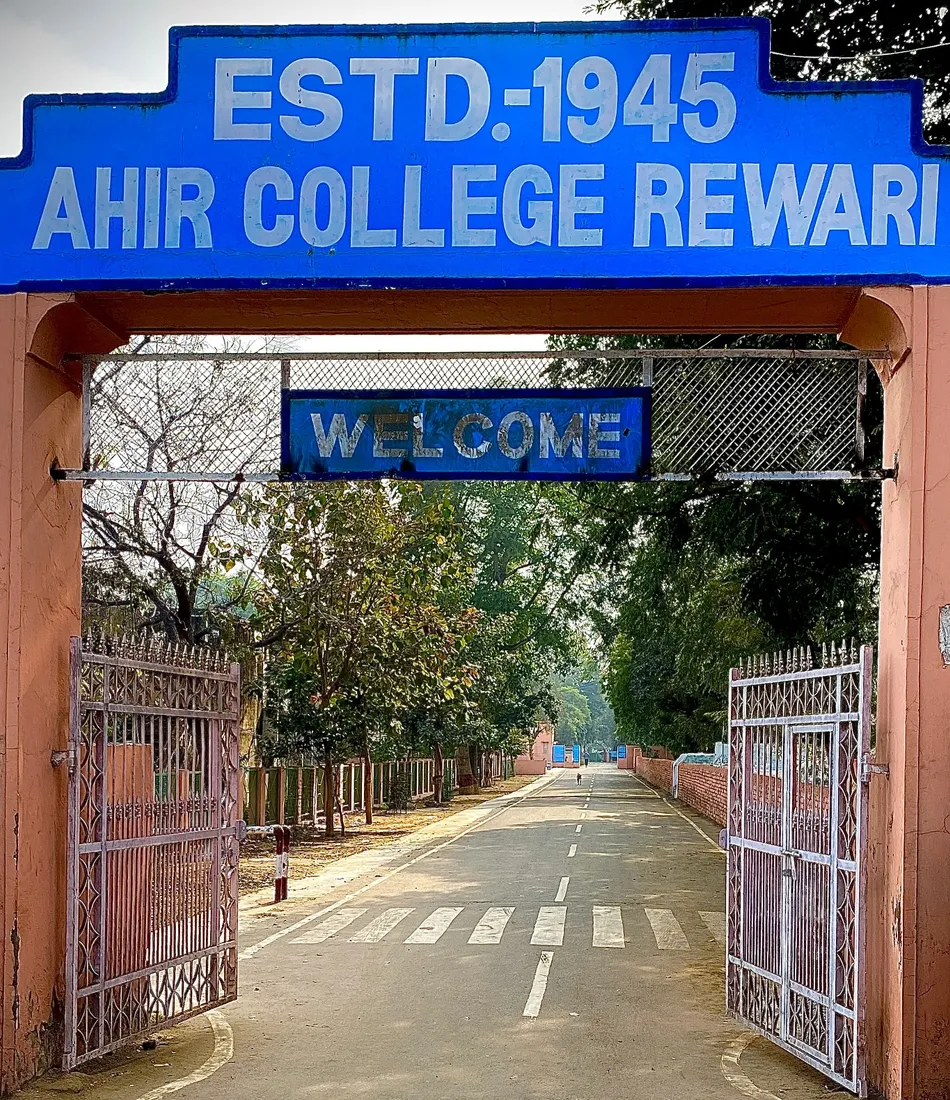
Many regions, many names

A heritage your family carries every day

In Varanasi or Rewari, Gwalior or Jamnagar, the talk of a match turns first to the gotra and to the village a family comes from. Among the Ahir families of Kutch and Saurashtra, the atak — the family's clan name — stands where the gotra stands elsewhere.

Families of Uttar Pradesh, Madhya Pradesh, Delhi and Rajasthan say Yadav; in Haryana's Ahirwal, Yadav and Ahir are both heard; in Gujarat the families are Ahir. Maharashtra has its Ahir Gawli families, Bengal its Goala and Gope families, and Odisha its Gopal and Gauda families.

Each of these families has its own group on the profile, beside its language and native district, so a household can begin among its own people.

What families often ask first

What families often value first

  • Choose your own group — Hindi-speaking Yadav / Ahir, Gujarati Ahir, Ahir Gawli, Bengali Goala / Gope or Odia Gopal / Gauda — and the search can stay within it.
  • Search by native district — Varanasi, Gorakhpur, Lucknow, Agra, Rewari, Gurugram, Gwalior, Jabalpur, Jamnagar, Kutch and many more.
  • Registrations stay among Yadav and Ahir families, and the gotra, the mother's gotra and the family deity can be written on the profile, ready before the first call.

What your family will find inside

What the elders will want to know

Before any contact is exchanged, the first things an elder asks about are already there to read.

Government ID verified members stand out

Members who complete Government ID verification carry a clear mark, giving your family added reassurance at a glance.

Narrow the search by group and native district

Look among your own group or more widely, and narrow by native district: Varanasi, Lucknow, Agra, Rewari, Gwalior, Jabalpur, Jamnagar, Kutch and many more.

Lineage recorded your way

The gotra or atak, the mother's gotra, the family deity and your samaj or group are each written as your elders say them — there is no list you have to fit into.

Education, work, and family background together

Degrees, professions, and family character read clearly on every profile, in the same order elders weigh an alliance.

Contact details are not shown openly

Phone numbers and email are not shown openly on profiles. A member uses the Reveal Contact feature to see another member's details and reach out directly when they are ready to take an introduction forward.

Interest is never lost

Shortlists and the profiles your family has already opened stay saved, so you can return to a promising profile after the household has talked it over.

Built around how Yadav alliances are made

From a village in Ahirwal to a home in Ahmedabad, a family's group, gotra and home district are there to read while the elders talk it over.

Why families feel at ease

Why Yadav and Ahir families feel at home

The details that decide an alliance sit together in one place, presented the way your family would present them.

A group for each region

Yadav and Ahir families of the Hindi-speaking states, and Gujarati Ahir, Ahir Gawli, Goala and Gopal families — each is welcomed by the name it uses at home.

Close to home, if you wish

The native district sits on every profile, so a family in Rewari can begin with Ahirwal and a family in Jamnagar with Saurashtra — and look further only when the elders choose.

Comfortable for parents and members alike

Whether the search is led by a parent, a sibling, or the member themselves, the profile reads clearly for all of them.

Move at your family's pace, with tradition honoured up front and you reach out when your family is ready.

Faith

Govardhan, held over the herd

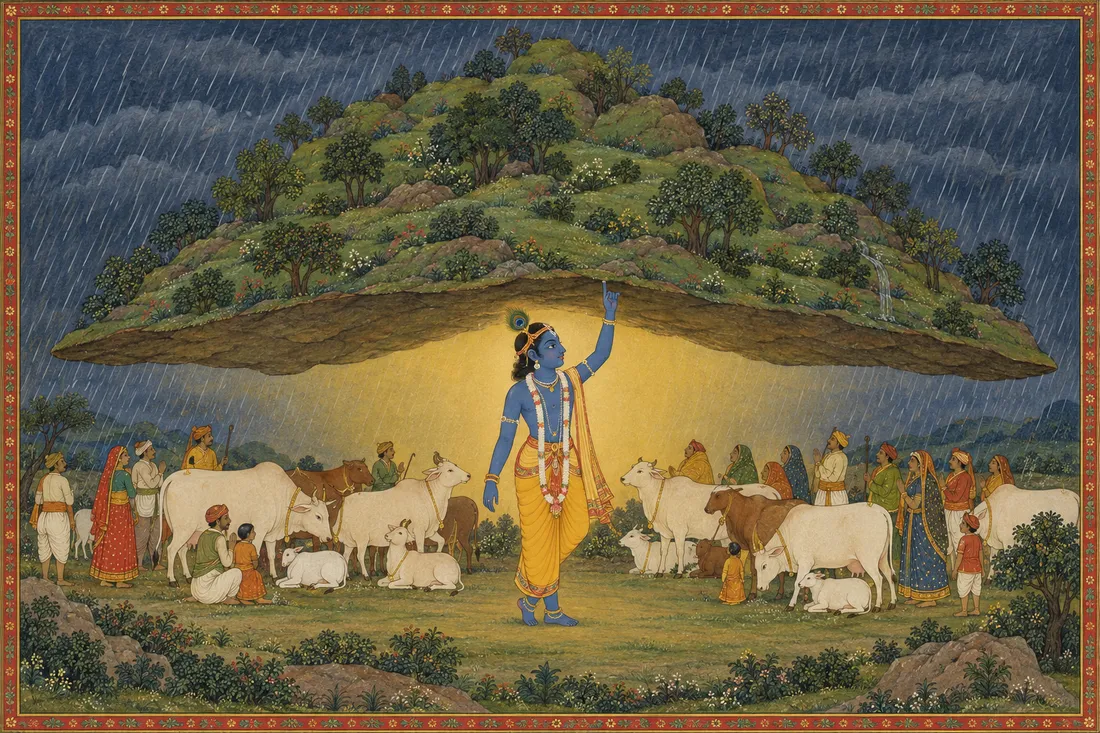
In the story told at Govardhan Puja, Krishna lifted the hill of Govardhan on one finger and held it for seven days, to shelter the herds of Braj, and the families who kept them, from the rain.

A devotional painting in the miniature style of Krishna holding up the green hill of Govardhan on one finger, with cows, calves and herding families sheltering beneath it from the monsoon rain

The herd's own day

Govardhan Puja, just after Diwali, is kept all across north India. In Yadav homes that keep cattle, the cows are decorated and worshipped.

Janmashtami and Govardhan

Many Yadav homes keep Janmashtami, and honour Krishna again at Govardhan Puja.

Told here with reverence; every family keeps its devotions in its own way.

Five regions

One name in Varanasi, another in Kutch

The name a family uses depends on where its roots are.

Uttar Pradesh, Madhya Pradesh and Delhi

From Varanasi and Lucknow to Gwalior, Jabalpur and Delhi, the families say Yadav.

Kutch and Saurashtra

Here the families are Ahir, and many also name their samaj.

Maharashtra, Bengal and Odisha

In Maharashtra the families are Ahir Gawli, in Bengal Goala and Gope, and in Odisha Gopal and Gauda — each with its own language, its own festivals and its own home districts.

Dola Purnima in Odisha

For three days from Dola Purnima, many Gopal families keep the Radha kalash, Gopujan — the worship of the cow — and the Laudi, danced by boys dressed as Krishna, with bells at the waist and peacock feathers.

Each region keeps its own customs.

Gotra and atak

The gotra, and the mother's gotra

Before an alliance is settled, the elders compare gotras — the family's own, and often the mother's as well.

In Haryana and western Uttar Pradesh

Many families look further still — to a grandmother's gotra, and some to both grandmothers' — before they agree to a match.

In Kutch and Saurashtra

Ahir families look to the atak, the family's clan name, when they weigh a match.

The elders know their own rule best; the profile simply gives them a place to write it.

Songs of the wedding

Birha for the wedding party

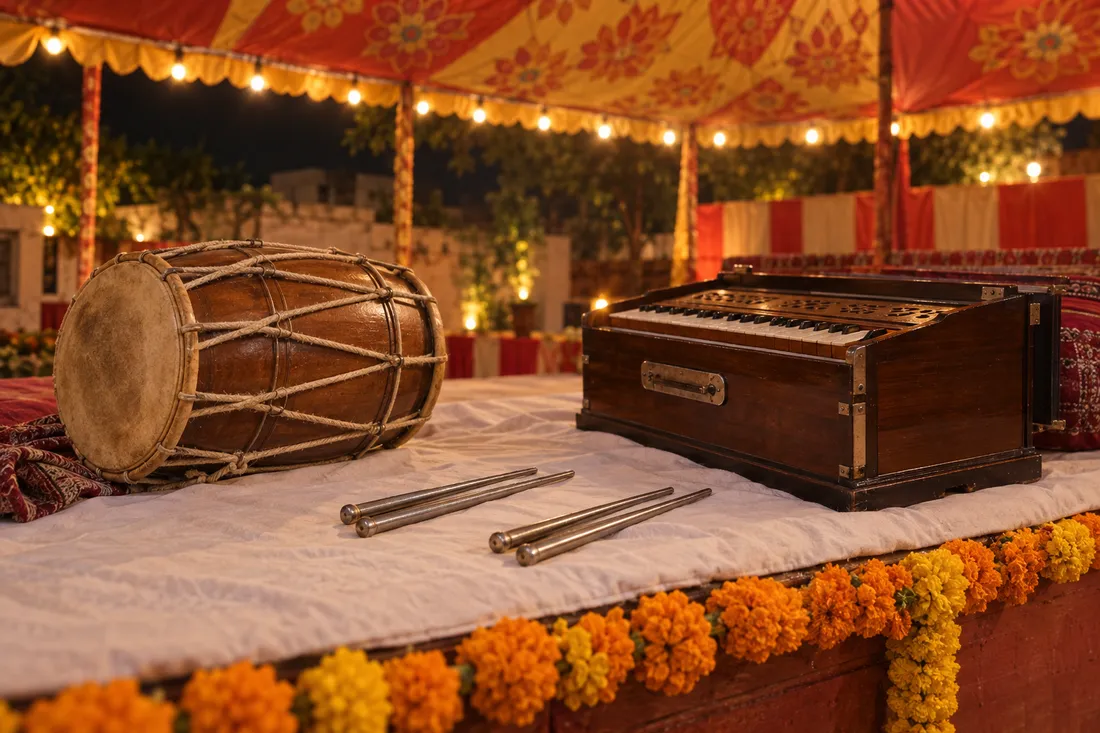
In the country around Banaras, when the groom's party arrives in the bride's village, Birha singers are often hired to sing for the guests.

Two pairs of metal kartal rods, a dholak and a harmonium on a white sheet beneath a wedding shamiana lit with a string of bulbs, a marigold garland along the front

The kartal

Two pairs of tapered metal rods, about nine inches each, struck together in the hand — the one instrument that belongs to Birha alone.

Guru Bihari

Singers trace Birha to Bihari Lal Yadav, remembered as Guru Bihari, who lived and sang in Banaras a century ago.

A song of the whole region

Birha belongs to the country around Banaras and to many of its families, and Ahir homes have kept it for generations.

Each district sings its own songs at a wedding.

Kutch and Saurashtra

The Ahir bride's embroidery

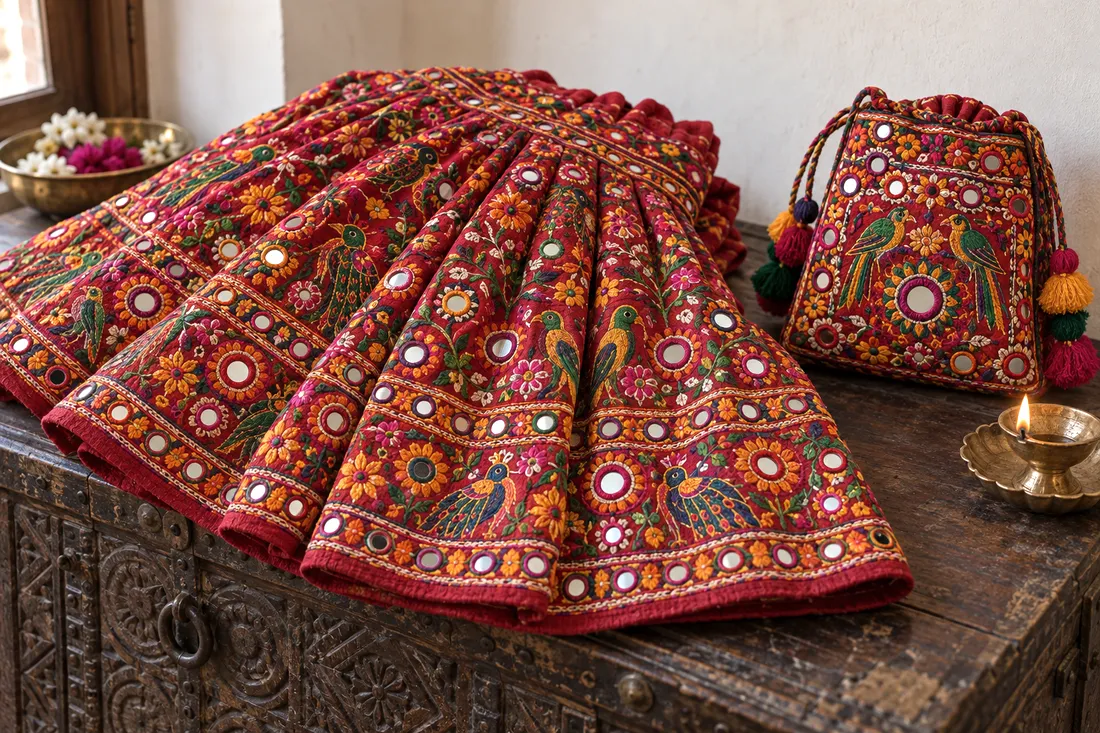
Ahir embroidery is one of the Kutch styles that carry the name of the families who make it — dense flowers, parrots and peacocks in chain stitch, set with small round mirrors.

A folded red bridal ghaghro embroidered in the Kutch Ahir style with flowers, parrots, peacocks and small round mirrors, beside an embroidered drawstring theli and a brass diya on a carved wooden chest

The ghaghro for the pheras

Traditionally, the bride wears an embroidered ghaghro for the pheras, the vows taken around the sacred fire.

The theli

An embroidered theli carries the bride's clothes to her new home.

In red, near Dwarka

In December 2023, Ahir women dressed in red danced the raas together near Dwarka, Krishna's city.

Patterns vary from village to village.

Questions families ask

Common questions from Yadav / Ahir families

Will we only see Yadav and Ahir profiles here?

Yes. Registering through this page places your profile in the Yadav / Ahir community, and every profile you see, match with, or contact belongs to it.

How is our family's lineage recorded?

Your gotra — or, for Gujarati Ahir families, the atak — is written in your own words, with a place for your mother's gotra, the family deity and your samaj or group. You may leave any of it blank.

We are Ahir Gawli, Goala or Gopal — is this our place?

Yes. Ahir Gawli families of Maharashtra, Goala and Gope families of Bengal, and Gopal and Gauda families of Odisha each have a group of their own here, beside Hindi-speaking Yadav and Ahir families and Gujarati Ahir families. A family unsure of its group can choose Other Yadav.

We are Golla Yadava from Andhra Pradesh, Telangana or Karnataka — is this our page?

Golla Yadava families have a page of their own here, written for Telugu- and Kannada-speaking Golla families. This page is for Yadav and Ahir families, and for Ahir Gawli, Goala and Gopal families.

Will our phone number be visible to everyone?

It is not shown openly on your profile. A member who wants to take an introduction forward can see your contact through the app's Reveal Contact feature and reach you directly, and Government-ID-verified badges help you know who you are speaking with.

Next step

Register or login when your family is ready to continue

Create your account and step into the Yadav and Ahir space on Sri Guru Raghavendra Matrimony, where your group, your gotra and your native district are part of every profile from the first day — for Yadav and Ahir families wherever they live today, with Ahir Gawli, Goala and Gopal families too, and your family sets the pace.