Sri Guru Raghavendra Matrimony™ emblem
SRI GURU RAGHAVENDRA MATRIMONY™

Lakshmi's owl and the Kojagari moon

Mahishya Matrimony

The low country of the Rupnarayan and the Damodar is where many Mahishya families have their roots. This page is for Mahishya families, wherever they live today.

Mahishya

Begin when you are ready

Register now, or read about Mahishya heritage first

Creating an account takes a few minutes. If your family prefers to understand the space first, the sections below walk through the low country of the rivers, the gotra and bhat-kapor, Lakshmi's full moon, and the winter Sundays.

Registrations from this page stay within the Mahishya community — every profile your family sees and contacts belongs to it.
Medinipur, Howrah and Hooghly

A heritage your family carries every day

Many Mahishya families come from Purba and Paschim Medinipur, Howrah, Hooghly and the two 24 Parganas, and others from Nadia and Murshidabad.

At home the language is Bengali, and many homes still keep the year by the aman rice.

Many households are Vaishnava, and many keep Lakshmi at home.

What families often ask first

What families often value first

  • A line for the gotra and one for the family deity, each written as the elders say it.
  • Search by native district — Purba Medinipur, Paschim Medinipur, Howrah, Hooghly, South 24 Parganas, North 24 Parganas, Nadia and many more.
  • Bengali at home is written on the profile, beside the native district.

What your family will find inside

Where the family's village is

The profile names the family's home district, not only the city it lives in now, and other families can search by it.

Government ID verified members stand out

Members who complete Government ID verification carry a clear mark, giving your family added reassurance at a glance.

Narrow the search by native district

Families from the same district can find one another first, wherever they now live.

Lineage recorded your way

Both lines, the gotra and the family deity, are written in the family's own words — there is no list you have to fit into.

Education, work, and family background together

Degrees, professions, and family character read clearly on every profile, in the same order elders weigh an alliance.

Contact details are not shown openly

Phone numbers and email are not shown openly on profiles. A member uses the Reveal Contact feature to see another member's details and reach out directly when they are ready to take an introduction forward.

Interest is never lost

Shortlists and the profiles your family has already opened stay saved, so you can return to a promising profile after the household has talked it over.

Built around how Mahishya alliances are made

A grandmother in Howrah and a son in Bengaluru read the same profile: the home district, the gotra and the family deity.

Why families feel at ease

Why Mahishya families feel at home

The details that decide an alliance sit together in one place, presented the way your family would present them.

A house in the village

For many families the village house is still home, and its district is written on the profile.

The gotra, checked quietly

The gotra is written on the profile, so the elders can settle that question privately, before any visit is arranged.

Comfortable for parents and members alike

Whether the search is led by a parent, a sibling, or the member themselves, the profile reads clearly for all of them.

Move at your family's pace, with tradition honoured up front and you reach out when your family is ready.

Heritage

Between the Rupnarayan and the Damodar

Mahishya families have long made their homes in the low country of the Rupnarayan, the Damodar, the Hooghly and the Kangsabati.

The village home

Wherever work has taken a family — to Kolkata, to Kharagpur, to Bengaluru — many still keep the house in the village where their relations live.

The year of the aman rice

The aman rice is sown in the rains of June, July and August and reaped in the cold months, and the year's festivals follow it, from Lakshmi's full moon to the new rice of Agrahayan.

Marriage

Rice, cloth and the gotra

The gotra matters while the families are still looking; rice and cloth come once the wedding is done.

Outside the gotra

Marrying outside one's own gotra is the rule written down for these families, and the elders of each house say how much it still decides.

Bhat-kapor

In his home, once the wedding is done, the groom gives the bride rice and cloth, bhat and kapor — a promise that she will never want for food or clothing.

Faith

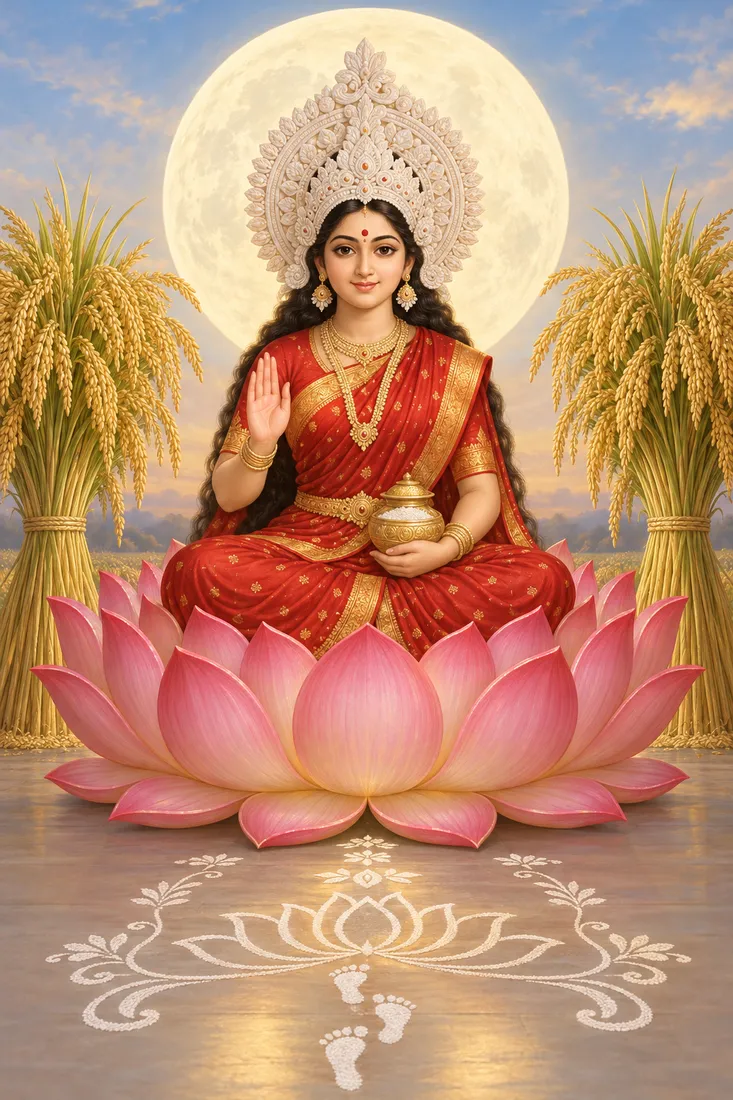
Lakshmi on the full moon of Ashwin

As the paddy ripens, many Bengali homes keep Kojagari Lakshmi Puja at night.

An illustration of Lakshmi as Bengali homes keep her on Kojagari Lakshmi Puja, seated on a pink lotus in a red saree and a white pith-work crown, a pot of rice in her hand, sheaves of paddy on either side, the full moon behind her and white alpana footsteps leading to her
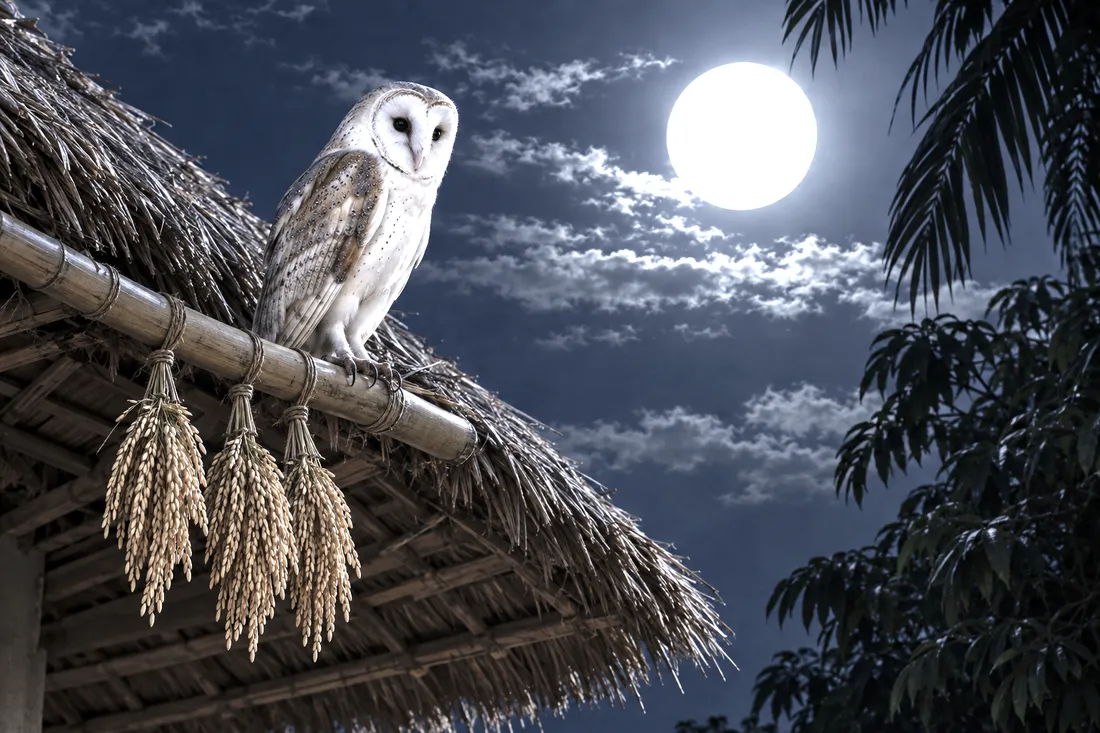
An illustration of a white owl on the edge of a thatched roof in the light of the full moon, beside small sheaves of paddy, on the night of Kojagari Lakshmi Puja

Who is awake?

The goddess is said to ask "who is awake?" as she passes in the night; small sheaves of the new paddy are strung up for her, and she comes with her owl.

Agrahayan's first rice

The first rice of the new harvest is cooked with milk and the season's new jaggery, and shared with neighbours.

Through the year

Winter Sundays, and Hari's name

In the south-west of Bengal the cold months bring Itu on Sundays, and many villages gather for kirtan.

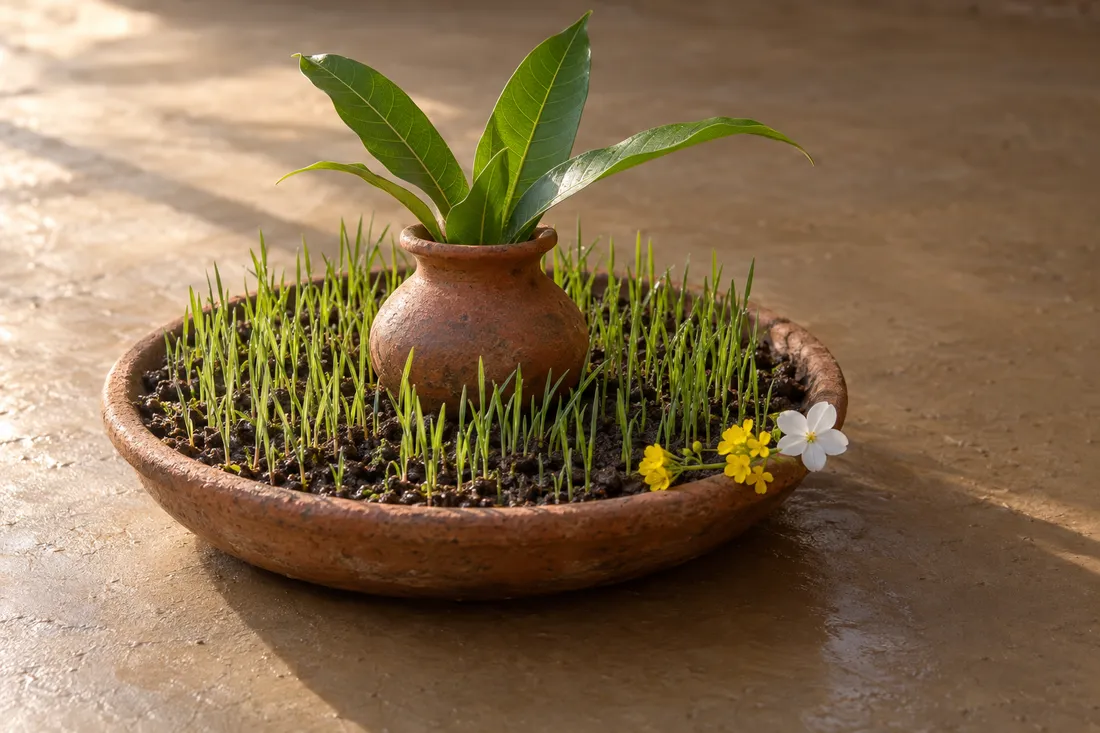
An illustration of an earthen dish of green shoots with a small clay pot and mango leaves, set out on a winter Sunday morning for Itu

Itu's green shoots

Many women keep Itu on the Sundays of Agrahayan: grains are sown in an earthen dish around a small pot, and the green shoots carry a quiet wish for the household.

Hari's name, day and night

An ashta-prahar kirtan, Hari's name sung through a whole day and night, brings a village together.

Questions families ask

Common questions from Mahishya families

Will we only see Mahishya profiles here?

Yes. Registering through this page places your profile in the Mahishya community, and every profile you see, match with, or contact belongs to it.

How is our family's lineage recorded?

There are two lines: the gotra, and the family deity if your household keeps one. Write them as your elders say them; nothing is read from a surname, and either can stay blank.

Our family lives far from Bengal now — can we still find families from Medinipur or Howrah?

Yes. The native district is on every profile, so the search can begin with Purba or Paschim Medinipur, Howrah or Hooghly, wherever your family lives today.

Will our phone number be visible to everyone?

It is not shown openly on your profile. A member who wants to take an introduction forward can see your contact through the app's Reveal Contact feature and reach you directly, and Government-ID-verified badges help you know who you are speaking with.

Next step

Register or login when your family is ready to continue

Create your account and step into the Mahishya space on Sri Guru Raghavendra Matrimony, where your gotra and your native district are part of every profile from the first day — for Mahishya families wherever they live today, and your family sets the pace.