Sri Guru Raghavendra Matrimony™ emblem
SRI GURU RAGHAVENDRA MATRIMONY™

Pipe and drum, Bhagavathi, and Mahatma Ayyankali

Pulaya Matrimony

In the villages of old Kochi, Pulaya families once raised a platform on four poles for the goddess Bhagavathi and danced on it to the pipe and the drum. This page is for Hindu Pulaya, Pulayar and Cheramar families of Kerala, wherever they live today.

PulayaCheramar

Begin when you are ready

Register now, or read about Pulaya heritage first

Creating an account takes a few minutes. If your family prefers to understand the space first, the sections below walk through the Pulaya families and their goddess, the pipe and drum, Mahatma Ayyankali, and the koottam.

Registrations from this page stay within the Pulaya community — every profile your family sees and contacts belongs to it.
Kerala, south to north

A heritage your family carries every day

Pulaya families are at home across Kerala, from the south of old Travancore through Kochi to Malabar.

Families speak Malayalam at home and write the name as Pulaya, Pulayar or Cheramar.

A 1909 account of Kochi names Bhagavathi as the families' guardian goddess and tells of the ancestors remembered at Onam and Vishu.

What families often ask first

What families often value first

  • Lines for the illam or koottam, the kuladevatha and the home village, kept in your family's own words.
  • Search by native district — Thiruvananthapuram, Kollam, Alappuzha, Kottayam, Ernakulam, Thrissur and every other district.
  • Each family you meet here is a Pulaya home, so the first call can turn straight to the two families and their villages.

What your family will find inside

Koottam, desam and district, before the first call

Elders who want to know a family's koottam and its village before the first call can look for both on the profile, beside the native district.

Government ID verified members stand out

Members who complete Government ID verification carry a clear mark, giving your family added reassurance at a glance.

Narrow the search by native district

Thiruvananthapuram, Kollam, Alappuzha, Ernakulam, Thrissur, Palakkad, Kozhikode: search close to home by native district, or across all of Kerala.

Lineage recorded your way

Each of the three lines carries your family's own words, and no surname is ever used to fill one.

Education, work, and family background together

Degrees, professions, and family character read clearly on every profile, in the same order elders weigh an alliance.

Contact details are not shown openly

Phone numbers and email are not shown openly on profiles. A member uses the Reveal Contact feature to see another member's details and reach out directly when they are ready to take an introduction forward.

Interest is never lost

Shortlists and the profiles your family has already opened stay saved, so you can return to a promising profile after the household has talked it over.

The koottam first, then the village

In the 1909 account the koottam was asked about before an alliance, and around Chittur and Palakkad two families of one village seldom married; today both have a place on the profile, for the families who keep them.

Why families feel at ease

Why Pulaya families feel at home

The details that decide an alliance sit together in one place, presented the way your family would present them.

Pulaya, Pulayar or Cheramar

Whichever of the three names your family uses, written in English or in Malayalam, this page is your family's place to begin.

A Malayalam-speaking home, near or far

A family settled far from Kerala can still look for a Malayalam-speaking home; the mother tongue is part of every profile.

Comfortable for parents and members alike

Whether the search is led by a parent, a sibling, or the member themselves, the profile reads clearly for all of them.

Move at your family's pace, with tradition honoured up front and you reach out when your family is ready.

Pulaya, Pulayar, Cheramar

A name, a goddess, the ancestors' days

Pulaya families write their name in more than one way, and a 1909 account from Kochi tells of the goddess who guards them and the days on which their ancestors are remembered.

The goddess who guards the families

That account names Kodungallur Bhagavathi as the families' guardian goddess.

Ancestors at Onam and Vishu

It has families making offerings to their ancestors at Onam and Vishu, and as Karkidakam and Makaram begin.

That account was written in the villages of Kochi; families from Travancore and Malabar may keep these days differently.

Songs and dances

Pipe and drum for the goddess

The 1909 account of Kochi names the pipe and the drum as the families' instruments, and tells of the dances below.

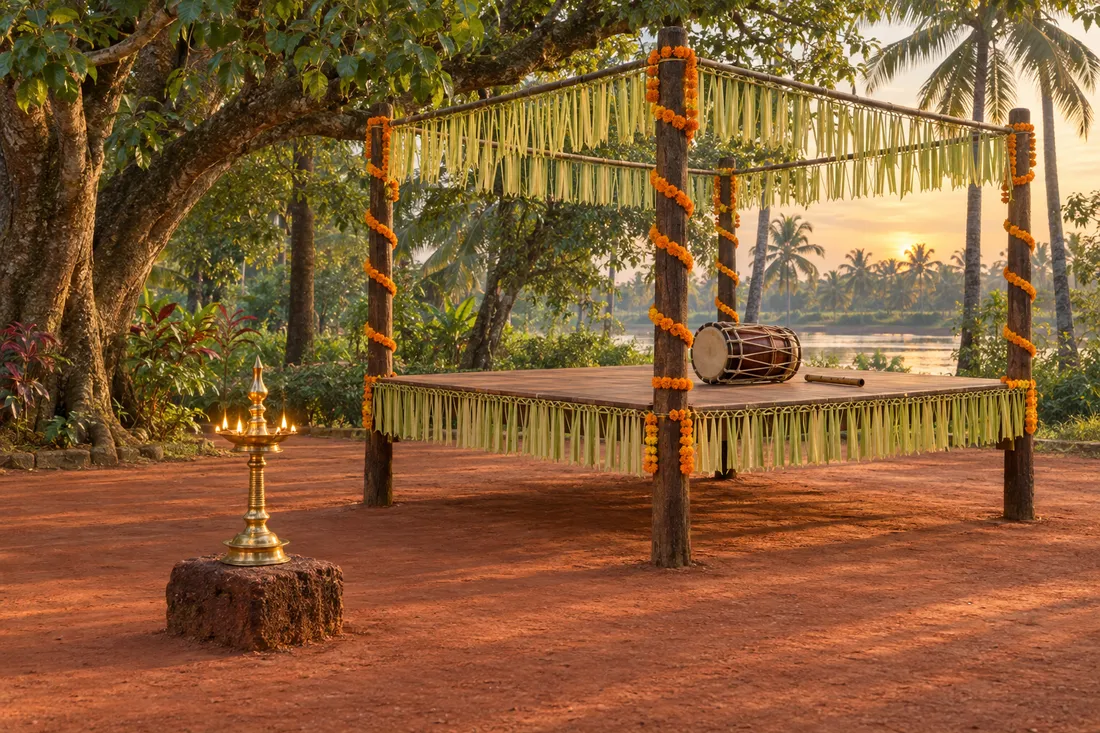
An illustration of a square wooden platform raised on four poles, hung with tender coconut-leaf fringes and marigold garlands, with a drum and a bamboo pipe resting on it and a lit brass lamp standing before it

A platform for the goddess

For Thattinmel kali, four poles were set firmly in the ground and a platform built on them, and the dancers took to it to the pipe and the drum, in honour of the goddess Bhagavathi.

Hands clapping in a circle

In Vatta kali the dancers moved in a circle, clapping and singing as they went, and young women sometimes joined in.

The women's circle at a wedding

At a wedding the women had a circle dance of their own.

These are three of the dances the 1909 account describes; whether a village keeps any of them today, its own elders will know.

Remembered every 28 August

Mahatma Ayyankali of Venganoor

Ayyankali, who lived from 1863 to 1941, is remembered by Pulaya families as Mahatma Ayyankali.

Born at Venganoor

He was born on 28 August 1863 at Venganoor, near Thiruvananthapuram, the first of the eight children of Ayyan and Mala.

Chellamma and their children

In 1888 he married Chellamma, and they had seven children.

Ayyankali Jayanti

His birthday, 28 August, is kept across Kerala as Ayyankali Jayanti, and a 2002 India Post stamp honours him.

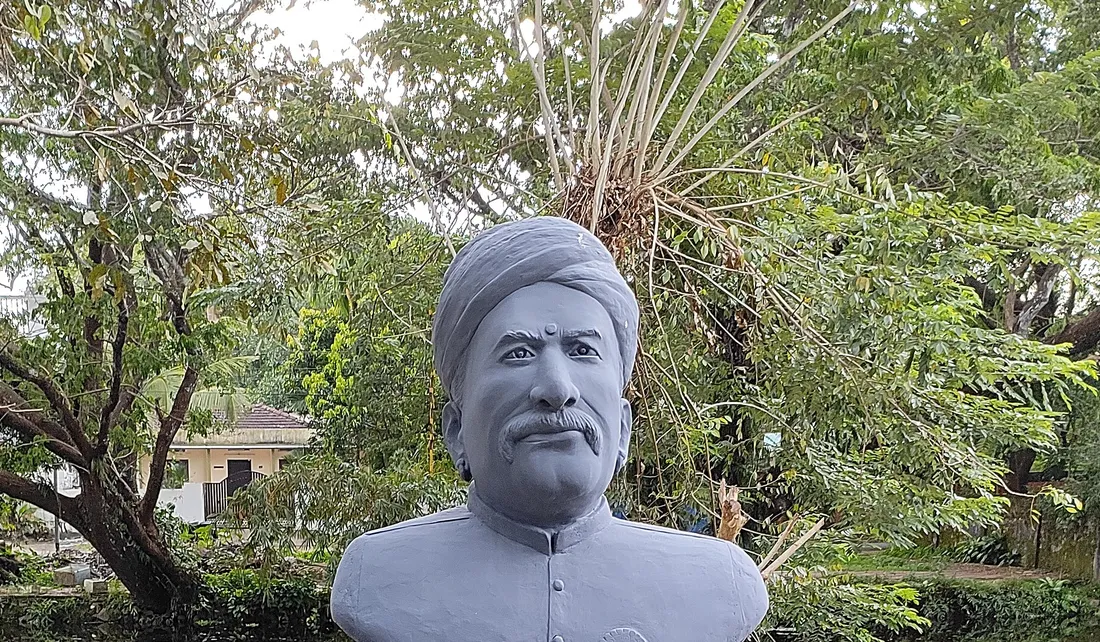
In Thiruvananthapuram, flowers are laid on that day at his statue in the square at Vellayambalam that carries his name.

Koottam, kuladevatha, desam

The koottam, the family deity and the home village

In the 1909 account from Kochi, a Pulaya marriage was made between two different family groups, called the illam or the koottam.

Asked when a match was discussed

In that account, the koottam was asked about when a marriage was discussed, so that two people of the same family group would not marry.

The village matters too

Around Chittur and Palakkad, the same account found that people of one village did not usually marry each other; the home village has a place on the profile for elders who still ask.

A kuladevatha, if the family keeps one

Where a family keeps its own deity, its kuladevatha, write it as the elders say it.

Write what the elders remember

Write the illam or koottam, the kuladevatha and the home village the way your elders name them, or leave any of them empty.

The home village can be the desam your family comes from, even if the family has lived elsewhere for generations.

Questions families ask

Common questions from Pulaya families

Will we only see Pulaya profiles here?

Yes. Registering through this page places your profile in the Pulaya community — families who call themselves Pulaya, Pulayar or Cheramar — and every profile you see, match with, or contact belongs to it.

How is our family's lineage recorded?

Your profile has three lines for it: the illam or koottam, the kuladevatha, and the home village. Write them as your family says them, or leave any of them empty; nothing is ever read from a family name.

We are Pulaya and write Cheramar — is this our page?

Yes. Cheramar is one of the names Pulaya families use, and a Pulaya family that writes it registers here like any other.

Will our phone number be visible to everyone?

It is not shown openly on your profile. A member who wants to take an introduction forward can see your contact through the app's Reveal Contact feature and reach you directly, and Government-ID-verified badges help you know who you are speaking with.

Next step

Register or login when your family is ready to continue

Create your account and step into the Pulaya space on Sri Guru Raghavendra Matrimony, where your illam or koottam, your kuladevatha, your desam and your native district are part of every profile from the first day — for Pulaya, Pulayar and Cheramar families of Kerala wherever they live today, and your family sets the pace.