Sri Guru Raghavendra Matrimony™ emblem
SRI GURU RAGHAVENDRA MATRIMONY™

The pattanas of the Karnataka coast

Mogaveera Matrimony

Mogaveera households belong to the Karnataka coast, and their settlements on the shore are called pattana. A family here is named for the place its line first settled, reckons that line for the most part through the mother, and names its bari before an alliance is thought about. So this page begins there — with the bari, the shore a family is named from, and the deity the house keeps.

MogaveeraOther Mogaveera community

Begin when you are ready

Register now, or read about the Mogaveera heritage first

Creating an account takes a few minutes. If your family prefers to understand the space first, the sections below walk through the shore the family names come from, the goddess on the island at Bennekudru, the schools this community built, the bari, and the observances the coast shares.

Registrations from this page stay within the Mogaveera community — every profile your family sees and contacts belongs to it.
The shore, and the name it gave

A heritage your family carries every day

These are households of the coast — Mangaluru and the pattanas south of it, Malpe and Udupi, Barkur and Hoode, and northward through Kundapur and Byndoor where Kannada rather than Tulu is the language of the house.

A Mogaveera family name is very often a place name. Bangera comes from Bengare, the sand spit where the Swarna and the Sita rivers meet the sea near Hoode; Suvarna is the Swarna river itself. The moolasthana, the first place a line settled, is what the family carries in its name.

So an alliance here begins with what a coastal household names first: the bari, the shore the family came from, the deity it keeps and the town it belongs to — with the dignity your family expects.

What families often ask first

What families often value first

  • Your bari is written in your own words, and a family that reckons its line through the father rather than the mother is never asked to leave it blank.
  • Your moolasthana — the shore settlement your family's name comes from — and your kula devaru sit on every profile.
  • Search by native place across Mangaluru, Udupi, Malpe, Barkur, Kundapur, Byndoor, Karkala, Bengaluru, Mumbai and beyond.

What your family will find inside

Everything your family checks, before the first phone call

These are the details Mogaveera households settle first — and they are visible before any contact is exchanged.

Government ID verified members stand out

Members who complete Government ID verification carry a clear mark, giving your family added reassurance at a glance.

The bari, written in your own words

A family marries away from its own bari, and that is the first thing two households check. Write yours exactly as your family names it. There is no list you have to fit into.

Filter by sub-community, native place and mother tongue

Narrow the search by native place — Mangaluru, Udupi, Malpe, Barkur, Kundapur, Byndoor, Karkala and many more — and by whether Tulu or Kannada is spoken at home.

Education, work, and family background together

Degrees, professions, and family character read clearly on every profile, in the same order elders weigh an alliance.

Contact details are not shown openly

Phone numbers and email are not shown openly on profiles. A member uses the Reveal Contact feature to see another member's details and reach out directly when they are ready to take an introduction forward.

Interest is never lost

Shortlists and the profiles your family has already opened stay saved, so you can return to a promising profile after the household has talked it over.

Built around how Mogaveera alliances actually happen

Whether your family looks among the Tulu-speaking pattanas of the south or among the Kundapur and Byndoor households further up the coast, the things that decide it — the bari, the shore the family is named from, the deity it keeps and the native town — are always in view.

Why families feel at ease

Why Mogaveera families feel at home

The details that decide an alliance sit together in one place, presented the way your family would present them.

However your family reckons its line

Most Mogaveera households trace the bari through the mother, and some of the northern families through the father. Both are written here as a family states them, and the bari is recorded where a household keeps one and never required of one that does not.

Tulu at home or Kannada at home

Between Mangaluru and Byndoor the language of the house changes, and neither answer puts a family outside this community. Mother tongue and native district are asked for plainly, because families ask about them.

Comfortable for parents and members alike

Whether the search is led by a parent, a sibling, or the member themselves, the profile reads clearly for all of them.

Move at your family's pace, with tradition honoured up front and you reach out when your family is ready.

The name, and the shore behind it

Bengare, Swarna, and the places families are named for

A great many Mogaveera family names are the names of places on this coast. It is worth knowing which places, because the name is the oldest thing a household carries.

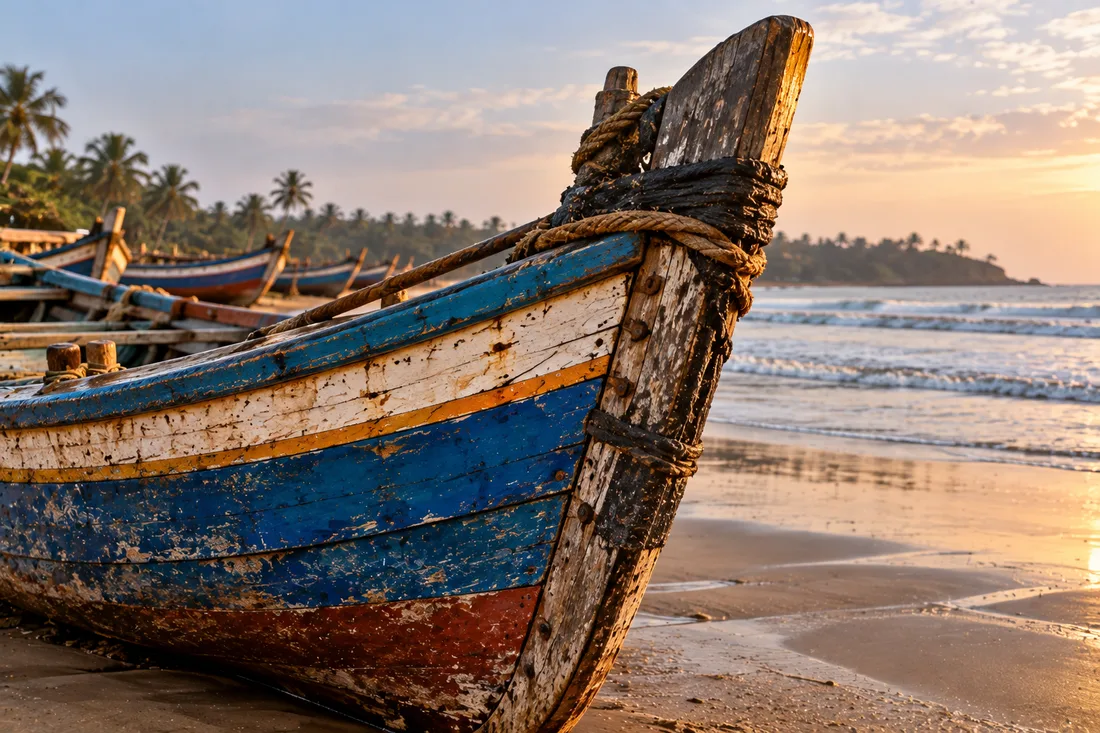
The high carved prow of an old plank-built country fishing boat drawn up on wet sand on the coastal Karnataka shore at first light, its weathered blue, white and red paint flaking to bare wood

The moolasthana, the first place

Bangera comes from Bengare — the sand spit at the mouth where the Swarna and the Sita rivers meet the sea, near Hoode in Udupi taluk. Suvarna is the Swarna river itself. This is what the community says of its own names, and the geography is there on any map of the coast.

  • Bengare, where two rivers meet the sea
  • The Swarna, and the families named from it
  • The pattana, the settlement on the shore

The name the community chose

Mogaveera is the name these households took for themselves in the early twentieth century, in place of the older Mogeyar, and among them the choosing is credited to Hoige-bazar Mohanappa Tingalaya. More than one account is told of what the word carries, and the community has not settled on one. Both older and newer names bring a family here.

Marakala, and the Udupi reaches

Marakala, or Marakaleru, is the name families in the Udupi reaches have always used, and a household that says Marakala at home is of this same community. Kundapur families used the title Naicker in the same way. Either name finds this page.

  • Marakala · Marakaleru · Marakalaru
  • Mogeyar, the older name

Practice and emphasis differ from one pattana, one branch and one family network to another — this is heritage held with pride, not a single rule book.

The goddess on the island

Sri Kula Mahastri Amma at Bennekudru

About a kilometre and a half west of Barkur, on an island in the Sita river, stands the temple this community has kept for as long as there is a record of it.

Kept by every family, eight annas a year

An account written down in 1909 records that every Mogaveera family paid the Mangala pujari eight annas a year to keep this temple. It is still described today as holding a particular significance for Mogaveera households across the whole of the old South Kanara district.

Nine generations of one priestly line

Nine generations carried the title Mangala Poojarya at this temple. The last of that line, Sri Madhava Mangala Poojarya, died in 1966.

The jatra, and the goddess on the water

The annual jatra opens with Genda Seva at Dhanu Sankramana in mid-December, and the goddess goes out on the river on a golden palanquin set within a silver boat, under a canopy of flowers. The float festival and the seva are kept at many temples across the South. What belongs to these households is this goddess, on this island, in this river.

Devotion is honoured here on its own terms. Nothing on this site ranks one form of it above another.

What the community built

A night school in 1908, and everything after it

The clearest thing this community has to say about itself is not in an old book. It is in what it put up with its own money, starting very early.

The schools

A night school in 1908. A girls' school in 1930. Colleges since. A fishing community on this coast was opening classrooms for its own children before most of the country had thought about it, and it has not stopped.

  • The night school, 1908
  • The girls' school, 1930

The magazine and the bank

The Mogaveera magazine has been published since 1939, and the community's own bank since 1946. Between them they are the better part of a century of a community keeping its own record and its own credit.

The sanghas, and what they are for

The mandalis and sanghas of this coast run the schools, the hostels and the halls, and a great many Mogaveera marriages have been settled through people who met across that work. It is the part of the heritage a young family recognises itself in most quickly.

If your family carries one of these names and does not find itself described here, please do tell us through the request option in the app — it is the kind of message that decides what we open next.

How a marriage is guarded

The bari, and the house it comes from

One thing decides whether an alliance can be made, and every Mogaveera family knows the word for it.

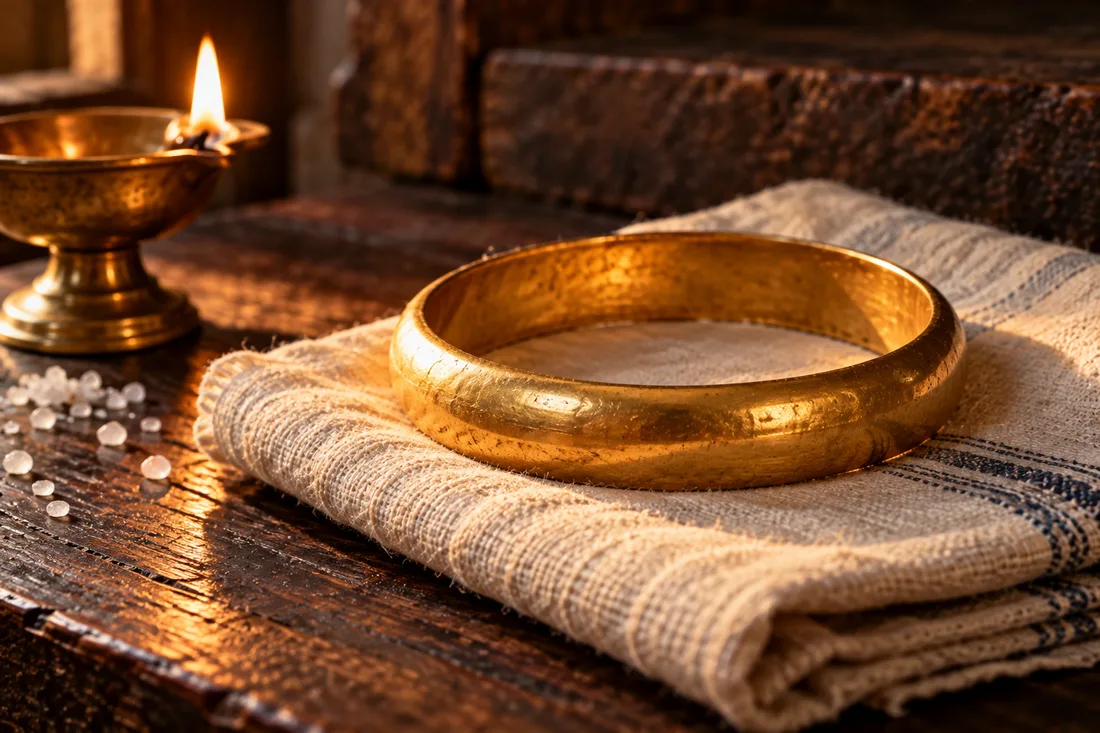
A plain heavy band of old yellow gold resting on folded undyed handwoven cotton on dark weathered teak, beside a small brass oil lamp and a few grains of coarse sea salt

A family marries away from its own bari

The bari is the line, and two households of the same bari do not marry. For most Mogaveera families it comes down through the mother, and for some of the northern households through the father. Write yours exactly as your family names it. There is no list you have to fit into.

  • Written in your own words, as your family says it
  • Recorded where a household keeps one, never required of one that does not

Why there is no list

The oldest account of these baris names creatures and trees; the lists families keep today are mostly place names. The two hardly overlap, and no roll of them has ever been agreed. Several baris are in any case shared with other communities of this coast — which is exactly why a family name can never say on its own which community a household belongs to.

The moolasthana, and the deity of the house

The shore settlement a line is named from sits on the profile beside the bari, and so does the deity the household keeps — Kula Mahastri Amma, Bobbariya, Panjurli, or whichever is yours. These are how a family is known. The bari is what an alliance is decided by.

The gurikara

The headman of a pattana is the gurikara, and families of that line have long been known by it. It is an office this coast keeps and several of its communities share, and it is named here as part of how a settlement ordered itself, not as a mark that places anyone above anyone.

Every line named here stands on its own terms. Nothing on this site places one household above another.

The sea, and the coast's own observances

The dhare, the shrine in the pattana, and the net that was hauled by hand

Some of what a Mogaveera family keeps is its own, and much of it belongs to the whole Tuluva coast. This page tries to be honest about which is which.

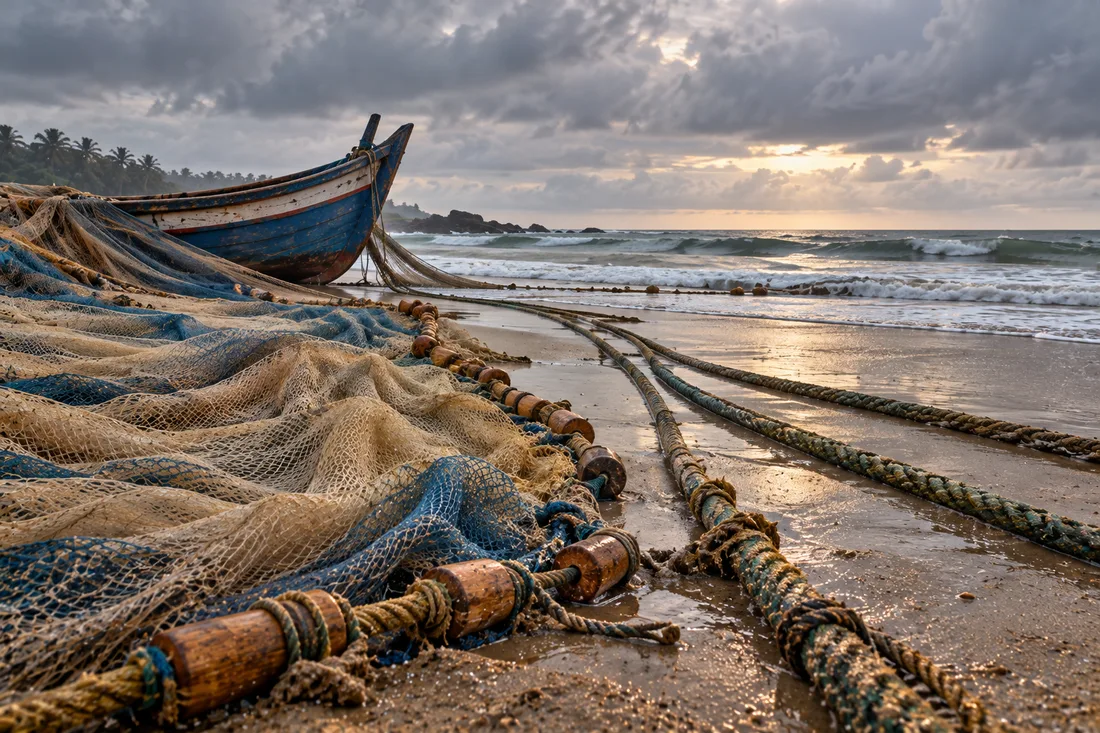
Coir hauling ropes and a great heap of shore-seine netting lying wet on a Karnataka beach at the start of the monsoon, with a plank-built boat drawn up at the water's edge under an overcast sky

The dhare

At the wedding the bride's father, or the gurikara, pours the dhare water over the couple's joined hands, and that is the moment the marriage is made. It is genuinely a Mogaveera custom and it is genuinely shared — the whole Tuluva coast keeps it, which is how this coast tends to work.

Bobbariya, and the shrines of the pattana

Most pattanas keep a Bobbariya shrine, and the daiva aradhane of this coast — the nagabana, the tambila — is kept in these households as it is in their neighbours'. It is the coast's own way of honouring the guardians of the shore, and no one community holds it alone.

Rampani, and a word that means two things

The rampani was the shore-seine that forty or fifty people hauled in from the beach together through the monsoon months, and the kairampani was its smaller form — kai in Tulu carries both hand and small. Mechanisation has very largely taken the work, and the smaller net has nearly gone. It is set down here as the gear of this coast, which these families worked.

Much of what is named here belongs to the whole Tuluva coast, and is written as something these households share rather than something they hold alone.

Questions families ask

Common questions from Mogaveera families

We say Marakala at home. Is this the right place?

Yes. Marakala, or Marakaleru, is the name families in the Udupi reaches have always used, and Kundapur households used the title Naicker in the same way. Both are names of this same community, and either one brings you here. The older name Mogeyar does too.

How is our family's lineage recorded?

By the bari, the moolasthana and the kula devaru, each written in your own words exactly as your family names them. There is no list you have to fit into. Most households reckon the bari through the mother and some of the northern families through the father, and the field is recorded where a family keeps one and never required of one that does not.

We are from Kundapur and speak Kannada at home, not Tulu.

That puts you nowhere outside this community. Mother tongue and native district are their own fields on the profile, and between Mangaluru and Byndoor the language of the house changes without the community changing with it.

Will our phone number be visible to everyone?

It is not shown openly on your profile. A member who wants to take an introduction forward can see your contact through the app's Reveal Contact feature and reach you directly, and Government-ID-verified badges help you know who you are speaking with.

Next step

Register or login when your family is ready to continue

Create your account and step into the Mogaveera space on Sri Guru Raghavendra Matrimony, where your bari, the shore your family is named from and your kula devaru are part of every profile from the first day — and your family sets the pace.