Sri Guru Raghavendra Matrimony™ emblem
SRI GURU RAGHAVENDRA MATRIMONY™

The weavers of the lotus thread

Padmashali Matrimony

A community whose looms have clothed the Telugu country for generations, whose devotion turns to the sage Bhavana Rishi, and whose alliances open with the family's own gotra and surname deserves a matrimony space that asks the right questions first — sub-community, gotra and surname, native region, and family character, all on the profile from the start.

Padmashali (Padma Sale)Shettigar (coastal Karnataka)Other Padmashali community

Begin when you are ready

Register now, or read about the Padmashali heritage first

Creating an account takes a few minutes. If your family prefers to understand the space first, the sections below walk through the community's weaving heritage, the Bhavana Rishi tradition it reveres, the gotra and surname system, and the handloom legacy it holds dear.

Registrations from this page stay within the Padmashali section — every profile your family sees and contacts belongs to the community.
A heritage of the loom, the lotus, and the lineage

A heritage your family carries every day

The Padmashali are one of the great weaving communities of the Telugu country. The very name tells their story — Padma, the lotus, and Sali, the weaver — and for generations their looms have clothed households across Telangana and Andhra Pradesh, with families settled also in Karnataka, Maharashtra and Tamil Nadu. In coastal Karnataka they are known as Shettigar, and there many speak Tulu or Kannada.

By tradition the community reveres the sage Bhavana Rishi, a descendant of the elder sage Markandeya, and its households trace their lineage through the gotras held to descend from him. An alliance still opens the old way: which family, which gotra and surname, and the native region that holds its roots — the details a Padmashali household settles before anything else.

Sri Guru Raghavendra Matrimony presents those details on every profile, in the order your elders actually weigh them — so a Padmashali alliance begins informed, and with the dignity your family expects.

What families often ask first

What families often value first

  • Profiles state gotra and surname, sub-community, and native region up front, so your family knows the essentials before the first conversation.
  • Padmashali families across the Telugu country and beyond — including the Shettigar families of coastal Karnataka — will find their community represented.
  • Registrations from this page stay within the Padmashali section, so every profile your family considers belongs to the community.

What your family will find inside

Everything your family checks, before the first phone call

These are the details Padmashali households settle first — and they are visible before any contact is exchanged.

Government ID verified members stand out

Members who complete Government ID verification carry a clear mark, giving your family added reassurance at a glance.

Filter by gotra, surname, and native place

Narrow the search by gotra and surname, native place, and family origin — the lineage checks a Padmashali family weighs first.

Education, work, and family background together

Degrees, professions, and family character read clearly on every profile, in the same order elders weigh an alliance.

Lineage recorded your way

Record your family's gotra and surname as free text, exactly as your family names them, so the same-gotra check your elders rely on is settled up front.

Contact details are not shown openly

Phone numbers and email are not shown openly on profiles. A member uses the Reveal Contact feature to see another member's details and reach out directly when they are ready to take an introduction forward.

Interest is never lost

Shortlists and expressed interest stay saved, so your family can return to a promising profile after the household has talked it over.

Built around how Padmashali alliances actually happen

Whether your family's search stays within one district or reaches across the Telugu country and beyond, the details that matter — gotra, surname, and native region — are always in view.

Why families feel at ease

Why Padmashali families feel at home

The details that decide an alliance sit together in one place, presented the way your family would present them.

A community-scoped beginning

Your search stays within the Padmashali community pool, so every introduction starts from shared roots.

Gotra and surname, honoured up front

The same-gotra check a Padmashali family relies on is settled on the profile itself, before any conversation begins.

Comfortable for parents and members alike

Whether the search is led by a parent, a sibling, or the member themselves, the profile reads clearly for all of them.

Move at your family's pace, with tradition honoured up front and you reach out when your family is ready.

Understanding the heritage

Weavers of the lotus thread

The Padmashali heritage is one of the loom. The name itself — Padma, the lotus, and Sali, the weaver — carries the community's craft and its devotion together, and for generations its families have woven the cloth of the Telugu country.

The name and the craft

Padmashali households have long been handloom weavers, and the craft is woven into the community's very name and its origin tradition. Telugu is the mother tongue across most of the community, and the loom has passed from one generation to the next as both livelihood and heritage.

One community across the states

Padmashali families are found across Telangana and Andhra Pradesh, and in Karnataka, Maharashtra and Tamil Nadu. In coastal Karnataka — Dakshina Kannada and Udupi — the community is known as Shettigar, where many families speak Tulu or Kannada and register within the same Padmashali space.

Practice and emphasis differ from one family network to another — this is heritage held with pride, not a single rule book.

One community, and its weaver kin

Who the Padmashali community is — and the related weaving families

This space is for the Padmashali community and the families who belong to it. Several other weaving communities share the same craft and are sometimes named alongside it, and each is welcomed here on its own terms — not merged into another.

The Padmashali family

At its heart is the Padmashali (Padma Sale) community, known in coastal Karnataka by its regional name Shettigar. Within the community there are both Vaishnava and Shaiva households — an orientation of devotion within one community, and families of both are equally at home here.

  • Padmashali (Padma Sale) — the weaving community proper
  • Shettigar — the community's regional name in coastal Karnataka
  • Vaishnava and Shaiva households — a devotional orientation, not a separate group

Related weaving communities

Other weaving communities are often named alongside the Padmashali, but they carry their own distinct identity and traditions. They are welcome to find their own home here rather than being folded into the Padmashali section.

  • Pattusali — the silk-weaving community, distinct from the Padmashali
  • Karnabhakthulu (Karna Sale) — a closely related but distinct weaving community
  • Swakula Sali — a Marathi-speaking weaving community with its own heritage

If your family's name or region is not listed separately, Other Padmashali community keeps you within the same community space.

A heritage of devotion

Bhavana Rishi, the sage the community reveres

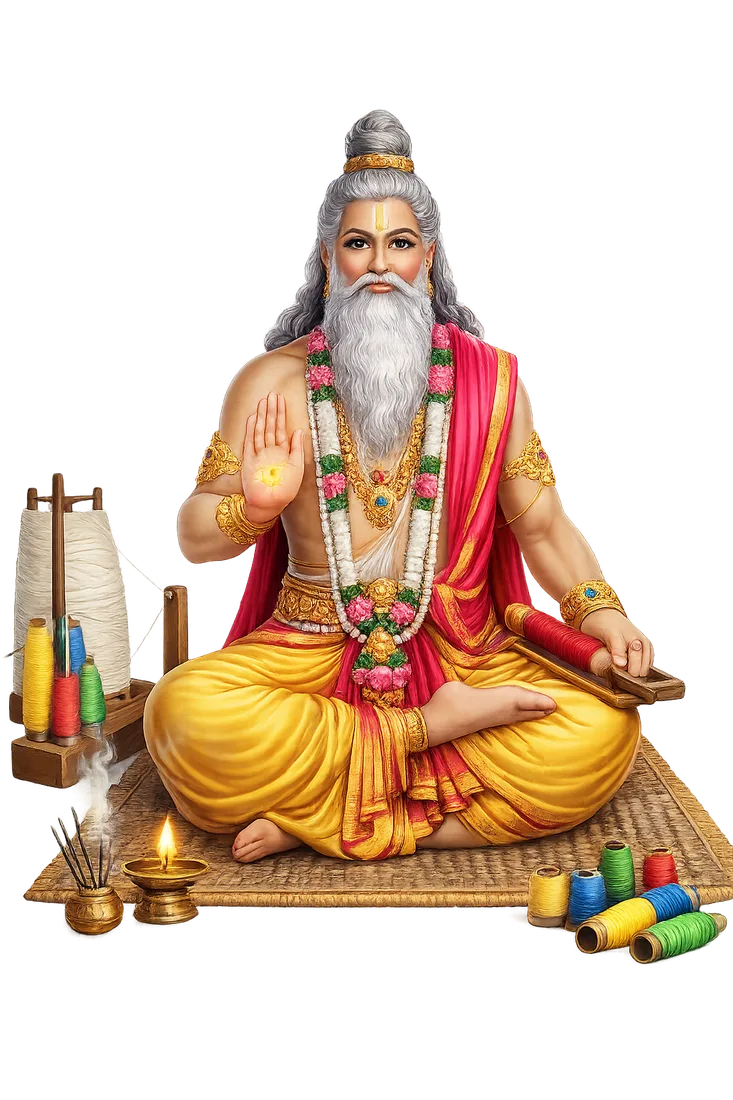
By tradition, the Padmashali community traces its very origins to the sage Bhavana Rishi (also honoured as Bhavana Maharshi), revered as its ancestral progenitor and the first weaver. These accounts are the community's cherished lore rather than documented history, and are shared here in that spirit of reverence.

Bhavana Rishi, also honoured as Bhavana Maharshi — the ancestral sage revered by the Padmashali weaving community as its progenitor and the first weaver

Bhavana Rishi, the sage of the loom

As the community's cherished legend tells it, the great sage Markandeya performed a sacred fire ceremony, and from its holy flames arose Bhavana Rishi, bearing thread drawn from the lotus — the padma said to have blossomed from the navel of Lord Vishnu. From that divine fibre he is said to have woven the first cloth to clothe the world, the sacred craft that gives the community its very name: Padma, the lotus, and Shali, the weaver. Tradition names his consort as Bhadravathi, a daughter of Surya the Sun.

The lineage of gotras, and the sage's honour

By tradition Bhavana Rishi's sons became the ancestors of the community's many gotras — the lineages through which Padmashali families still trace their descent and arrange their alliances — while Markandeya is revered as the elder sage of the line. Bhavana Rishi is honoured as the community's own guardian sage, remembered at family shrines and at temples dedicated to him across Andhra Pradesh and Telangana, and celebrated each year in his own festival, Bhavana Rishi Jayanti.

The deities Padmashali families hold dear

Alongside their ancestral sage, Padmashali households honour the wider Hindu tradition in the way of their own families. Many are devoted to Lord Venkateswara of Tirupati and to Goddess Lakshmi in her form of Padmavathi; the community's Shaiva families revere Lord Shiva and the Mother Goddess in forms such as Chamundeshwari and Yellamma; and every household keeps its own kuladevata, the family deity handed down through the generations.

  • Bhavana Rishi and Markandeya — the community's ancestral sages
  • Lord Venkateswara and Goddess Lakshmi (Padmavathi) — cherished by many families
  • Lord Shiva and the Mother Goddess Durga — revered in the community's Shaiva households
  • The family kuladevata — each household's own guardian deity

These sages, deities, and sacred places are mentioned with reverence and gratitude alone, as the community's living tradition. No endorsement is implied, and devotional matters rest with each family and its elders.

Understanding the traditions

Gotra and surname: how Padmashali families trace and match lineage

Before education, often before the horoscope itself, a Padmashali alliance turns to the family's gotra and surname. These are the markers families use to keep an alliance outside the same ancestral line.

Marriage outside the same gotra

Two families of the same gotra are traditionally treated as one ancestral line, so alliances are sought outside it, while the match stays within the Padmashali community. The community frames its descent through the gotras held to come down from Bhavana Rishi's sons, and every family also carries the shared Bhargava name alongside its own gotra.

  • Same gotra is avoided, like a shared ancestral line
  • The match stays within the community; the gotra is checked across families
  • Surname is weighed together with the gotra in the same check

The surname your family carries

Alongside the gotra, families compare the surname — the old house names (inti-peru) of the community, such as those that survive today as family surnames. Here both are recorded as your family's own, in your own words.

  • Enter your gotra and your surname exactly as your family names them
  • Old Padmashali house names survive today largely as surnames
  • The check your elders rely on can happen before any contact is exchanged

Households differ in how strictly they weigh the lineage line — some settle it first, others read it alongside the horoscope and the family's overall comfort.

A heritage of the handloom

The looms of the Telugu country

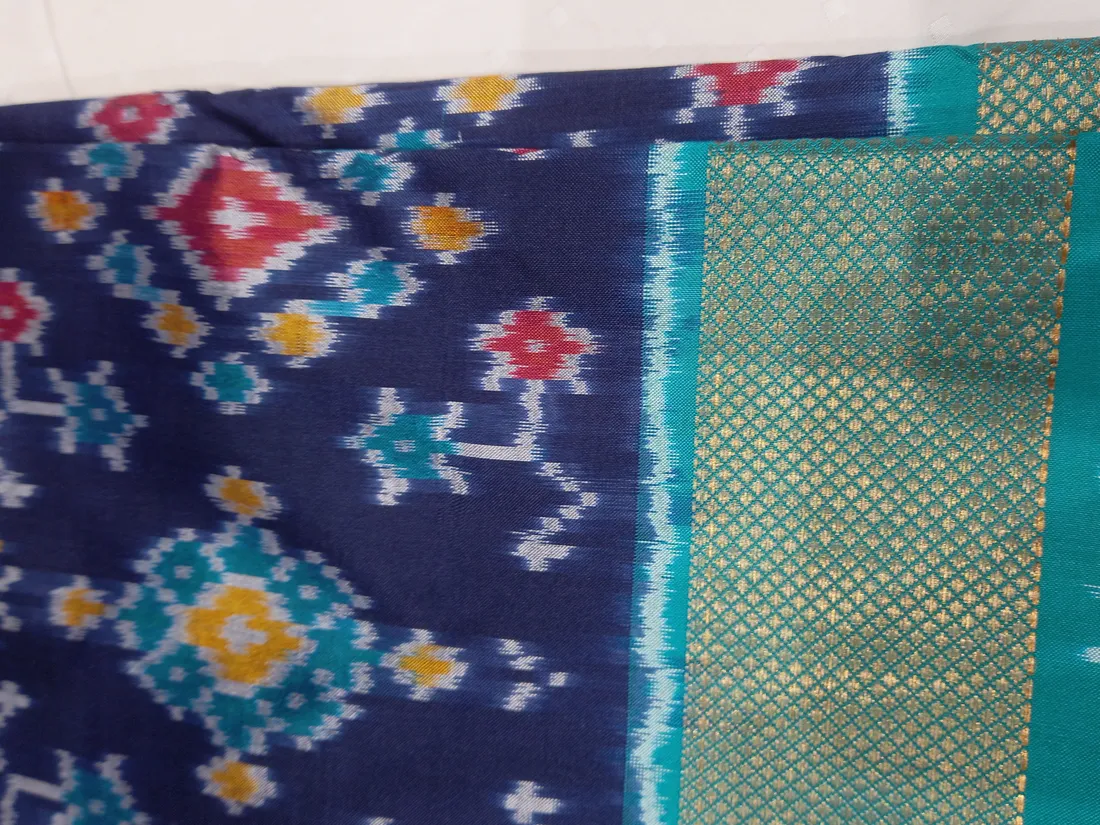
The Padmashali legacy is written in cloth. From the tie-and-dye ikat of Pochampally to the silk-bordered sarees of Gadwal and Narayanpet, the community's looms have given the Telugu country some of its most treasured handloom traditions.

The Ikat of Pochampally

The tie-and-dye Pochampally Ikat — woven at Bhoodan Pochampally in Telangana and honoured with a Geographical Indication — is among the community's proudest crafts, its patterns dyed into the thread itself before ever a shuttle is thrown.

Gadwal and Narayanpet sarees

The community's handloom legacy also carries the Gadwal saree, with its cotton body and silk-and-zari border, and the Narayanpet saree, with its checked body and temple-inspired border — sarees a Telugu household treasures for a lifetime.

This craft heritage is recalled with pride and gratitude, as the community's own contribution to the culture of the land. No ranking of any community is intended.

Questions families ask

Common questions from Padmashali families

Will we only see Padmashali profiles here?

Yes. Registering through this page places your profile in the dedicated Padmashali section — the Padmashali (Padma Sale) and Shettigar families — and every profile you see, match with, or contact belongs to it.

We are Shettigar from coastal Karnataka — is this our section?

Yes. Shettigar is the community's regional name in coastal Karnataka, and Shettigar families are at home in this Padmashali section. You can register and search here, with your gotra, surname, and native region on every profile.

How is our family's lineage recorded?

Lineage is recorded as free text, so you can enter your gotra and your surname exactly as your family names them. Alliances traditionally avoid the same gotra, and there is no single fixed list imposed on the community.

Will our phone number be visible to everyone?

It is not shown openly on your profile. A member who wants to take an introduction forward can see your contact through the app's Reveal Contact feature and reach you directly, and Government-ID-verified badges help you know who you are speaking with.

Next step

Register or login when your family is ready to continue

Create your account and step into the Padmashali section of Sri Guru Raghavendra Matrimony, where gotra and surname, native region, and family background are part of every profile — for the weaving families of the Bhavana Rishi tradition, and your family sets the pace.