Sri Guru Raghavendra Matrimony™ emblem
SRI GURU RAGHAVENDRA MATRIMONY™

Rama's name, a lamp kept lit, and a kitchen at Virpur

Lohana Matrimony

The families this page is for are the Lohana households of Saurashtra and Kutch — Ghoghari, Halai and Kutchi among them — and the families who took the name on to Mumbai, East Africa, Britain and beyond. Their heritage keeps returning to three things: Rama, whose son Lava the community traces itself to by tradition; Dariyalal, lord of the waters, for whom Lohana villages kept a lamp burning day and night; and Jalaram Bapa of Virpur, whose kitchen has fed whoever came to it since 1820.

Lohana

Begin when you are ready

Register now, or read about Lohana heritage first

Creating an account takes a few minutes. If your family prefers to understand the space first, the sections below walk through Rama's son Lava and the community's beginning, Ghoghari, Halai and Kutchi families, Jalaram Bapa of Virpur, Dariyalal and the lamp kept lit, and the nukh and the mosal.

Registrations from this page stay within the Lohana community — every profile your family sees and contacts belongs to it.
Rama's name, the lamp and the kitchen

A heritage your family carries every day

Lohana households have long been at home in the Halar country around Jamnagar, in Rajkot, Porbandar and Junagadh, around Bhavnagar and across Kutch, and in Mumbai.

From Jamnagar and Rajkot many went on to East Africa, and from there to Britain, Canada and the United States — and Jalaram Bapa's day went with them.

So an alliance here begins with what a Lohana household names first — the nukh, the mosal and the goddess the house keeps — with the dignity your family expects.

What families often ask first

What families often value first

  • Your nukh, your mother's family's nukh and your kuldevi sit on the profile, each written the way your family says it.
  • Ghoghari, Halai or Kutchi — your family's own word — can be written beside them.
  • Search by native place across Jamnagar, Devbhumi Dwarka, Rajkot, Porbandar, Junagadh, Bhavnagar, Kutch, Ahmedabad, Mumbai City and beyond.

What your family will find inside

Both sides of the family, read at a glance

These are the details Lohana households settle first — and they are visible before any contact is exchanged.

Government ID verified members stand out

Members who complete Government ID verification carry a clear mark, giving your family added reassurance at a glance.

Nukh and mosal, in your own words

Where your family names them, the nukh of your father's line and the nukh of your mother's family sit on the profile, so two families can see from the first look whether their lines are apart.

Filter by native place and family origin

Narrow the search by native place — Jamnagar, Devbhumi Dwarka, Rajkot, Morbi, Porbandar, Junagadh, Amreli, Bhavnagar, Kutch, Ahmedabad, Vadodara, Mumbai City and many more.

Education, work, and family background together

Degrees, professions, and family character read clearly on every profile, in the same order elders weigh an alliance.

Contact details are not shown openly

Phone numbers and email are not shown openly on profiles. A member uses the Reveal Contact feature to see another member's details and reach out directly when they are ready to take an introduction forward.

Interest is never lost

Shortlists and the profiles your family has already opened stay saved, so you can return to a promising profile after the household has talked it over.

Built around how Lohana alliances actually happen

Whether your family is in Rajkot, Mumbai, Nairobi or London, the things that settle it — the nukh, the mosal, the kuldevi and where your people come from — are always in view.

Why families feel at ease

Why Lohana families feel at home

The details that decide an alliance sit together in one place, presented the way your family would present them.

Ghoghari, Halai or Kutchi — said your way

Many Lohana households say first where their people come from. Write it the way your family says it, and every family that opens your profile will read it there, beside the native district that helps a family looking among its own to find you.

Your mother's side counts too

Lohana families have long looked at the mother's family as well as the father's before agreeing to a match. Both nukhs have a place on the profile, so that part of the conversation is settled early.

Comfortable for parents and members alike

Whether the search is led by a parent, a sibling, or the member themselves, the profile reads clearly for all of them.

Move at your family's pace, with tradition honoured up front and you reach out when your family is ready.

The community's beginning

Rama's name in the line

Where does the community begin? In many Lohana homes, the answer is the Ramayana.

Lava's line

By tradition the community traces itself to Lava, the son of Rama and Sita, and many families call themselves Raghuvanshi, of Raghu's line, for that reason. Some households hold the Ramayana as the story of their own beginning.

Rama, first, in a Kutch home

An account of the Lohana families written a century ago notes that the Lohana households of Kutch worshipped Rama by preference — because he is the father of Lava.

This is the beginning many Lohana homes tell, and it is kept here as their tradition.

Where a family's people come from

Ghoghari, Halai and Kutchi

The families this page is for are the Gujarati- and Kutchi-speaking Lohana households of Saurashtra and Kutch, wherever they live now.

Your family's own word

Families often say where their people come from: Ghoghari, a name that recalls the old port of Ghogha near Bhavnagar; Halai, for the Halar country around Jamnagar; Kutchi, for Kutch. These are your family's own words, and every one of them belongs here.

The Lohana name, carried in Sindh too

Many Sindhi families carry the Lohana name as well, and Sindhi households have a page of their own here.

Mumbai, and the native place you keep

Lohana families in Mumbai opened a hostel for their students in a single room at Bhuleshwar in 1904, with seven students, and it still helps Lohana boys and girls through their studies. Wherever your family lives now, its native place is the Indian district its people come from.

Which word a family uses is its own to choose, and none of them stands above another.

The saint of Virpur

Jalaram Bapa of Virpur

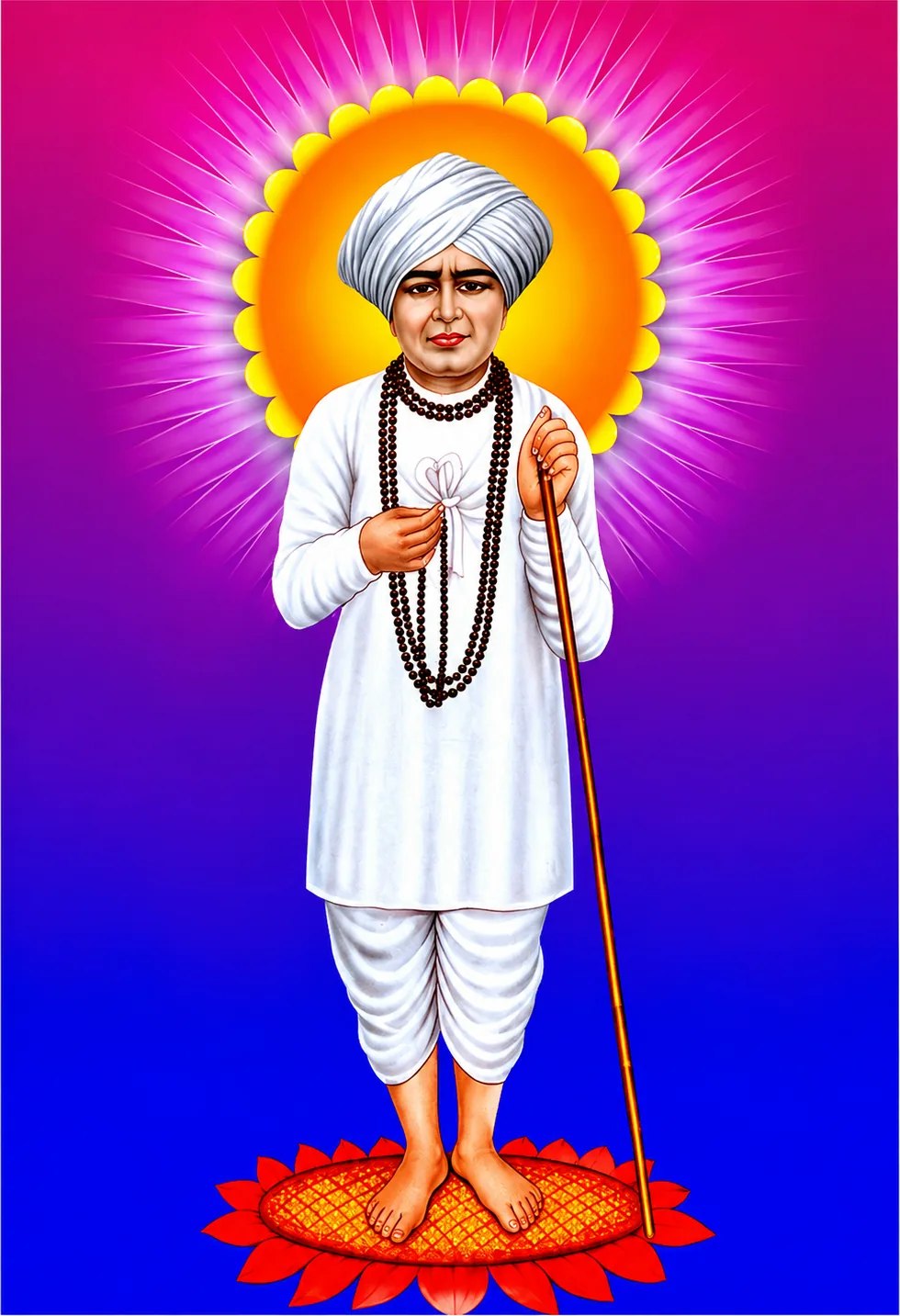
Jalaram Bapa was born into a Lohana family at Virpur, in Rajkot district, in 1799, and the kitchen he opened there still feeds everyone who comes.

A devotional painting of Jalaram Bapa in white, a rosary of beads at his neck and a staff in his hand, standing on a red lotus before a golden halo

Rama's name, from a boy

His parents, Pradhan and Rajbai Thakkar, watched him take to Rama's name as a child, and he found his teacher in Bhoja Bhagat of Fatehpur, a farmer and poet whose songs are still sung.

Why he agreed to marry

As his life is told, he wanted only to pray, and his father and uncle answered him with a picture of a household: with a home of your own you can give water to the thirsty and a meal to a stranger, you can feed the doves and the sparrows, and even the ants find food at your door. In 1816 he married Virbai of Atkot.

The kitchen he and Virbai kept

In 1820, with his teacher's blessing, he opened a sadavrat, a vow to feed whoever came, and Virbai worked it beside him. It still serves every visitor, every day of the year, and since 2000 the temple at Virpur has accepted no donations, in cash or in kind.

  • Born at Virpur, Rajkot district, in 1799
  • Married Virbai of Atkot, 1816
  • The sadavrat, open since 1820
  • No donations accepted at Virpur since 2000

Jalaram Jayanti

His day falls on the seventh of the bright half of Kartik, a week after Diwali, and families of many communities keep it — at Virpur, and at Jalaram temples far from Gujarat.

Jalaram Bapa belongs to everyone who comes to Virpur. He is told here as Lohana households tell him.

Lord of the waters

Dariyalal, and the lamp kept lit

Many Lohana households of Saurashtra and Kutch keep Dariyalal, lord of the waters, close to the heart of the family's devotion.

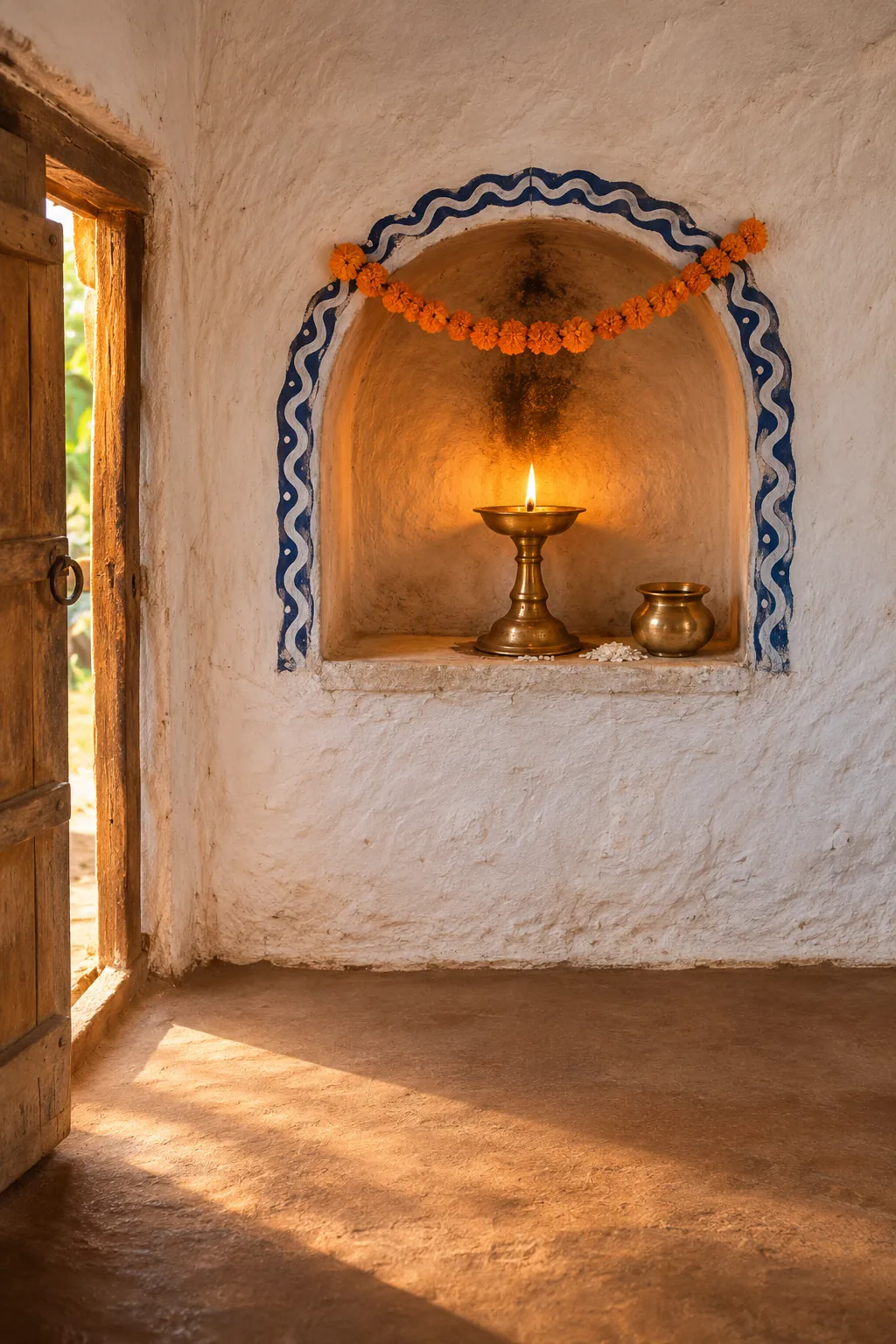
A brass lamp of ghee burning in the niche of a small lime-washed village shrine, morning light falling through the open door — the lamp Lohana villages kept lit for Dariyalal

A lamp in the village

An account of Kutch written in 1880, and later accounts of Gujarat, record that the Lohana villages there kept a place in his honour, where a lamp fed with ghee burned day and night, and a festival in the month of Chaitra.

Chaitri Bij

His day is Chaitri Bij, the second of the bright half of Chaitra, kept with darshan, aarti and a meal shared at the mahajan wadi.

Jalaram beside him

In many Lohana temples of Dariyalal, Jalaram Bapa is honoured beside him.

Dariyalal is honoured by more than one community, and by more than one name. This page tells only how Lohana households keep him.

How a family is known

Your nukh, and your mother's

A Lohana family knows two names before it agrees to a match: its own nukh, and the nukh of the mother's family, its mosal.

Your nukh

The nukh is the clan of your father's line, an old clan name worn down over the years into a family name. Many families write Thakkar as their surname and keep the nukh beside it, so the profile asks for the nukh itself and guesses nothing from a surname.

Your mother's nukh, the mosal

Lohana families have traditionally kept a match away from the mother's side as well — her close kin, and her own family's nukh. That nukh, your mosal's, has its own place on the profile.

The kuldevi, and a gotra if you keep one

Many families say each nukh keeps its own kuldevi, the family goddess, and her name can stand beside your nukh on the profile, with a gotra too where a family keeps one. Any of these may be left blank.

Practice differs from one family to another — this is heritage held with pride, not a single rule book.

Questions families ask

Common questions from Lohana families

Will we only see Lohana profiles here?

Yes. Registering through this page places your profile in the Lohana community — Ghoghari, Halai and Kutchi families among them — and every profile you see, match with, or contact belongs to it.

How is our family's lineage recorded?

Lohana families have traditionally looked at two lines before a match: the father's nukh, outside which a marriage is made, and the mother's family, the mosal. The profile has a place for each nukh, and for the kuldevi your house keeps — and for a gotra if your family names one. Many families write Thakkar as their surname and keep the nukh beside it, so the nukh is asked for in its own right and nothing is guessed from a surname. You may leave any of it blank.

We are Ghoghari (or Halai, or Kutchi). Is this our page?

Yes. Ghoghari, Halai and Kutchi are the words Lohana families use for where their people come from, and all three are at home here. Write yours on your profile the way your family says it, and give your native district — Bhavnagar, Jamnagar, Kutch or wherever your people are from — so families who look first among their own can find you.

We are Sindhi Lohana. Is this our page?

Many Sindhi families carry the Lohana name too. This page is for the Gujarati- and Kutchi-speaking Lohana families of Saurashtra and Kutch; if yours is a Sindhi family, Sindhi households have a page of their own here, and you are welcome there.

Will our phone number be visible to everyone?

It is not shown openly on your profile. A member who wants to take an introduction forward can see your contact through the app's Reveal Contact feature and reach you directly, and Government-ID-verified badges help you know who you are speaking with.

Next step

Register or login when your family is ready to continue

Create your account and step into the Lohana space on Sri Guru Raghavendra Matrimony, where your nukh, your mosal and the kuldevi your house keeps can sit on your profile from the first day — and your family sets the pace.