Sri Guru Raghavendra Matrimony™ emblem
SRI GURU RAGHAVENDRA MATRIMONY™

Kerala's families of healing, learning and devotion

Ezhava Matrimony

A community that has kept a long inheritance of healing, of learning and of devotion — and kept it in its own houses, with its own hands — deserves a matrimony space that asks the right questions first: the illam your family names, the kiriyam in Malabar, native district, and family character, all on the profile from the start.

EzhavaThiyyaOther Ezhava or Thiyya community

Begin when you are ready

Register now, or read about the heritage first

Creating an account takes a few minutes. If your family prefers to understand the space first, the sections below walk through the names the community carries, the illam named at an alliance, its long inheritance of healing and learning, and the Guru and the hill at Sivagiri.

Registrations from this page stay within this community — every profile your family sees and contacts belongs to the community.
A heritage of healing, of learning, and of the Guru's word

A heritage your family carries every day

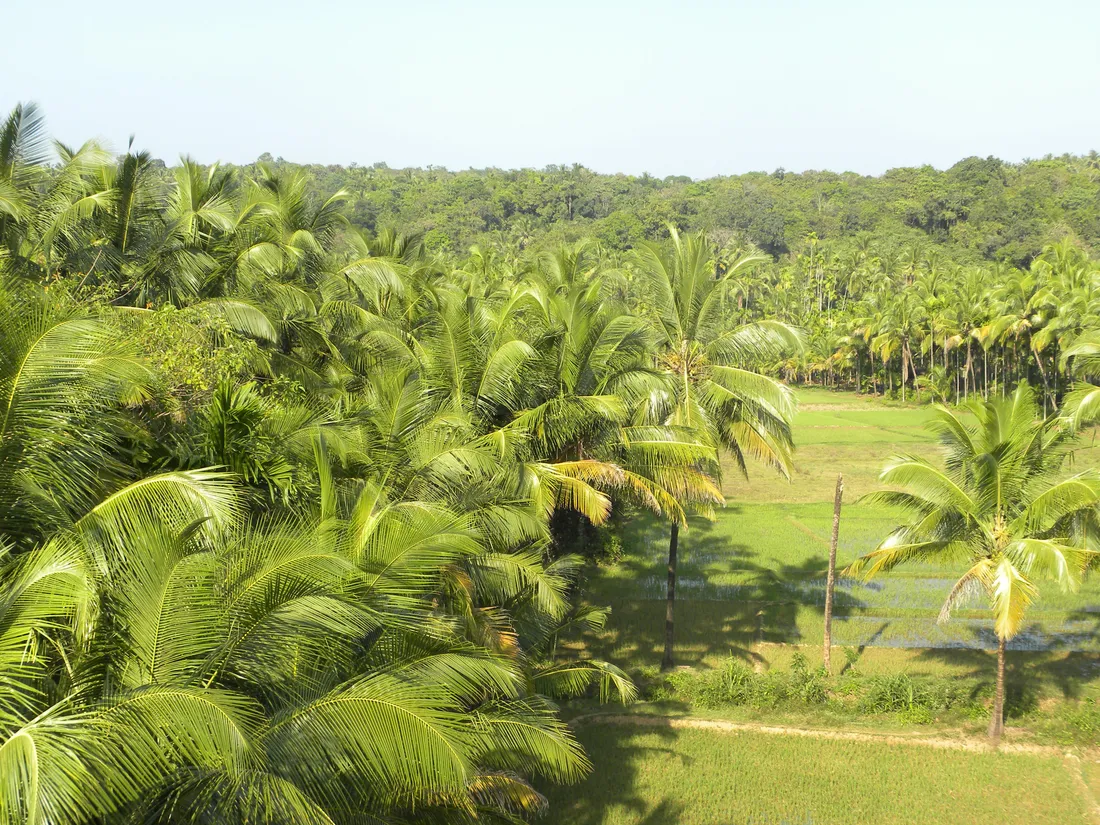
From the coconut groves of Travancore to the paddy country of Malabar, Ezhava families have kept a long inheritance of healing, of learning, and of devotion — and have kept it in their own houses, with their own hands. Medicine and astrology were the community's own professions, and its households were educated in Sanskrit.

In Kerala this community is called Ezhava in Travancore and Kochi, and Thiyya in Malabar. Families use the name their own region has always used, and on this site you can choose either — Ezhava or Thiyya — and be listed under the name your family answers to. When an alliance is settled, the oldest question is still asked — what is your illam, and what is your kiriyam? — and the answer names the line the family belongs to; bride and groom belong to different illams.

Sri Guru Raghavendra Matrimony presents those details on every profile, in the order your elders actually weigh them — so an alliance begins informed, and with the dignity your family expects.

What families often ask first

What families often value first

  • Profiles state the illam your family names, the kiriyam where Malabar families keep one, and native district up front, so your family knows the essentials before the first conversation.
  • A Malabar family that has always said Thiyya is written as Thiyya here, and a Travancore family as Ezhava — the name your family answers to is the name that stands on the profile, and the name other families will find you by.
  • Registrations from this page stay within this community, so every profile your family considers belongs to it.

What your family will find inside

Everything your family checks, before the first phone call

These are the details Ezhava and Thiyya households settle first — and they are visible before any contact is exchanged.

Government ID verified members stand out

Members who complete Government ID verification carry a clear mark, giving your family added reassurance at a glance.

Filter by illam, region, and native place

Narrow the search by the illam a family names, by the kiriyam where Malabar families keep one, and by native district and family origin.

Education, work, and family background together

Degrees, professions, and family character read clearly on every profile, in the same order elders weigh an alliance.

Lineage recorded your way

Write your illam in your own words, exactly as your family names it, with suggestions offered for Travancore and for Malabar — and leave it blank if your family no longer names one.

Contact details are not shown openly

Phone numbers and email are not shown openly on profiles. A member uses the Reveal Contact feature to see another member's details and reach out directly when they are ready to take an introduction forward.

Interest is never lost

Shortlists and the profiles your family has already opened stay saved, so you can return to a promising profile after the household has talked it over.

Built around how Ezhava and Thiyya alliances actually happen

Whether your family's search stays within one district of Kerala or reaches to Bengaluru, the Gulf and beyond, the details that matter — the illam, the kiriyam and the native district — are always in view.

Why families feel at ease

Why Ezhava and Thiyya families feel at home

The details that decide an alliance sit together in one place, presented the way your family would present them.

Raised on the Guru's teaching

Your search stays among families of this community, so every introduction starts from shared roots in Kerala.

The name your family answers to

Ezhava and Thiyya each stand in their own right, so a Kannur family is never asked to answer to a Travancore name, and a Kollam family is never asked to answer to a Malabar one.

Comfortable for parents and members alike

Whether the search is led by a parent, a sibling, or the member themselves, the profile reads clearly for all of them.

Move at your family's pace, with tradition honoured up front and you reach out when your family is ready.

One community, its own names

Ezhava in the south, Thiyya in Malabar

In Kerala this community is called Ezhava in Travancore and Kochi, and Thiyya in Malabar. Families use the name their own region has always used, and on this site you can choose either — Ezhava or Thiyya — and be listed under the name your family answers to.

The names families use

Ezhava — also written Izhava, Ezhavar or Ilavan — is the name used across Travancore and Kochi, from Thiruvananthapuram and Kollam through Alappuzha, Kottayam, Ernakulam and Thrissur. Thiyya is the name used across Malabar, in Kannur, Kozhikode, Wayanad, Malappuram and Palakkad.

  • Ezhava, Izhava, Ezhavar, Ilavan — Travancore and Kochi
  • Thiyya — the districts of Malabar
  • Both are first-class choices, and both are searchable by name
  • Chova, Chogan and their variants are not used on this site

Names your family may also carry

Channan, Asan, Vaidyar, Muppan, Kurup and Panicker are honours and family names rather than communities — Thurston records several of them as honours conferred on families by the sovereigns of Kerala. Panicker is an honorific title, not a community name — it was conferred on distinguished families across several different Kerala communities, and by itself it tells you nothing about which community a family belongs to.

  • Channan, Asan, Vaidyar, Muppan, Kurup, Panicker are titles or family names
  • Asan comes from Acharya, a teacher
  • Vaidyar names the family's calling in medicine
  • A surname does not tell you a family's community

If your family's name is not listed separately, Other Ezhava or Thiyya community keeps you within the same community space.

Understanding the traditions

The illam: the line named at an alliance

When an alliance is settled, the oldest question is still asked — what is your illam, and what is your kiriyam? — and the answer names the line the family belongs to.

Different illams, on both sides

Bride and groom belong to different illams; the illams are the exogamous lines of the community, and families name them when a match is discussed. The name-sets are not the same in the south and in the north, so the suggestions offered follow your family's own region — and you can always write your own instead.

  • Bride and groom belong to different illams
  • Travancore and Kochi families name illams of their own
  • Malabar families name a different set, and a kiriyam beside it
  • No list is complete — write your own

The horoscope, and the star of your birth

The two horoscopes are still read together for porutham, the agreement between them, on twenty-one points, before a lamp of five, seven, nine or eleven wicks. Families still keep the day of their birth star as a day of worship each month.

Households differ in how they weigh these — some settle the illam first, others read it alongside the horoscope and the family's overall comfort. Many families today no longer name an illam at all, and the field is never required.

A heritage of healing and learning

The physicians, and the plants of Malabar

Medicine and astrology were the community's own professions, its households were educated in Sanskrit, and one Ezhava physician's knowledge stands printed in one of the great books of the world.

Itty Achudan and the Hortus Malabaricus

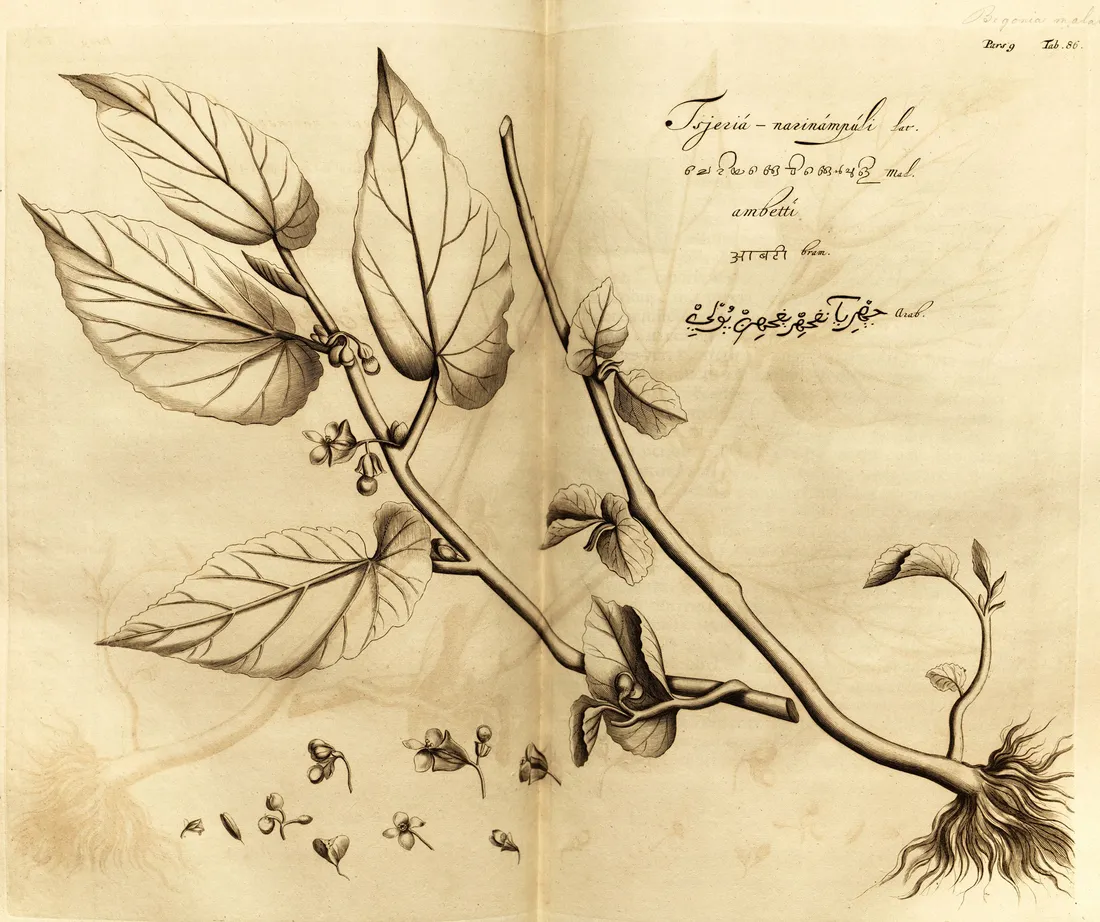
In 1675 an Ezhava physician of the Kollatt family, Itty Achudan, chose the plants and dictated their properties in Malayalam for the Hortus Malabaricus, the great treatise on the plants of Malabar compiled under Hendrik van Rheede and published in twelve volumes from 1678. His signed certificate, dated the twentieth of April that year and written in the Kolezhuthu hand, stands printed in its first volume.

  • Born at Cherthala; of the Kollatt family of Kadakkarappally
  • He selected the plants and gave their properties in Malayalam
  • His certificate is printed in Volume One, in Kolezhuthu script
  • The plant names stand in Malayalam beside the Latin

The vaidya houses, and a poet of Kerala

Families of vaidyars — physicians — carried their learning from one generation to the next, and the honorific Asan, from Acharya, a teacher, is among the commonest the community holds. Kumaran Asan, one of the modern triumvirate of Malayalam poetry and author of Veena Poovu, Nalini, Leela and Chinthavishtayaya Seetha, was given the title Mahakavi by Madras University in 1922.

Practice and emphasis differ from one family to another — this is heritage held with pride, not a single rule book.

A heritage of devotion

The deities of the house and the village

Devotion here is close to home — the Devi of the family and the village, the sun at its rising, and the small shrine kept in memory of a forebear.

Bhagavati, and the deities families keep

Bhagavati — Bhadrakali — has long been the deity of the family and of the village. The women of the house worship Gauri on Mondays and Fridays, the sun is honoured at dawn, and families keep the Anchu Tampurakkal, the five lords, who have a temple at Mayyanad in Quilon, and in Central Travancore the Kayalil Daivam.

  • Bhagavati and Bhadrakali, of the house and the village
  • Gauri, worshipped by the women on Mondays and Fridays
  • The sun, honoured at its rising
  • The Anchu Tampurakkal, with their temple at Mayyanad

The house that faces east, and the tekketu

The old family house faces east, with the arappura at its heart, and in some houses a tekketu stands to its south — a small shrine raised in memory of a forebear remembered for learning or for piety, holding a seat, a conch, a cane and a small bag of ashes, kept scrupulously clean, where the ancestors were honoured on their fixed days. Families of the community have long held their own standing rights at the shrines of Saktikulamgara in Karunagappally and Chettikulangara in Mavelikara.

These deities, shrines and sacred places are mentioned with reverence and gratitude alone, as heritage the community holds dear. No endorsement is implied, and devotional matters rest with each family and its elders.

Malabar, and the deity the families keep

Sree Muthappan, and the shrine at Parassinikkadavu

In North Malabar devotion has its own centre. Thiyya families revere Sree Muthappan as the ancestral deity of the community — the Kulapoorvikan, the forebear of the line — and his shrine stands at Parassinikkadavu on the bank of the Valapattanam river.

Muthappan, honoured as the forebear of the line

Sree Muthappan is revered as the Kulapoorvikan, the ancestral forebear of the Thiyya community of Malabar. He is worshipped through the Muthappan Theyyam, which appears in two forms, Thiruvappana and Vellattam, and at Parassinikkadavu the pujas and rituals of the shrine are conducted by members of the community itself. The theyyam is offered there through all the days of the year rather than in one festival season alone.

  • Sree Muthappan, revered as the community's ancestral deity
  • The Muthappan Theyyam, in its two forms — Thiruvappana and Vellattam
  • The shrine's pujas and rituals conducted by the community's own families
  • Theyyam offered through all the days of the year

Parassini Madappura, on the river

The Parassini Madappura Sree Muthappan temple at Parassinikkadavu in Kannur district stands on the bank of the Valapattanam river and is counted among the most revered pilgrim places of northern Kerala. The theyyam there is performed by the Vannan community, and the shrine keeps no restriction on who may come to it — people of every religion and background are received, which is much of why Malabar holds it so dear.

  • Parassinikkadavu, Kannur district, on the Valapattanam river
  • Among the most revered pilgrim places of northern Kerala
  • The theyyam performed by the Vannan community
  • Open to visitors of every religion and background

This deity, shrine and its observances are mentioned with reverence and gratitude alone, as heritage the community holds dear; this space is not affiliated with any of them.

The Guru and the hill

Sree Narayana Guru, and Sivagiri

Philosopher, spiritual teacher and poet, born in 1856 into an Ezhava family of ayurvedic physicians, Sree Narayana Guru gave Kerala the line his people still carry.

One caste, one religion, one God for man

The Guru consecrated a Siva temple at Aruvippuram in 1888 and set his own verse there — Jaathibhedam Mathadwesham, Eathumillathey Sarvarum, Sodarathwena Vaazhunna, Mathrukasthanamanithu — a model place, he wrote, where all live together in brotherhood, without distinction and without enmity. He left some forty-five works in Malayalam, Sanskrit and Tamil, among them the Daiva Dasakam and the Atmopadesa Satakam, and he died on the twentieth of September 1928.

  • Born 1856; a family of ayurvedic physicians
  • The Siva temple at Aruvippuram, consecrated 1888
  • Some forty-five works in Malayalam, Sanskrit and Tamil
  • Guru Jayanti, kept on the Chathayam star in Chingam

Sivagiri, and the eight subjects

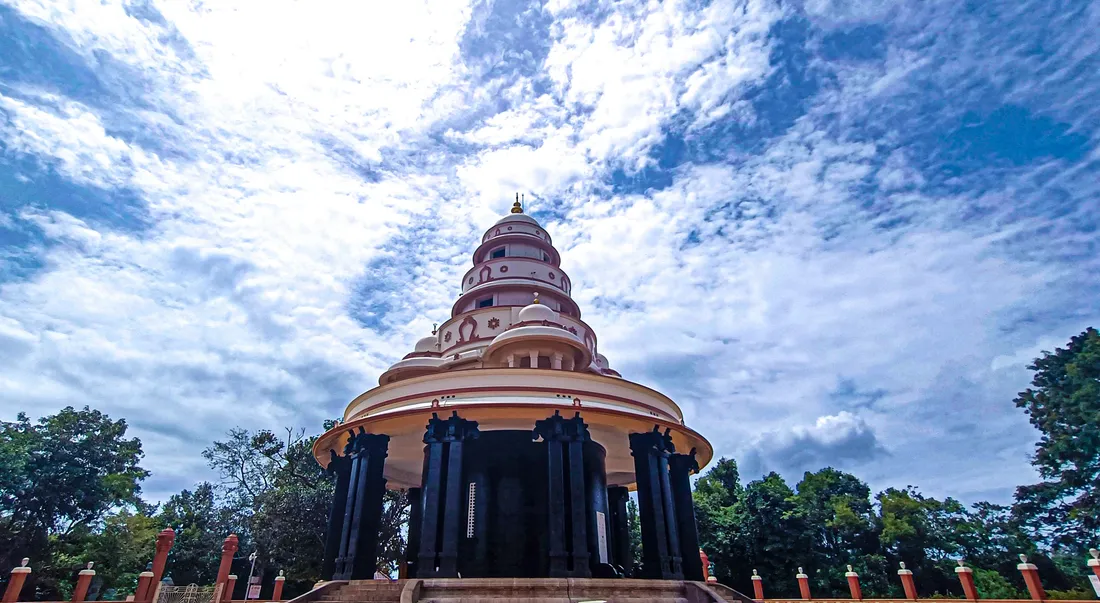
At the turn of every year, in the Malayalam month of Dhanu, pilgrims in yellow climb Sivagiri after ten days of purification, keeping the eight subjects the Guru set for them — education, cleanliness, devotion to God, organisation, agriculture, trade, handicrafts and technical training. He came to Sivagiri at Varkala in 1904, consecrated the Sree Sarada temple there in April 1912, and his samadhi is on the hill. The Sree Narayana Dharma Paripalana Yogam, registered on the fifteenth of May 1903 at Aruvippuram, runs schools, colleges and hospitals across Kerala.

The order the Guru founded, and the temples of Malabar

In January 1928, months before he passed away, the Guru founded the Sree Narayana Dharma Sanghom — the order of sanyasis seated at Sivagiri — and its object was set down as the propagation of his teaching and service to humanity. Membership of the order turned on renunciation rather than on birth, and among his sanyasi disciples were Bodhananda Swami, who became its first President, and Nataraja Guru, who translated the Guru's principal works into English and founded the Narayana Gurukula. The Sanghom today keeps mutts and temples and runs schools and hospitals. In Malabar the Guru's own hand is on two temples the community still gathers at: the Sree Jagannatha temple at Thalassery, raised under his leadership in February 1908, and the Sree Sundareswara temple at Talap in Kannur, consecrated by him on the eleventh of April 1916.

  • The Sree Narayana Dharma Sanghom, founded January 1928, seated at Sivagiri
  • Sree Jagannatha temple, Thalassery — February 1908
  • Sree Sundareswara temple, Talap, Kannur — 11 April 1916
  • The Narayana Gurukula, founded by Nataraja Guru as an order of study

Aluva, and a gathering of every faith

At Aluva the Guru founded the Advaita Ashramam in 1913, with a Sanskrit school attached so that the language of the scriptures could be taught to students who sought it. There, in the 1920s, he convened a gathering of all religions, with scholars of Hinduism, Buddhism, Christianity and Islam taking part — said to be the first of its kind in Asia. His message to it was a single line: not to argue and win, but to know and to inform.

The Guru, the hill and its institutions are mentioned with reverence and gratitude alone, as heritage the community holds dear; this space is not affiliated with any of them.

Craft, and the year's own days

The skill of the hands, and the days families keep

Cloth, mats, tiles and rope were made here with remarkable skill, and the year turns on days the community keeps as its own.

The skill of the hands

Several kinds of cloth were woven here, and mats, tiles and ropes made with remarkable skill; the community were the chief distillers of lemon-grass oil in Travancore. The old kalari attached to an ancestral house was the family's training ground, where its tutelary images were kept, and the teacher there carried the honorific Asan.

Poorakkali, Mamachchirappu, and the sadya

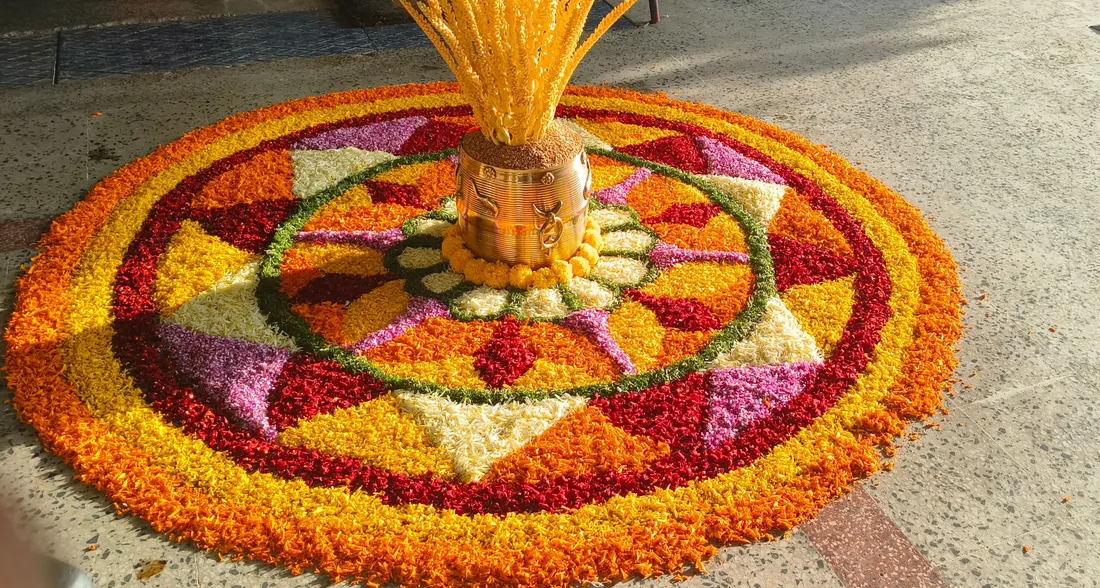
Across North Malabar the men keep Poorakkali in the Bhagavathy temples through the nine days of Pooram in Meenam, March into April, dancing around a tall many-tiered nilavilakku with singing, clapping and footwork kept in time. In Central Travancore families keep Mamachchirappu in Vrischikam, November into December — an evening bath, an hour addressing the deities by name, then an offering of tender coconuts, fruit and fried grain, held for anywhere from twelve to forty-one days as the household finds convenient. The sadya, the vegetarian feast on a banana leaf at weddings and at Onam and Vishu, is shared with every Malayali family alike.

Festivals and their customs are cherished differently from one household to another; they are shared here as heritage the community holds dear.

Questions families ask

Common questions from Ezhava families

We are Thiyya — is this the right place for us?

Yes. Thiyya is a choice of its own here, not a label applied to you. In Kerala this community is called Ezhava in Travancore and Kochi, and Thiyya in Malabar; families use the name their own region has always used, and on this site you can choose either and be listed under the name your family answers to.

Will we only see profiles from this community here?

Yes. Registering through this page places your profile in the dedicated Ezhava and Thiyya section, and every profile you see, match with, or contact belongs to it.

How is our family's lineage recorded?

Your illam is written in your own words, exactly as your family names it, and Malabar families can record their kiriyam alongside it. Suggestions are offered for Travancore and for Malabar because the name-sets differ, but no list is complete, and you can always write your own. Many families today no longer name an illam, and the field is never required.

Our family name is Asan, Vaidyar, Kurup or Panicker — which community is that?

Those are honours and family names rather than communities — several were conferred on families by the sovereigns of Kerala. Panicker is an honorific title, not a community name — it was conferred on distinguished families across several different Kerala communities, and by itself it tells you nothing about which community a family belongs to. Your community is always what you choose on your profile; a surname is never used to decide it.

Will our phone number be visible to everyone?

It is not shown openly on your profile. A member who wants to take an introduction forward can see your contact through the app's Reveal Contact feature and reach you directly, and Government-ID-verified badges help you know who you are speaking with.

Next step

Register or login when your family is ready to continue

Create your account and step into the Ezhava and Thiyya section of Sri Guru Raghavendra Matrimony, where the illam your family names, the kiriyam in Malabar, native district and family background are part of every profile — and your family sets the pace.