Sri Guru Raghavendra Matrimony™ emblem
SRI GURU RAGHAVENDRA MATRIMONY™

The country, the river, and the family

Kamma Matrimony

A community whose name is carried by a whole country — Kammanadu, between the hills and the sea — whose families have farmed the Krishna and Godavari delta for generations, and who open an alliance with the gothram and the house name, deserves a matrimony space that asks the right questions first.

KammaKamma NaiduKammavar NaiduKamma Chowdary

Begin when you are ready

Register now, or read about the Kamma heritage first

Creating an account takes a few minutes. If your family prefers to understand the space first, the sections below walk through the Kammanadu country the community is named for, the titles its families carry, the gothram and inti-peru system, and the devotion and culture it holds dear.

Registrations from this page stay within the Kamma community — every profile your family sees and contacts belongs to the community.
A heritage of the land, the house name, and the family

A heritage your family carries every day

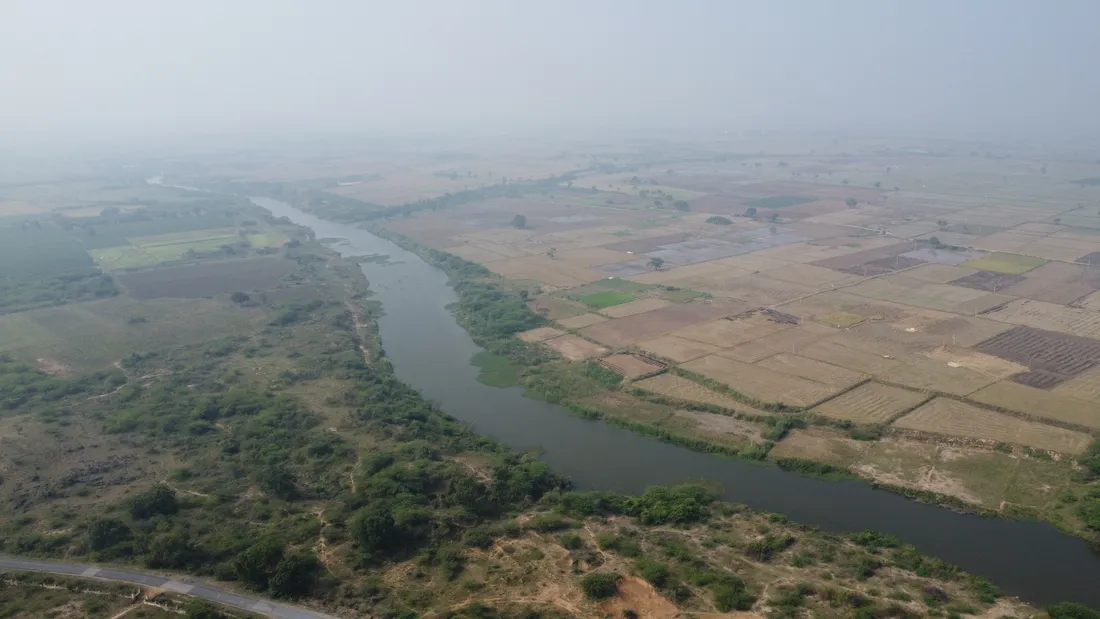
The Kamma community's roots are traced to the cultivators of Kammanadu — the old country of coastal Andhra that the historian K. Iswara Dutt described as the Narasaraopet, Sattenapalle, Bapatla and Ongole taluks, bounded by Srisailam to the west, Palnadu and Velanadu to the north, the Gundlakamma river to the south, and the Bay of Bengal to the east.

In different regions Kamma families carry different honoured titles — Chowdary across much of the Telugu country, and Naidu, with its Tamil form Naicker or Nayakar, in Rayalaseema and the Tamil districts. These are titles of address, shared with several other communities, not separate communities: a Kamma Naidu, a Kammavar Naidu and a Kamma Chowdary family are all of one and the same community.

Sri Guru Raghavendra Matrimony presents the gothram, the inti-peru and the native place on every profile, in the order your elders actually weigh them — so a Kamma alliance begins informed, and with the dignity your family expects.

What families often ask first

What families often value first

  • Profiles state the gothram and inti-peru, the native place and the family background up front, so your family knows the essentials before the first conversation.
  • Kamma families under every regional name — Kammavar, Kamma Naidu, Kammavar Naidu, Kamma Naicker and Kamma Chowdary — belong in this one section.
  • Registrations from this page stay within the Kamma community, so every profile your family considers belongs to the community.

What your family will find inside

Everything your family checks, before the first phone call

These are the details Kamma households settle first — and they are visible before any contact is exchanged.

Government ID verified members stand out

Members who complete Government ID verification carry a clear mark, giving your family added reassurance at a glance.

Filter by gothram, inti-peru, and native place

Narrow the search by the gothram and the house name, the native place, and family origin — the checks a Kamma family weighs first.

Education, work, and family background together

Degrees, professions, and family character read clearly on every profile, in the same order elders weigh an alliance.

Lineage recorded your way

Your gothram, your inti-peru and your surname are each recorded separately, in your own words, exactly as your family says them — with no catalogue to choose from and nothing guessed from anything else.

Contact details are not shown openly

Phone numbers and email are not shown openly on profiles. A member uses the Reveal Contact feature to see another member's details and reach out directly when they are ready to take an introduction forward.

Interest is never lost

Shortlists and the profiles your family has already opened stay saved, so you can return to a promising profile after the household has talked it over.

Built around how Kamma alliances actually happen

Whether your family's search stays within the delta districts or reaches across Rayalaseema, Telangana, the Tamil land, Bengaluru and beyond, the details that matter — the gothram, the house name and the native place — are always in view.

Why families feel at ease

Why Kamma families feel at home

The details that decide an alliance sit together in one place, presented the way your family would present them.

Kammanadu, and the name it carries

Your search stays among Kamma families, so an introduction begins on ground both households already share.

Gothram and house name, honoured up front

The gothram and the inti-peru are named on the profile itself, so what your family asks first is answered before any conversation begins.

Comfortable for parents and members alike

Whether the search is led by a parent, a sibling, or the member themselves, the profile reads clearly for all of them.

Move at your family's pace, with tradition honoured up front and you reach out when your family is ready.

Understanding the heritage

Kammanadu — the country the community is named for

Few communities can point to a whole country that carries their name. The Kamma heritage begins in Kammanadu, the old land of coastal Andhra between the hills and the sea, and in the delta country of the Krishna and the Godavari that its families have farmed for generations.

The old country and its bounds

The historian K. Iswara Dutt described Kammanadu as the Narasaraopet, Sattenapalle, Bapatla and Ongole taluks — bounded by Srisailam to the west, Palnadu and Velanadu to the north, the Gundlakamma river to the south, and the Bay of Bengal to the east. The region's name appears in Sanskrit as Karma-rashtra in inscriptions from the third century.

  • Kammanadu — the Narasaraopet, Sattenapalle, Bapatla and Ongole country
  • The Gundlakamma river to the south, the Bay of Bengal to the east
  • Karma-rashtra in Ikshvaku inscriptions of the third century

The name itself

The name is old and much discussed. In Telugu kamma is an ear ornament worn by women, and several stories recorded by Edgar Thurston in 1909 connect the community's name to one — told as folklore rather than documented history. Scholars, meanwhile, trace the name to the Kammanadu region itself: either to the two rivers that bounded it, or to the sanghakammas, the Buddhist monastic institutions once found across that country. Sources differ, and both readings are set down here, neither chosen over the other.

This heritage is recalled with pride and gratitude, as the community's own contribution to the life of the land. No ranking of any community is intended.

One community, the names families know

Who the Kamma community is

This space is for the Kamma community and the families who belong to it. Across the regions the community carries different honoured titles, and every one of them belongs here.

Titles of address, not separate communities

Chowdary is carried across much of the Telugu country, and Naidu — with its Tamil forms Naicker and Nayakar — in Rayalaseema and the Tamil districts. These are titles of address, shared with several other communities, and they never identify a community on their own. A Kamma Naidu, a Kammavar Naidu and a Kamma Chowdary family are all of one and the same community.

  • Kamma — the community's own name, everywhere
  • Kammavar / Kammavaru — chiefly the Tamil land
  • Kamma Naidu / Kammavar Naidu — Rayalaseema and the Tamil districts
  • Kamma Naicker / Kamma Nayakar — the Tamil land
  • Kamma Chowdary — coastal Andhra and Telangana

The older sections

The community's older records name two sections, the Gampa Chatu and the Goda Chatu, which in that time did not make alliances with one another. Whether that still holds is for each family to say, not for a website to declare. Families who know themselves by one of these names can record it; those who do not simply register as Kamma.

  • Gampa Chatu Kamma and Goda Chatu Kamma — recorded in 1909
  • Most families simply register as Kamma
  • Other Kamma community keeps every family among its own people

No ranking among any of these names is intended. Whether families of different titles or older sections make alliances with one another is not for a website to declare — that is each family's own matter, and this space simply shows the name and leaves the decision with your elders.

Understanding the traditions

Gothram and inti-peru: how Kamma families trace lineage

Before education, often before the horoscope itself, a Kamma alliance turns to two things: the family's gothram, and its inti-peru — the house name spoken before the given name.

The house name and the gothram

The inti-peru is the Kamma family's own house name, and the older records describe it as the line families keep an alliance outside of. Thurston recorded those house names in 1909, drawn from the fields and the household — Mallela for jasmine, Cheruku for sugar-cane, Lanka for the island, Gali for the wind, Dhaniala for coriander — and families still name themselves by them today. The gothram is weighed alongside it.

  • Inti-peru — the house name, spoken before the given name
  • Gothram — weighed together with it
  • Both are named by the family, never guessed by anyone else

How we record it

No single list of Kamma gothrams has been drawn up, and one house name can carry more than one; so here each part is recorded separately, in your own words, exactly as your family says it — the gothram, the inti-peru, the surname, the native place and the family deity — with no catalogue to choose from and nothing assumed from a surname.

  • Gothram · Inti-peru · Surname — each its own detail, never merged
  • Native place and family deity recorded alongside
  • Nothing is auto-rejected on a spelling — your family reads and decides

Households differ in how strictly they weigh the lineage line — some settle it first, others read it alongside the horoscope and the family's overall comfort. A gothram is never inferred from a surname, and no list has been drawn up for the community.

A heritage of service

In the age of Vijayanagara

Kamma families served the Vijayanagara empire as ministers, commanders and governors, and it was in that age that the community carried its name south into the Tamil land and west into Karnataka.

The Pemmasani Nayaks and Gandikota

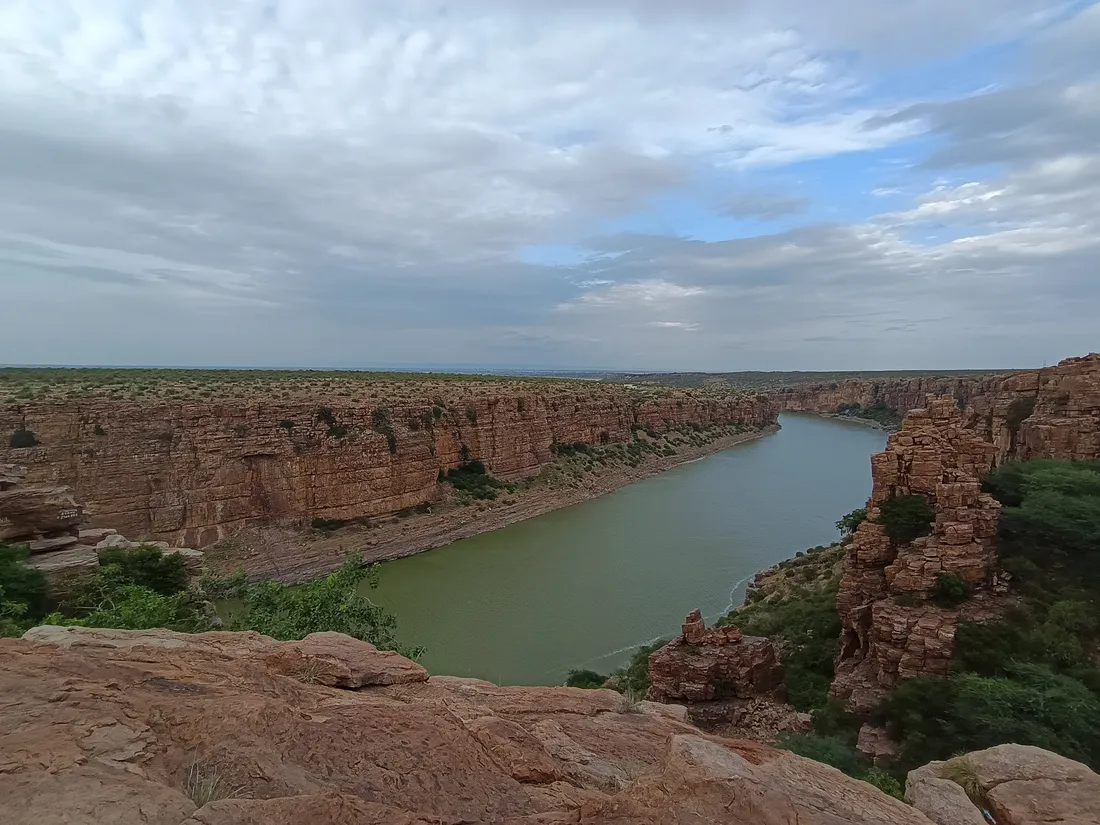
Among the best remembered are the Pemmasani Nayaks, who held the great fortress of Gandikota above the Pennar, together with Yadiki, Gooty and Tadipatri. The Sayapaneni and Ravella lines are remembered alongside them, and Kamma officers held place in the court of Krishnadevaraya.

A heritage that carried families far

It was service of this kind that took Kamma families beyond Kammanadu — south into the Tamil districts, where they came to be known as Kammavar and Kamma Naidu, and west into the Kannada country. The heritage is remembered here for its service and its craft of administration, not for any claim over anyone.

This heritage is recalled with pride and gratitude alone, as part of the story of the Telugu country. No ranking of any community is intended.

A heritage of devotion

Faith and the deities of the Kamma home

Kamma devotion is a household matter, and it reaches from the great temples of the delta to the village goddess whose shrine stands at the edge of the fields.

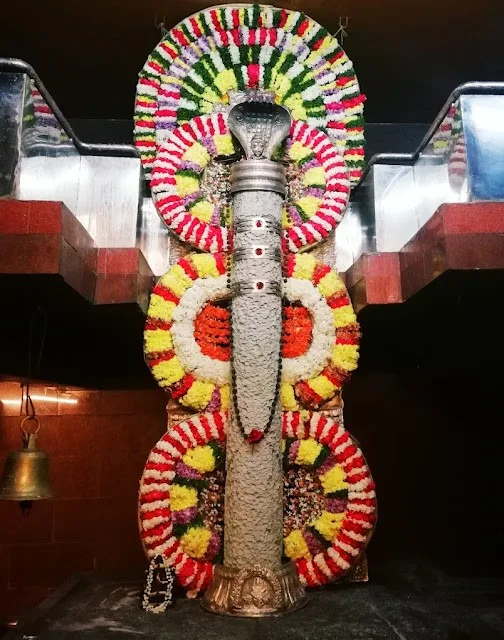
Amareswara Swamy at Amaravati on the Krishna river — the tall linga in the sanctum, garlanded for worship, at one of the Pancharama Kshetras in the old Kammanadu country

Vigneswara, and the deities of the village

Some Kamma families follow the Saiva tradition and some the Vaishnava, but all keep Vigneswara and the grama devata — the deities of their own soil. Poleramma, Gangamma, Ankamma, Padavetiamma and the thousand-eyed Veikandla Thalli are among the goddesses families hold dear, and many households in the Tamil districts keep their own tutelary deity alongside.

Ganga, invoked before the wedding

One old custom is recorded plainly and is dear to the community: Ganga is invoked before the marriage ceremonies begin. The great temples of the delta country stand close by — among them the Amareswara Swamy temple at Amaravati on the Krishna, one of the Pancharama Kshetras, within the old Kammanadu itself.

These deities and sacred places are mentioned with reverence and gratitude alone, as the community's living tradition. No single deity is the compulsory deity of every family — devotional matters rest with each family and its elders.

Where families are today

From the delta to Bengaluru and beyond

From the Kammanadu and the delta districts, Kamma families have long been settled across the Telugu country and well beyond it.

Across the South

The heartland remains the Krishna–Godavari delta and the Kammanadu country — Krishna, Guntur, West and East Godavari, Prakasam — with families long settled through Rayalaseema, in the irrigated country of Telangana and in Hyderabad, and in the Tamil districts, chiefly the Kongu belt around Coimbatore, where they have lived since the Vijayanagara period.

  • The delta and Kammanadu — Krishna, Guntur, the Godavari districts, Prakasam
  • Rayalaseema, and the irrigated country of Telangana
  • Tamil Nadu — the Kongu belt around Coimbatore
  • Karnataka — Bengaluru, where the Kammavari Sangham has served families since 1952

And families abroad

In recent generations many families have settled far beyond the Telugu country, keeping close ties to the districts they came from — and an alliance is still opened the same way, within the community, with the gothram and the house name named first.

Regions and customs differ from one district and household to another; they are named here with affection, as the shared map of the community.

A heritage the family lives

Courtesy, the calendar, and a story for children

Beyond land and lineage, the Kamma heritage lives in the year's festivals, in a certain insistence on courtesy, and in one gift to Indian childhood that is worth naming.

Chandamama, and a storyteller from Tenali

Aluri Chakrapani was born in a village near Tenali in the Guntur country, into a Kamma farming family. With B. Nagi Reddi he founded Chandamama in 1947 — the children's magazine of folk tales and serials that went on to be published in many Indian languages, and that generations of children across the country grew up reading.

The courtesy of 'garu', and the year's festivals

There is a small story the community likes to tell: when settlement officers in the Kistna district once issued land documents that left the honorific garu off Kamma names, the families refused to accept them until it was restored. It says a good deal about the courtesy the community expects and extends. The year turns with Ugadi and with Sankranti — the great harvest festival of the Telugu country, kept with the family gathered close.

  • Ugadi — the Telugu new year
  • Sankranti — the harvest festival of the Telugu country
  • Garu — the courtesy of address, kept with care

Customs, festivals and observances vary from region to region and home to home; they are named here with affection, as the shared culture of the community.

Questions families ask

Common questions from Kamma families

Will we only see Kamma profiles here?

Yes. Registering through this page places your profile in the dedicated Kamma section — the Kamma, Kammavar, Kamma Naidu, Kammavar Naidu, Kamma Naicker and Kamma Chowdary families — and every profile you see, match with, or contact belongs to it.

We are Kamma Naidu (or Kammavar Naidu, or Kamma Naicker) — is this the right place for us?

Yes. Kamma Naidu, Kammavar Naidu, Kamma Naicker and Kamma Chowdary are the same community under different regional titles, and all of them belong here. Whether your family registers through this page or through the Naidu section, you are in the same Kamma community and your matches stay within it. The Naidu title is also carried by other Telugu communities; Kapu families have a page of their own here, and other families register under the community their household belongs to.

Is Kamma the same as Kammalar, Kammari or Kamsala?

No. Kammalar, Kammari, Kammara and Kamsala are the craft names of the Vishwakarma community, which has its own dedicated space on Sri Guru Raghavendra Matrimony. The similarity in the names is a coincidence — the Kamma community described on this page is a separate community with its own heritage.

How is our family's lineage recorded?

Each part sits in its own place, written in your own words, exactly as your family says it — your gothram, your inti-peru (house name), your surname, your native place and your family deity. No single list of Kamma gothrams has ever been drawn up, so nothing is chosen for you here, and a gothram is never inferred from a surname.

Will our phone number be visible to everyone?

It is not shown openly on your profile. A member who wants to take an introduction forward can see your contact through the app's Reveal Contact feature and reach you directly, and Government-ID-verified badges help you know who you are speaking with.

Next step

Register or login when your family is ready to continue

Create your account and step into the Kamma section of Sri Guru Raghavendra Matrimony, where your gothram and inti-peru, native place and family background are part of every profile — for the Kamma families of the Telugu country and beyond, and your family sets the pace.