Sri Guru Raghavendra Matrimony™ emblem
SRI GURU RAGHAVENDRA MATRIMONY™

North India, in the name of Bhagwan Valmiki

Valmiki / Balmiki Matrimony

Eleven kilometres west of Amritsar, where by tradition Sita found shelter, an eight-foot gold-plated murti of Bhagwan Valmiki stands in a temple set in a sacred pond. This page is for Hindu Valmiki and Balmiki families of Punjab, Haryana, Delhi, Uttar Pradesh, Rajasthan, Madhya Pradesh and Uttarakhand, wherever they live today.

Valmiki / Balmiki

Begin when you are ready

Register now, or read about Bhagwan Valmiki and Pargat Diwas first

Creating an account takes a few minutes. If your family prefers to understand the space first, the sections below walk through Bhagwan Valmiki, his birthday, the Bhagwan Valmiki Tirath and the three gotras.

Registrations from this page stay among Valmiki and Balmiki families, so every profile your family sees and contacts comes from these families.
Punjab, Haryana and the Hindi heartland

A heritage your family carries every day

Valmiki and Balmiki families live across Punjab, Haryana and Delhi, Uttar Pradesh, Rajasthan, Madhya Pradesh and Uttarakhand — in Amritsar, Jalandhar and Patiala, in Sitarganj, and in towns and cities right across the north.

Homes in Punjab speak Punjabi, many in Haryana speak Haryanvi, and elsewhere in the north the talk at home is in Hindi.

Bhagwan Valmiki, the poet of the Ramayana, is honoured in Valmiki and Balmiki homes, and his birthday is celebrated as Pargat Diwas in Punjab and as Valmiki Jayanti across the north.

What families often ask first

What families often value first

  • Three lines of their own for the gotras, the family's own, the mother's and the dadi's, each in your family's spelling.
  • Search by native district, from Amritsar and Jalandhar to Meerut, Aligarh, Rohtak and Kota.
  • Search by mother tongue, so a Punjabi-speaking family can look among Punjabi-speaking homes first and widen the search whenever it wishes.

What your family will find inside

Three gotras beside the home district

A Valmiki or Balmiki profile can carry the family's gotra, the mother's and the dadi's, beside the native district and the language of home, so both families have read them by the time they first speak.

Government ID verified members stand out

Members who complete Government ID verification carry a clear mark, giving your family added reassurance at a glance.

Narrow the search by native district

Start with your own district, Patiala, Meerut or Rohtak, and open the search across the north when your family is ready.

Lineage recorded your way

Each of the three gotras reads in your family's own spelling, and a line left blank stays blank.

Education, work, and family background together

Degrees, professions, and family character read clearly on every profile, in the same order elders weigh an alliance.

Contact details are not shown openly

Phone numbers and email are not shown openly on profiles. A member uses the Reveal Contact feature to see another member's details and reach out directly when they are ready to take an introduction forward.

Interest is never lost

Shortlists and the profiles your family has already opened stay saved, so you can return to a promising profile after the household has talked it over.

Built around how Valmiki and Balmiki alliances are made

Before the two families sit down together, the three gotras, the native district and the mother tongue are already on the profile, so the first meeting can be about the young people themselves.

Why families feel at ease

Why Valmiki and Balmiki families feel at home

Punjabi or Hindi, Amritsar or Aligarh: the profile tells another family both the district and the language of home.

Punjabi, Haryanvi or Hindi

Every profile names the language spoken at home, so Punjabi, Haryanvi and Hindi homes can each find one another.

Valmiki or Balmiki, whichever you write

Families who write Valmiki and families who write Balmiki register here alike, and a search finds them all.

Comfortable for parents and members alike

Whether the search is led by a parent, a sibling, or the member themselves, the profile reads clearly for all of them.

Move at your family's pace, with tradition honoured up front and you reach out when your family is ready.

Across the north, in two spellings

Families who carry the sage's name

The name these families carry is Bhagwan Valmiki's own, and their homes are spread across the north of India.

Two spellings, one name

Valmiki and Balmiki are the same name, spelled two ways, and a family may write either.

Homes across seven states

Punjab, Haryana and Delhi; Uttar Pradesh and Uttarakhand; Rajasthan and Madhya Pradesh. Amritsar, Jalandhar and Sitarganj are among the towns where the sage's birthday is kept with a procession.

Written for Hindu homes

Here the welcome is for Hindu Valmiki and Balmiki families, with respect for every family's faith.

Neither spelling is more correct than the other; both are at home here.

Bhagwan Valmiki

The sage at the moment of writing

Valmiki and Balmiki families honour Bhagwan Valmiki, the poet who composed the Ramayana in Sanskrit.

A quill and a page

In the portraits carried on his birthday he is shown in saffron robes, holding a quill and paper.

The poet of the Ramayana

He is remembered as a great poet of the old Sanskrit tradition, and the Ramayana as his work.

In Hoshiarpur

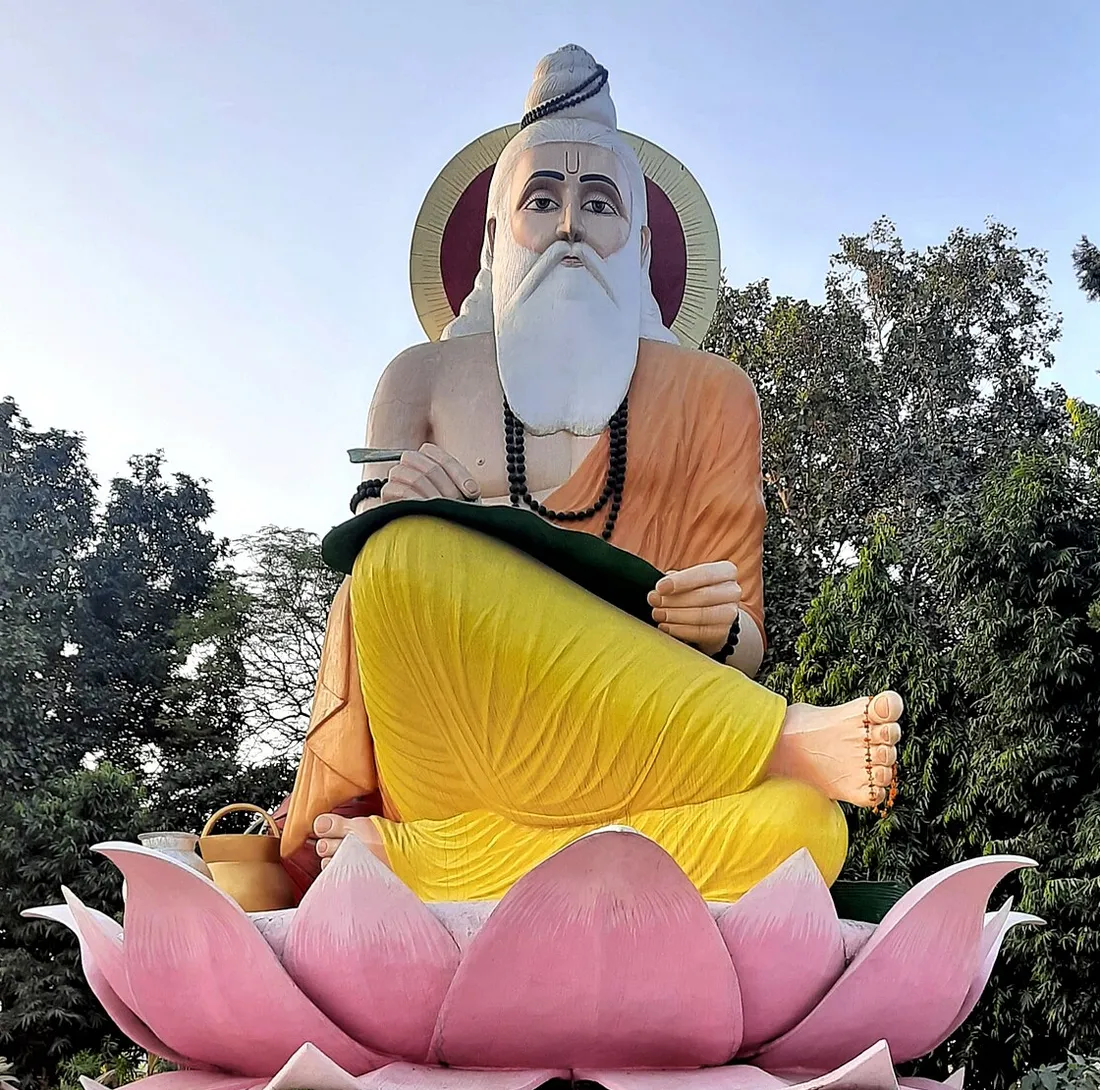
In Hoshiarpur, Punjab, a tall statue shows him seated on a lotus, a pen in his right hand and a book on his knee.

Called Bhagwan

Families speak of him as Bhagwan Valmiki, and their temples, temple committees and sabhas carry his name.

At home or at the temple, each family honours him as it always has.

Pargat Diwas and Valmiki Jayanti

On the eve of the sage's birthday

His birthday falls on the full moon of Ashvin, in late September or October. In Punjab it is called Pargat Diwas, and in Hindi it is also written Prakat Diwas.

A date that follows the moon

Because the day is set by the moon, it falls on a different date each year.

The palanquin through the markets

On the eve in Amritsar, the palanquin of Bhagwan Valmiki is carried through the city's markets, with bhajans, kirtans and decorated tableaux along the way.

A portrait through the main streets

In towns such as Sitarganj in Uttarakhand, his portrait is carried through the main streets to devotional singing.

At the Valmiki Tirath

In Amritsar, devotees mark the day itself at the Bhagwan Valmiki Tirath and pay their respects at his temple.

Some families walk with the procession and some keep the day at home; both are honoured here.

The Valmiki Tirath, near Amritsar

Where, by tradition, Sita found shelter

Eleven kilometres west of Amritsar, on the road to Lopoke, the Bhagwan Valmiki Tirath, also known as Ram Tirath, is remembered as the place of the sage's hermitage.

Lava and Kusha

By tradition, the sage sheltered Sita in his hermitage here, and it was here that Lava and Kusha were born.

A temple in the water

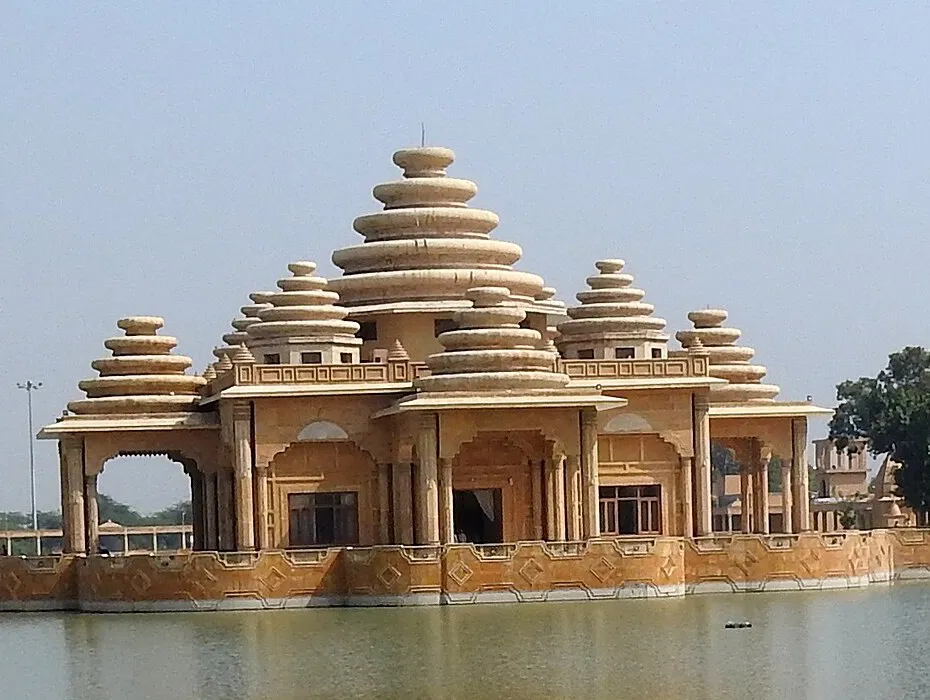
The Bhagwan Valmiki Tirath Sthal stands in a sacred pond, with a bridge for the walk around it.

An eight-foot murti

Since December 2016 an eight-foot, gold-plated murti of the sage has stood inside.

A Sanskrit library

The Tirath also keeps a Sanskrit library and a museum.

The Tirath is described here as tradition remembers it.

Three gotras

The family's gotra, the mother's and the dadi's

Three lines on a Valmiki or Balmiki profile are kept for gotras, in this order: Gotra, Mother's Gotra, and Dadi's Gotra (Father's Mother).

The family's own, first

The first line holds the family's own gotra, the one that comes down the father's side.

Then the mother's and the dadi's

The next two hold the gotra of the mother's family and the gotra of the father's mother, spelled as the elders at home pronounce them.

Only what you write

Each line holds only your family's own words. No gotra is ever guessed from a surname, and an empty line simply stays empty.

For the two families to talk over

How much the three gotras weigh in a match is the two families' own conversation; the profile only shows what each has written.

The three gotras are there for the other family to read, in your words.

Questions families ask

Common questions from Valmiki / Balmiki families

Will we only see Valmiki and Balmiki profiles here?

Yes. Registering through this page places your profile among Valmiki and Balmiki families, and every profile you see, match with, or contact belongs to one of them.

How is our family's lineage recorded?

In three lines, in this order: your family's own gotra, then the gotra of the mother's family, then the dadi's, each spelled as your family writes it. The app never guesses a gotra from a surname, and any of the three may be left empty.

We are Valmiki Nayaka, from Karnataka — is this our page?

The name Valmiki is honoured in many parts of India. Valmiki Nayaka families of Karnataka and the Telugu states have their own page here, Nayaka Matrimony; this page is for Valmiki and Balmiki families of North India.

Will our phone number be visible to everyone?

It is not shown openly on your profile. A member who wants to take an introduction forward can see your contact through the app's Reveal Contact feature and reach you directly, and Government-ID-verified badges help you know who you are speaking with.

Next step

Register or login when your family is ready to continue

Create your account and join Valmiki and Balmiki families on Sri Guru Raghavendra Matrimony, where the family's gotra, the mother's gotra, the dadi's gotra and your native district are part of every profile from the first day — for families of the north wherever they live today, and your family sets the pace.