Sri Guru Raghavendra Matrimony™ emblem
SRI GURU RAGHAVENDRA MATRIMONY™

The god's musician — what the name itself says

Devadiga Matrimony

The name says what the office is. Devadiga — from deva and vadiga — is the god's musician, and the community's own state body reads it as those whose work in the temple is to delight the god. A family from this community has had music in it for as long as this coast has had temples. An alliance here begins with the bali, and with the way your household reckons its descent.

DevadigaOther Devadiga community

Begin when you are ready

Register now, or read about the Devadiga heritage first

Creating an account takes a few minutes. If your family prefers to understand the space first, the sections below walk through the name and the instruments, the bali and the two ways of reckoning a line, and the temple at Barkur.

Registrations from this page stay within the Devadiga community — every profile your family sees and contacts belongs to it.
The name, and the music in it

A heritage your family carries every day

These are households of the Karnataka coast — Mangaluru and the Tulu country south of it, Udupi and Barkur, Kundapura, and northward into Uttara Kannada where Kannada rather than Tulu is the language of the house. Many families are in Bengaluru and Mumbai now.

The hereditary calling of this community is music, and the instruments have names of their own — the shriti, the bass horn that holds the note beneath everything; the moori, the reed pipe; the sammelu, the double drum; and the gidbidki, the small drum. The office is theirs and the ensemble is theirs, and both are still played.

So an alliance here begins with what a Devadiga household names first: the bali, the way the family reckons its descent, the deity it keeps and the town it belongs to — with the dignity your family expects.

What families often ask first

What families often value first

  • Your bali is written in your own words, exactly as your family names it.
  • Whether your household follows Aliya Kattu or Makkala Kattu is asked for plainly — it is a real difference between families and neither answer narrows anything.
  • Search by native place across Mangaluru, Udupi, Barkur, Karkala, Kundapura, Byndoor, Uttara Kannada, Bengaluru, Mumbai and beyond.

What your family will find inside

Everything your family checks, before the first phone call

These are the details Devadiga households settle first — and they are visible before any contact is exchanged.

Government ID verified members stand out

Members who complete Government ID verification carry a clear mark, giving your family added reassurance at a glance.

The bali, written in your own words

Two households of the same bali do not marry. Write yours exactly as your family names it — there is no list you have to fit into, and several bali names are shared with other households along this coast, so a bali is never worked out from a surname.

Filter by native place and mother tongue

Narrow the search by native district — Mangaluru, Udupi, Karkala, Kundapura, Byndoor, Uttara Kannada and many more — and by whether Tulu or Kannada is spoken at home.

Education, work, and family background together

Degrees, professions, and family character read clearly on every profile, in the same order elders weigh an alliance.

Contact details are not shown openly

Phone numbers and email are not shown openly on profiles. A member uses the Reveal Contact feature to see another member's details and reach out directly when they are ready to take an introduction forward.

Interest is never lost

Shortlists and the profiles your family has already opened stay saved, so you can return to a promising profile after the household has talked it over.

Built around how Devadiga alliances actually happen

Whether your family is of the Tulu country or of the Kannada-speaking taluks further north, the things that decide an alliance — the bali, the way your household reckons descent, the deity it keeps and the native town — are always in view.

Why families feel at ease

Why Devadiga families feel at home

The details that decide an alliance sit together in one place, presented the way your family would present them.

Both ways of reckoning descent, asked plainly

Some Devadiga households follow Aliya Kattu, where the line runs through the mother, and others Makkala Kattu, where it runs through the father. Both are genuinely this community's, and the profile asks which is yours rather than assuming one for everybody.

Tulu at home or Kannada at home

Between Mangaluru and Uttara Kannada the language of the house changes, and neither answer puts a family outside this community. Mother tongue and native district are asked for plainly.

Comfortable for parents and members alike

Whether the search is led by a parent, a sibling, or the member themselves, the profile reads clearly for all of them.

Move at your family's pace, with tradition honoured up front and you reach out when your family is ready.

The office, and the instruments

The god's musician, and the ensemble that is theirs

The name of this community is a description of what it does, and the instruments it names are its own.

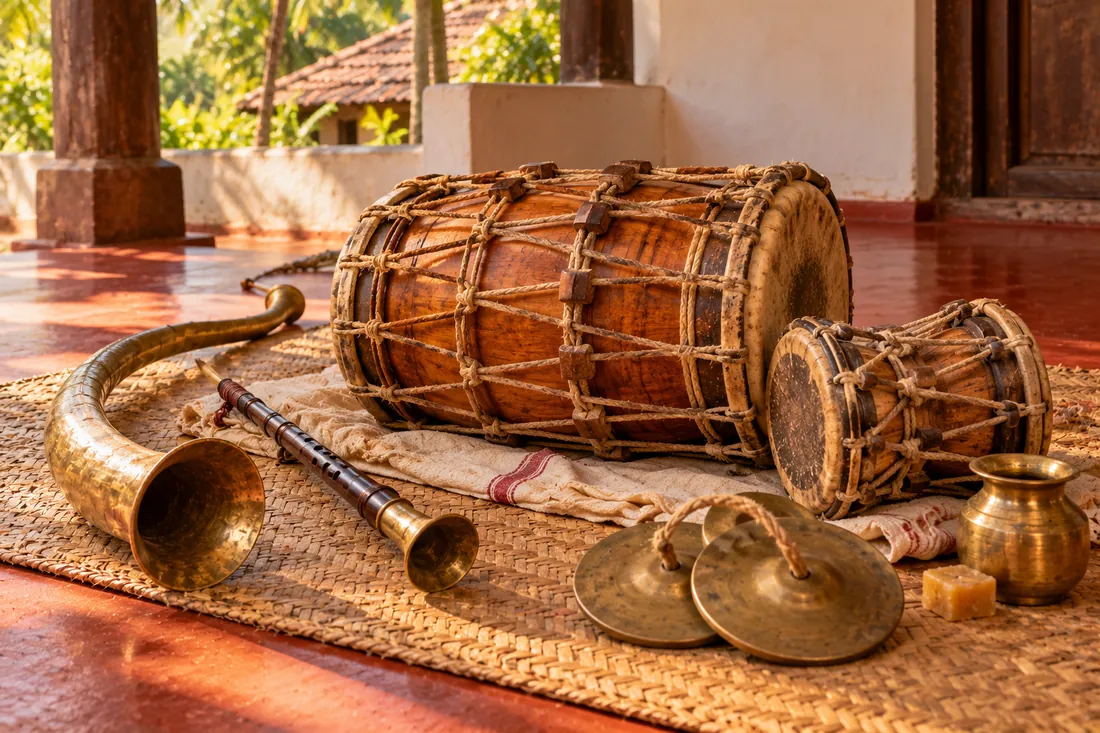
The instruments of a coastal Karnataka temple musician's household at rest on a palm-leaf mat — a cord-laced double-headed barrel drum, a smaller hand drum, a curved brass horn, a reed pipe and a pair of bronze cymbals

What the name says

Devadiga — deva, god, and vadiga, music. The community's own state body reads it as those whose work in the temple is to delight the god. The hereditary calling of the community is music, and the old record states that in exactly those words.

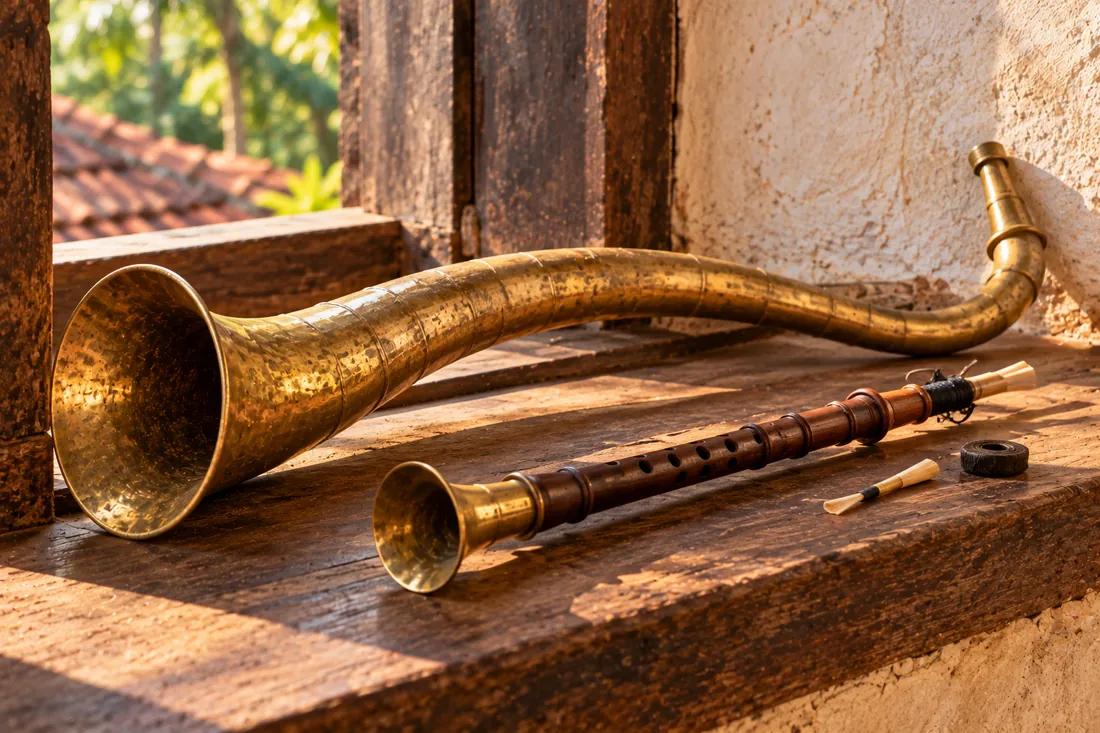
A long curved brass horn and a short dark reed pipe with a brass bell, resting side by side on a teak windowsill against a lime-washed wall, with a spare reed and waxed thread beside them

The instruments have their own names

The shriti, the bass horn that holds the steady note beneath everything. The moori, the reed pipe that carries the tune. The sammelu, the double drum. And the gidbidki, the small drum. Those four names belong to this ensemble, and a family from this community will know every one of them.

  • Shriti — the bass horn
  • Moori — the reed pipe
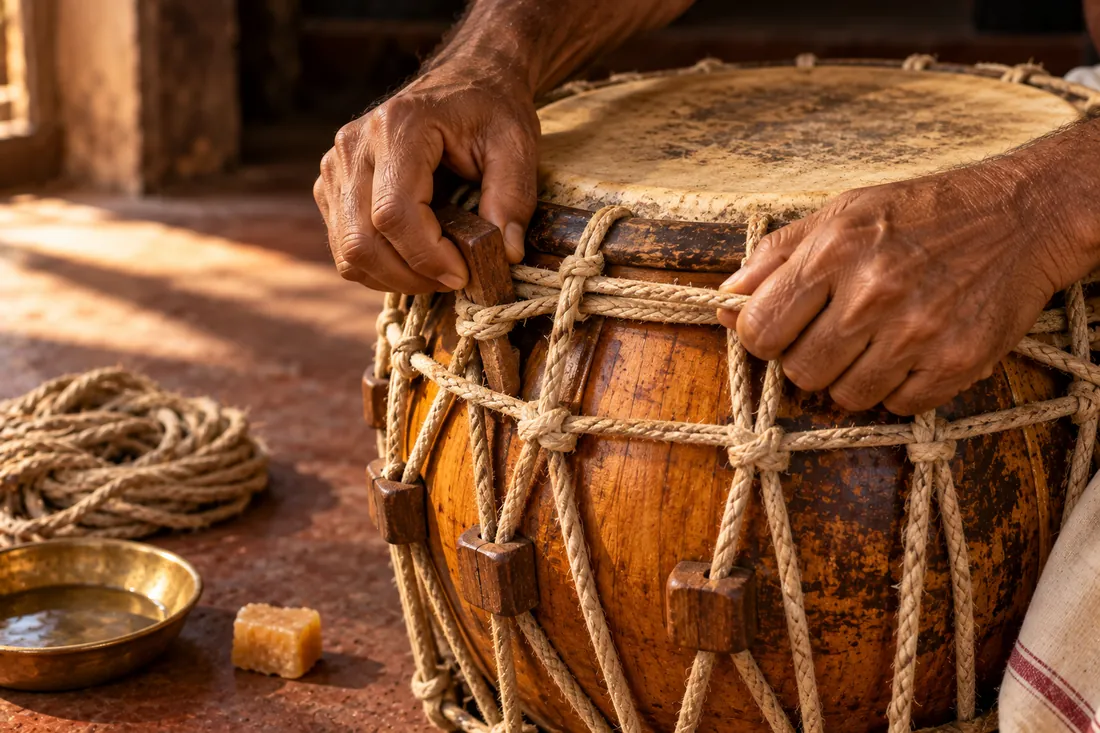
  • Sammelu — the double drum
  • Gidbidki — the small drum
Two weathered hands driving a wooden tension block further under the cord lacing of a jackwood barrel drum, with a coil of spare cord, a stub of beeswax and a brass dish of water on the floor beside them

And it is still played

The temple band of this coast is still heard at the seasons, with the reed pipe, the paired kettle-drums and the big rope-laced frame drum together, much as the old account describes them. This is not a heritage that had to be recovered from a book.

How old the office is

The community's own tradition places the beginning of it in the reign of Mayura Varma, the king remembered for the temples raised along this coast. That is a long way back, and it is the community's own account of itself.

Practice and emphasis differ from one temple, one taluk and one family network to another — this is heritage held with pride, not a single rule book.

How a marriage is guarded

The bali, and the two ways of reckoning a line

One unit decides whether an alliance can be made, and this community keeps two different ways of passing it down.

A family marries away from its own bali

Two households of the same bali do not marry — the old record calls a match within one bali a matter of the prohibited degrees, the same as between a brother and a sister. It is the first thing two families check.

  • Written in your own words, as your family says it
  • Recorded where a household keeps one

Aliya Kattu, and Makkala Kattu

Where a household follows Aliya Kattu the bali comes down from the mother; where it follows Makkala Kattu it comes down from the father. Both are this community's own, and the northern families and the Tulu families have long differed in it. The profile asks which is yours, because it is a real question a family will want answered.

A matching bali closes a door; a different one opens nothing

The old accounts are careful about this and so is this page. The avoidance reaches further than the one word — it extends to allied balis, and there are relations a family will not match whatever the bali says. So the field tells you when to stop; it never tells you to proceed. That part stays where it belongs, with the two families.

Why there is no list

No roll of these balis has ever been agreed, the naming differs between the Tulu and the Kannada country, and many bali names are shared with other households along this coast. So nothing is chosen for you, and a bali is never worked out from a surname.

Every line named here stands on its own terms. Nothing on this site places one household above another.

The deity of the house

Ekanatheshwari at Barkur, and the deities families keep

One temple on this coast is this community's own to keep, and it is the right place to begin.

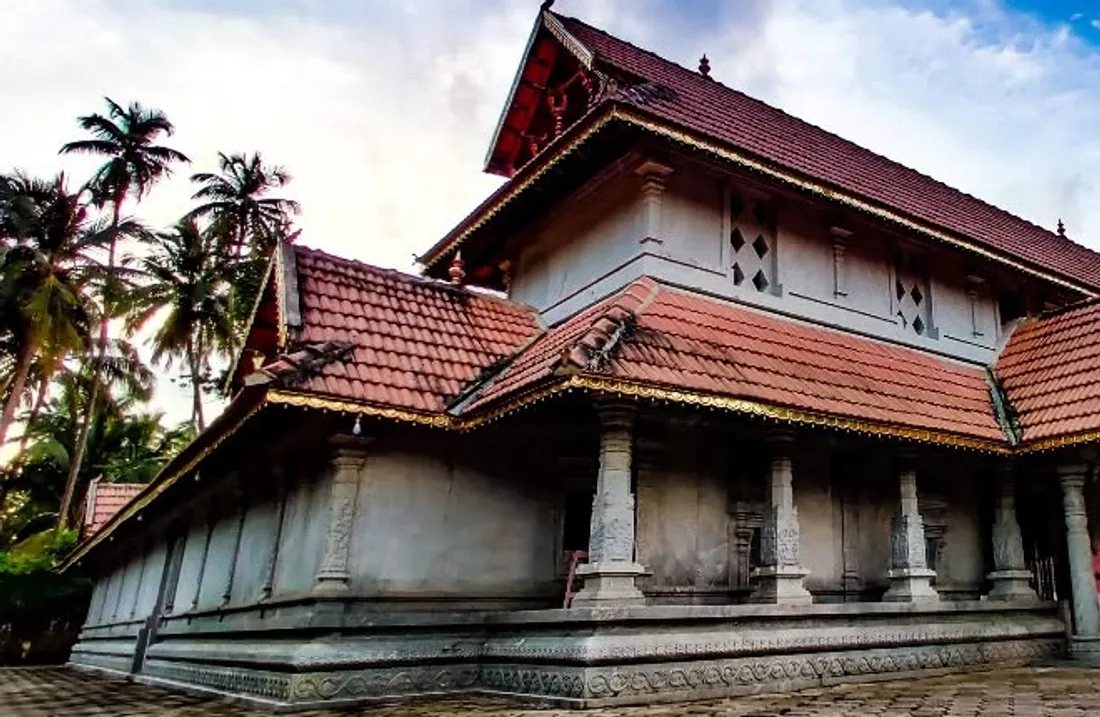
The Sri Ekanatheshwari temple at Barkur in Udupi district — its tiled roofs, carved stone pillars and gilded eaves, the temple this community keeps

The temple in their charge

The Sri Ekanatheshwari temple at Barkur is managed by this community, and for the families of that hobli she is the kula devata. It is theirs to keep — the possession is the fact worth stating, and it needs nothing else said around it.

And the deities of each house

Beyond her, each household names its own kula devata, and that goes on the profile as the family names it. It is how a household is known; the bali is what an alliance is decided by.

What this coast shares

The daiva aradhane of the Tulu country — the shrines, the seasons, the offerings — is kept in these households as it is in their neighbours'. It belongs to the coast rather than to any one community, and it is written here as something these families keep rather than something they hold alone.

Devotion is honoured here on its own terms. Nothing on this site ranks one form of it above another.

Questions families ask

Common questions from Devadiga families

Will we only see Devadiga profiles here?

Yes. Registering through this page places your profile in the Devadiga community, and every profile you see, match with, or contact belongs to it. Your bali, the way your family reckons its descent, your kula devata and your native town are on the profile.

How is our family's lineage recorded?

By the bali, written in your own words exactly as your family names it, and by whether your household follows Aliya Kattu or Makkala Kattu. There is no list you have to fit into — the naming differs between the Tulu and the Kannada country, and many bali names are shared with other households on this coast, which is why a bali is never worked out from a surname.

We say Moily at home, not Devadiga. Is this our page?

Yes. Moili, Moyili, Moily, Devadigar and Devadig are names of this same community, and any of them brings you here. You register as the name your household uses.

Our family is from Uttara Kannada and speaks Kannada, not Tulu.

That puts you nowhere outside this community. Mother tongue and native district are their own fields on the profile, and the northern households have long reckoned descent through the father where the Tulu households reckon it through the mother — both are asked for plainly and neither narrows anything for you.

Will our phone number be visible to everyone?

It is not shown openly on your profile. A member who wants to take an introduction forward can see your contact through the app's Reveal Contact feature and reach you directly, and Government-ID-verified badges help you know who you are speaking with.

Next step

Register or login when your family is ready to continue

Create your account and step into the Devadiga space on Sri Guru Raghavendra Matrimony, where your bali, the way your family reckons its descent and your kula devata are part of every profile from the first day — and your family sets the pace.