Sri Guru Raghavendra Matrimony™ emblem
SRI GURU RAGHAVENDRA MATRIMONY™

The pastoral heritage of the Yadava cowherds

Golla Matrimony

A community that herded the cattle of the Deccan, carries the name of Gopala, and holds Lord Krishna — the divine cowherd — closest to its heart deserves a matrimony space that asks the right questions first: sub-community, gotra and inti-peru, native region, and family character, all on the profile from the start.

Uru Golla — village GollaKadu Golla — pastoral / forest GollaYerra GollaPakanati Golla

Begin when you are ready

Register now, or read about the Golla heritage first

Creating an account takes a few minutes. If your family prefers to understand the space first, the sections below walk through the pastoral heritage, the community's deep devotion to Krishna, the gotra and inti-peru system, and the regional sub-communities.

Registrations from this page stay within the Golla section — every profile your family sees and contacts belongs to the community.
A heritage of the herd and the household

A heritage your family carries every day

The Golla are one of South India's great pastoral communities — Telugu-speaking cowherds and dairy families whose very name comes from Gopala, the protector of cows. For generations they tended cattle, sheep and goats across Andhra Pradesh, Telangana and the Deccan, and brought milk, ghee and curds to every village market. The community is also widely known as Yadava, holding its identity to the ancient Yadu line that the tradition associates with Lord Krishna.

Golla families have long stood for honour and dependability. In the centuries before colonial rule some Golla lineages rose as poligars, the chieftains of Rayalaseema, and the Bokhasa Golla were trusted to guard and carry treasure for kings and merchants. Today Golla families farm, run businesses, teach, build careers and serve in public life — yet an alliance conversation still opens the old way: which sub-community a family belongs to, its gotra and inti-peru, the house name and family deity it carries, and the native region that holds its roots.

Sri Guru Raghavendra Matrimony presents those details on every profile, in the order your elders actually weigh them — so a Golla alliance begins informed, and with the dignity your family expects.

What families often ask first

What families often value first

  • Profiles state sub-community, gotra/inti-peru, and native region up front, so your family knows the essentials before the first conversation.
  • Families across Andhra Pradesh and Telangana (Golla / Golla Yadava), Karnataka, Tamil Nadu and beyond will find their regions and sub-communities represented — Uru Golla and Kadu Golla, Pakanati and Kuruma Golla alike.
  • Registrations from this page stay within the Golla section, so every profile your family considers belongs to the community.

What your family will find inside

Everything your family checks, before the first phone call

These are the details Golla households settle first — and they are visible before any contact is exchanged.

Government ID verified members stand out

Members who complete Government ID verification carry a clear mark, giving your family added reassurance at a glance.

Filter by sub-community, gotra, and native place

Narrow the search by sub-community, gotra or inti-peru, native place, and family origin — whether your family is Uru Golla, Kadu Golla, Pakanati, Kuruma, or simply Golla Yadava.

Education, work, and family background together

Degrees, professions, and family character read clearly on every profile, in the same order elders weigh an alliance.

Lineage recorded your way

Record your family's gotra, inti-peru, or kula daiva as free text, exactly as your family names it.

Contact details are not shown openly

Phone numbers and email are not shown openly on profiles. A member uses the Reveal Contact feature to see another member's details and reach out directly when they are ready to take an introduction forward.

Interest is never lost

Shortlists and expressed interest stay saved, so your family can return to a promising profile after the household has talked it over.

Built around how Golla alliances actually happen

Whether your family's search stays within one district or reaches across Andhra Pradesh, Telangana and beyond, the details that matter are always in view.

Why families feel at ease

Why Golla families feel at home

The details that decide an alliance sit together in one place, presented the way your family would present them.

A community-scoped beginning

Your search stays within the Golla community pool, so every introduction starts from shared roots.

Every region and sub-community at home

Uru Golla and Kadu Golla, Pakanati, Kuruma and Krishna Golla, and Golla Yadava families across the South are all welcome, each with its own sub-community option.

Comfortable for parents and members alike

Whether the search is led by a parent, a sibling, or the member themselves, the profile reads clearly for all of them.

Move at your family's pace, with tradition honoured up front and you reach out when your family is ready.

Understanding the heritage

Gopala — the cowherds who carried the name of Krishna

The Golla name comes from Gopala, the protector of cows — and for centuries the community's life turned on the herd: cattle and sheep, milk and ghee, and a reading of the land and the seasons. That pastoral life sits at the very heart of who the Golla are.

The herd, the dairy, and the village

Golla families tended cattle, sheep and goats and brought milk, ghee and curds to the markets of every Deccan village. The dairy hearth, the cattle pen, and the festivals of the herd shaped a self-reliant way of life that families still hold with pride.

Guardians of honour

Honour and dependability run through the community's story. Some Golla lineages rose as poligars, the chieftains of Rayalaseema, and the Bokhasa Golla were entrusted to guard and carry treasure for rulers and merchants — a name for trustworthiness the community still wears.

Practice and emphasis differ from one family network to another — this is heritage held with pride, not a single rule book.

A heritage of devotion

Why the Golla hold Lord Krishna closest of all

Of all the deities a Golla home honours, none is held closer than Lord Krishna — Gopala, the divine cowherd. For the community this is not devotion alone; it is a sense of kinship.

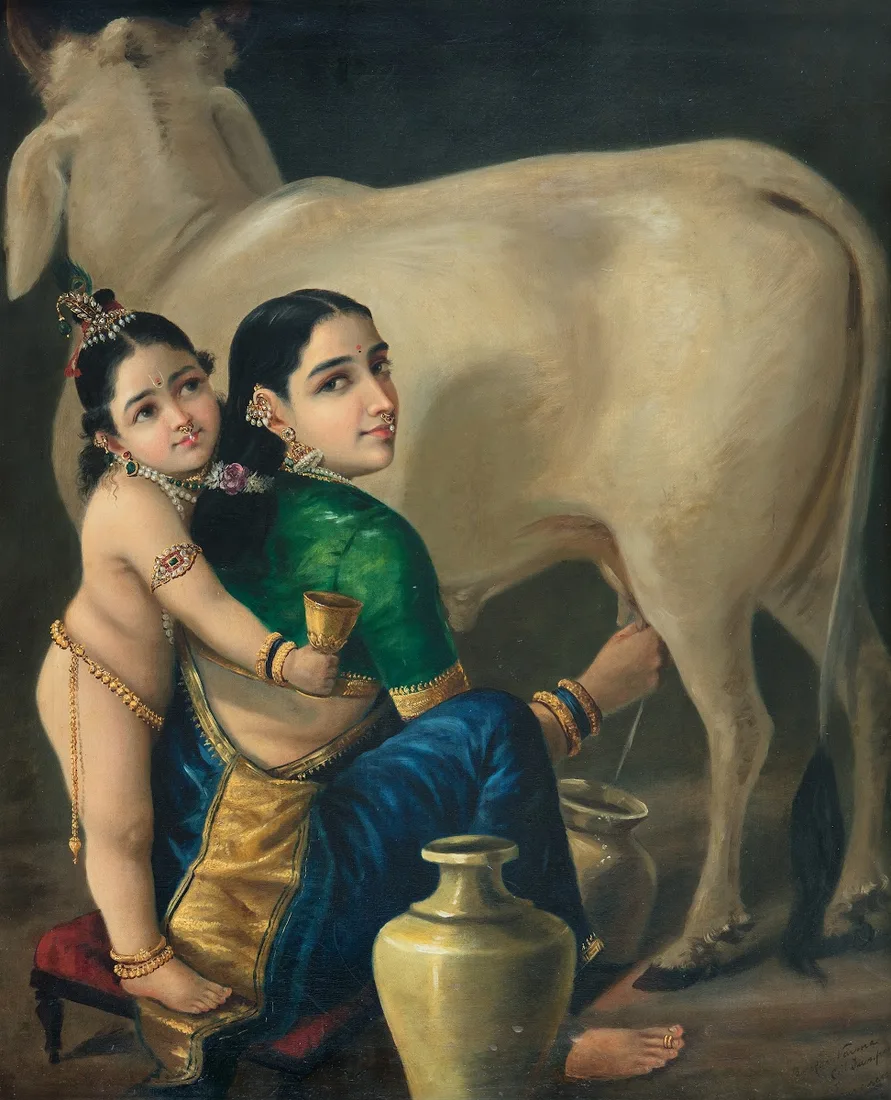
Yashoda with the child Krishna, the divine cowherd revered by the Golla Yadava community — Raja Ravi Varma

Yashoda with Krishna — Raja Ravi Varma (public domain)

The cowherd god, and a community of cowherds

Krishna was raised among cowherds in Vrindavan, in the home of Nanda and Yashoda — he grazed the cattle, played the flute to the herd, and lived the very life the Golla have lived for generations. In Krishna the divine cowherd, a community of cowherds sees its own world made sacred. This is why Janmashtami and the temples of Venugopala and Gopala Swamy are so beloved in Golla homes.

The Yadava lineage the community remembers

The Golla also know themselves as Yadava, and the community's tradition traces its line to the ancient Yadu dynasty into which Krishna was born. Held as a cherished tradition — distinct from the question of historical record — it gives the community a deep, affectionate bond with Krishna as both deity and ancestor-kin.

Krishna and the protector deities together

Golla devotion is warm and broad. Alongside Krishna, many families honour Mallanna (Mallikarjuna), Virabhadra, and the village mother Ankamma — the protective deities of the pastoral world — so a Golla home holds both the Vaishnava and the Shaiva traditions with ease.

These deities and traditions are mentioned with reverence and gratitude alone. No endorsement is implied, and devotional matters rest with each family and its elders.

Understanding the traditions

Gotra and inti-peru: how Golla families trace and match lineage

Before education, often before the horoscope itself, a Golla alliance turns to the family's gotra and inti-peru — the patrilineal line and the house name. These are the markers families use to keep an alliance outside the same ancestral line.

Marriage outside the same gotra

Two families who share the same gotra are treated as one ancestral line, so alliances are traditionally sought outside it. The inti-peru, the house name carried at the front of a family's name, and the kula daiva often form part of the same check.

  • Same gotra is avoided, like a shared ancestral line
  • Sub-community match is usually weighed together with this gotra check
  • Stating it on the profile settles a question that would otherwise come first

How we record it

Golla lineage is recorded as a free-text gotra / inti-peru / kula daiva field, written the way your family already says it — so every household's own vocabulary fits, with no single fixed list imposed.

  • Enter your gotra, inti-peru, or kula daiva in your own words
  • Works the same for Uru Golla, Kadu Golla, Pakanati, Kuruma and related families
  • The check your elders rely on can happen before any contact is exchanged

Households differ in how strictly they weigh the lineage check — some settle it first, others read it alongside the horoscope and the family's overall comfort.

One community, many names

From Uru Golla and Kadu Golla to Yadava and beyond

The Golla live across the Telugu country and the wider Deccan under several names. Knowing where your family belongs helps you search with clarity.

Village and pastoral Golla

Families distinguish the settled village Golla from the more pastoral, herd-following Golla, and each is at home here with its own sub-community option so families recognise and match within their own group.

  • Uru Golla — the village, settled-farming Golla
  • Kadu Golla — the pastoral, herd-following Golla
  • Yerra Golla and other regional divisions

Regional Golla names

Across the Telugu districts and into Karnataka and Tamil Nadu, the community carries its own regional names while remaining one people.

  • Pakanati Golla — the Pakanadu country
  • Kuruma Golla and Krishna Golla / Hanabaru
  • Golla Yadava — the shared, pan-South identity

If your family's name or region is not listed separately, Other Golla / Golla Yadava keeps you within the same community space.

Questions families ask

Common questions from Golla families

Will we only see Golla profiles here?

Yes. Registering through this page places your profile in the dedicated Golla section, and every profile you see, match with, or contact belongs to the community — Golla, Golla Yadava, Uru Golla, Kadu Golla and related families alike.

We are Kadu Golla — or from a particular regional Golla group. Is this the right place for us?

Yes. Uru Golla and Kadu Golla, Pakanati, Kuruma, Krishna Golla and Golla Yadava families are all welcome, and each has its own sub-community option when you register, so your matches stay close to your group and region.

How is our family's lineage recorded?

Lineage is a free-text field, so you can enter your gotra, inti-peru, or kula daiva exactly as your family names it. There is no single fixed list imposed on the community.

Will our phone number be visible to everyone?

It is not shown openly on your profile. A member who wants to take an introduction forward can see your contact through the app's Reveal Contact feature and reach you directly, and Government-ID-verified badges help you know who you are speaking with.

Next step

Register or login when your family is ready to continue

Create your account and step into the Golla section of Sri Guru Raghavendra Matrimony, where sub-community, gotra and inti-peru, native region, and family background are part of every profile — and your family sets the pace.