Sri Guru Raghavendra Matrimony™ emblem
SRI GURU RAGHAVENDRA MATRIMONY™

The hills of Kodagu, the okka, and the family

Kodava Matrimony

A community as distinctive as the misty hills it calls home — its own language and dress, its okkas and ancestral ainmanes, its devotion to Goddess Kaveri and Lord Igguthappa, and a heritage of honour, land and courage — deserves a matrimony space that asks the right questions first: sub-community, okka and ainmane, native nad, and family character, all on the profile from the start.

KodavaAmma KodavaOther Kodava community

Begin when you are ready

Register now, or read about the Kodava heritage first

Creating an account takes a few minutes. If your family prefers to understand the space first, the sections below walk through the community's heritage of the hills, the okka and ainmane system, the faith and festivals of Kodagu, and the living culture the community holds dear.

Registrations from this page stay within the Kodava section — every profile your family sees and contacts belongs to the community.
A heritage of the hills, the okka, and honour

A heritage your family carries every day

The Kodava — the people of Kodagu, long known as Coorg — are one of India's most distinctive communities, cradled in the mist-wrapped hills of the Western Ghats. Theirs is a heritage all their own: their own language, Kodava thakk; their own dress; their own festivals; and a proud, patrilineal, land-loving culture built around the okka, the clan, and its ainmane, the ancestral home.

By tradition a Kodava alliance opens with the family's okka and ainmane, and the native nad that holds its roots — the markers a household settles before anything else — and turns in devotion to Goddess Kaveri, the sacred river, and Lord Igguthappa of the hills.

Sri Guru Raghavendra Matrimony presents those details on every profile, in the order your elders actually weigh them — so a Kodava alliance begins informed, and with the dignity your family expects.

What families often ask first

What families often value first

  • Profiles state sub-community, okka and ainmane, and native nad up front, so your family knows the essentials before the first conversation.
  • Kodava families across Kodagu, Bengaluru, Mysuru and beyond — Kodava and Amma Kodava alike — will find their community represented.
  • Registrations from this page stay within the Kodava section, so every profile your family considers belongs to the community.

What your family will find inside

Everything your family checks, before the first phone call

These are the details Kodava households settle first — and they are visible before any contact is exchanged.

Government ID verified members stand out

Members who complete Government ID verification carry a clear mark, giving your family added reassurance at a glance.

Filter by okka, ainmane, and native place

Narrow the search by okka and ainmane, native nad, and family origin — the lineage checks a Kodava family weighs first.

Education, work, and family background together

Degrees, professions, and family character read clearly on every profile, in the same order elders weigh an alliance.

Lineage recorded your way

Record your family's okka, ainmane, and native nad as free text, exactly as your family names them, so the same-okka check your elders rely on is settled up front.

Contact details are not shown openly

Phone numbers and email are not shown openly on profiles. A member uses the Reveal Contact feature to see another member's details and reach out directly when they are ready to take an introduction forward.

Interest is never lost

Shortlists and expressed interest stay saved, so your family can return to a promising profile after the household has talked it over.

Built around how Kodava alliances actually happen

Whether your family's search stays within one nad of Kodagu or reaches across Bengaluru and beyond, the details that matter — okka, ainmane, and native place — are always in view.

Why families feel at ease

Why Kodava families feel at home

The details that decide an alliance sit together in one place, presented the way your family would present them.

A community-scoped beginning

Your search stays within the Kodava community pool, so every introduction starts from shared roots.

Okka and ainmane, honoured up front

The same-okka check a Kodava family relies on is settled on the profile itself, before any conversation begins.

Comfortable for parents and members alike

Whether the search is led by a parent, a sibling, or the member themselves, the profile reads clearly for all of them.

Move at your family's pace, with tradition honoured up front and you reach out when your family is ready.

Understanding the heritage

The hills of Kodagu, and a culture all their own

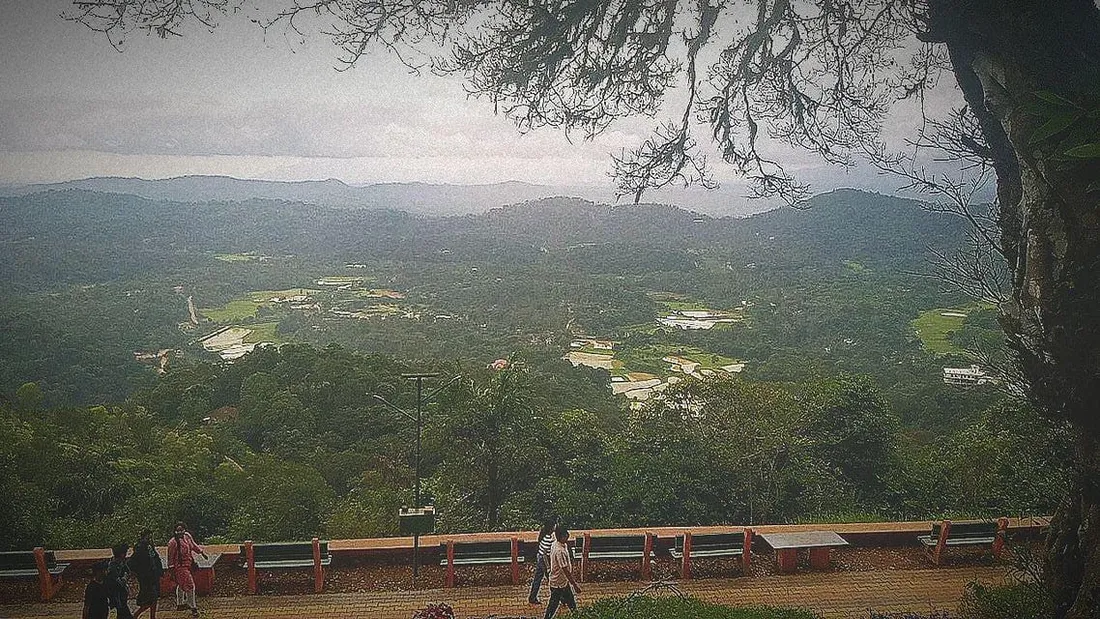
The Kodava heritage is written into the hills of Kodagu — the misty coffee country of the Western Ghats. It is a culture unlike any other in the land: its own language and dress, its own faith and festivals, and a proud people of the okka, the land, and the ancestral home.

A people of the hills

The Kodava are the native community of Kodagu — the hill district long known as Coorg. Speaking their own language, Kodava thakk, and wearing a dress found nowhere else, they are a patrilineal, land-owning people whose paddy valleys and coffee slopes have shaped a self-reliant, honourable way of life across the generations.

The okka and the ainmane

At the heart of Kodava life is the okka — the patrilineal clan — gathered around its ainmane, the ancestral home where generations honour their forebears. The okka gives a Kodava their name, their kin, and their place in the world, and it is the first thing a family weighs in an alliance.

This heritage is recalled with pride and gratitude, as the community's own distinctive way of life. No ranking of any community is intended.

One community, the names families know

Who the Kodava community is

This space is for the Kodava community and the families who belong to it. Within it, families recognise themselves by a couple of familiar names, and each is welcome here on its own terms.

Kodava and Amma Kodava

At its heart is the Kodava community — the land-owning people of the okkas — joined by the Amma Kodava, a tradition within the community known for its priestly role and largely vegetarian way of life. Families register as the name they know themselves by, and both belong to the one Kodava community here.

  • Kodava — the community of the okkas and the ainmane
  • Amma Kodava — the priestly, largely vegetarian tradition within the community
  • Other Kodava community — for families who name themselves differently

No ranking among these names is intended — the Amma Kodava tradition is a difference of custom, honoured on its own terms. If your family names itself differently, Other Kodava community keeps you within the same space.

Understanding the traditions

The okka and the ainmane: how Kodava families trace and match lineage

Before education, often before the horoscope itself, a Kodava alliance turns to the family's okka. This is the marker families use to keep an alliance outside the same ancestral line.

Marriage outside the same okka

Every Kodava belongs to an okka — a patrilineal clan named for its ancestral line, gathered around its ainmane, the ancestral home. By tradition two families of the same okka are treated as one lineage, so an alliance is always sought outside it, while the match stays within the Kodava community. A bride takes her husband's okka on marriage.

  • Same okka is avoided, as one shared ancestral line
  • The ainmane and native nad tell a family's roots at a glance
  • The match stays within the Kodava community

How we record it

Kodava lineage is recorded as your family's own — your okka (clan name), your ainmane, and your native nad or village — each written the way your family already says it, with no single fixed list imposed. Families of the Amma Kodava tradition, who keep a gotra, can note it too.

  • Enter your okka, ainmane, and native nad in your own words
  • The same-okka check can happen before any contact is exchanged
  • Amma Kodava families may also note their gotra

Households differ in how strictly they weigh the lineage line — but the okka is the one bond a Kodava family settles first. An okka is never guessed; each family names its own.

A heritage of devotion

Goddess Kaveri, Lord Igguthappa, and the forest that is God's

Kodava devotion rises from the land itself — from the sacred river born in the hills to the forest groves left wild for the divine, and from the deities of Kodagu to the ancestors honoured in every home.

Kaveri and Igguthappa

The Kodava revere Goddess Kaveri, the sacred river born at Talakaveri on the Brahmagiri hill, as their patron goddess — and Lord Igguthappa, worshipped as a form of Subramanya, god of rain and harvest, at his hill shrine near Kakkabe. Bhagavathi and Ayyappa are held dear too, in the faith of the hills.

The ancestors and the sacred grove

Every okka reveres its first ancestor, the Guru Karana, at the family shrine — and beside the coffee estates the Kodava keep the Devarakadu, the 'forest that is God's', groves left wild in devotion. Nature, ancestor, and the sacred river are woven together in a faith close to the earth.

These deities, ancestors, and sacred places are mentioned with reverence and gratitude alone, as the community's living tradition. No endorsement is implied, and devotional matters rest with each family and its elders.

A heritage of celebration

The three great festivals of the Kodava year

The Kodava year turns on three beloved festivals — of the harvest, the river, and the honoured tools of the home — each kept with the family and the okka gathered close.

Kailpodh and Kaveri Sankramana

At Kailpodh, kept as the crop-guarding season begins, the family's implements and arms are taken out, cleaned, garlanded, and honoured — a ceremony of respect for the tools that protect the home and the harvest. At Kaveri Sankramana, in the month of Tula, the community worships Goddess Kaveri as her sacred spring wells up at Talakaveri, and married women perform the Kanni Puje — the one strictly vegetarian festival of the year.

Puthari, the harvest

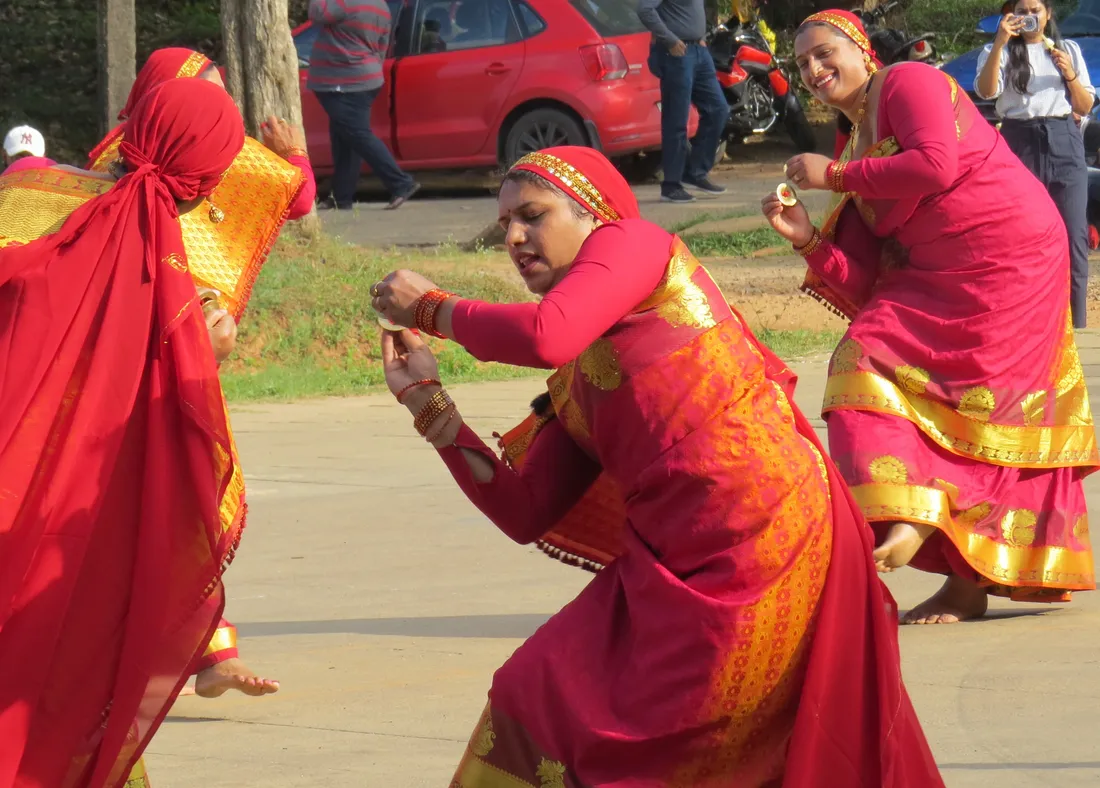
Puthari, the new-rice festival of late autumn, is the most joyful of all — the family gathers by lamplight to cut the first sheaf of the season's paddy, and the whole nad comes together in song and the circling Ummattat dance, in a celebration of the land's bounty.

  • Kailpodh — honouring the family's implements and arms
  • Kaveri Sankramana — worship of Goddess Kaveri (vegetarian)
  • Puthari — the new-rice harvest, in song and dance

Customs and dates vary by nad and household; the festivals are named here with affection, as the shared heritage of the community.

A heritage the family lives

The Kodava wedding, blessed by its own

A Kodava wedding is unlike any other in the land — a celebration of family, ancestors, and the two okkas coming together, in which the community's own elders preside.

Blessed by the elders

In the Kodava tradition no outside priest presides over the wedding — the couple is blessed by their own family elders, before the sacred lamp and the ancestors. It is a proud, self-sufficient custom: the mother's blessing comes first, then the father's, then the elders', and the two clans are joined by the dialogue of their heads.

  • The couple is blessed by family elders, not an outside priest
  • The mother's blessing comes first, before the sacred lamp
  • The two okkas are joined by their elders' word

In the dress of the forebears

The groom stands in the white kupya, the knee-length coat, bound with the red-and-gold chele sash and the silver peeche kathi at the waist; the bride in her richly draped Kodava saree and gold — the dress of Kodagu, worn with pride at every threshold of life.

Wedding customs vary from family to family and nad to nad; they are described here with respect for the community's own cherished traditions.

A heritage of honour and the hills

Soldiers, sport, and the living culture

Beyond faith and lineage, the Kodava heritage lives in a legacy of honour and courage, in a love of sport and celebration, and in a culture of dress, dance, and the table that a family carries into every home.

A soldierly heritage, borne with honour

Few communities have given India so many of its finest soldiers. From the hills of Kodagu came Field Marshal K. M. Cariappa, independent India's first Commander-in-Chief, and General K. S. Thimayya, a celebrated Army Chief — a legacy of duty and courage the community carries with quiet honour.

The cradle of hockey, and a living culture

Kodagu is cherished as a cradle of Indian hockey, home to the largest family hockey festival in the world, where hundreds of okkas field their own teams. The living culture sings, too, in the Ummattat and Bolakaat dances, in the distinctive Kupya-Chele attire, and at the Kodava table — from kadumbuttu and akki roti to the famed pandi curry — the cherished flavours of a Coorg home.

This heritage is recalled with pride, honour, and affection alone. No ranking of any community is intended, and the community's martial legacy is remembered as a heritage of duty and courage.

Questions families ask

Common questions from Kodava families

Will we only see Kodava profiles here?

Yes. Registering through this page places your profile in the dedicated Kodava section — the Kodava and Amma Kodava families — and every profile you see, match with, or contact belongs to it.

How is our family's lineage recorded?

Lineage is recorded as your family's own — your okka (clan name), your ainmane, and your native nad or village — each entered as free text, exactly as your family names them. Alliances traditionally avoid the same okka, and there is no single fixed list imposed. Families of the Amma Kodava tradition may also note their gotra.

We are Amma Kodava — is this our section?

Yes. The Amma Kodava tradition is at home in the Kodava section, honoured on its own terms. You can register as Amma Kodava and note your gotra, with your okka, ainmane, and native place on every profile.

Will our phone number be visible to everyone?

It is not shown openly on your profile. A member who wants to take an introduction forward can see your contact through the app's Reveal Contact feature and reach you directly, and Government-ID-verified badges help you know who you are speaking with.

Next step

Register or login when your family is ready to continue

Create your account and step into the Kodava section of Sri Guru Raghavendra Matrimony, where your okka and ainmane, native nad, and family background are part of every profile — for the Kodava families of Coorg and beyond, and your family sets the pace.