Sri Guru Raghavendra Matrimony™ emblem
SRI GURU RAGHAVENDRA MATRIMONY™

The Tuluva families of the coastal country

Bunt Matrimony

A community rooted in the paddy country of Tulu Nadu, that reckons its line through the mother, that names a bari before an alliance is considered and a guttu when it speaks of home, deserves a matrimony space that asks the right questions first — sub-community, bari and ancestral house, native district and mother tongue, and family character, all on the profile from the start.

BuntMasadika BuntNadava (Nad) BuntParivara Bunt

Begin when you are ready

Register now, or read about the Bunt heritage first

Creating an account takes a few minutes. If your family prefers to understand the space first, the sections below walk through the community's Tuluva homeland, the names it carries, the bari and guttu system, the faith kept close to the land, and the dhare that makes a marriage.

Registrations from this page stay within the Bunt community — every profile your family sees and contacts belongs to the community.
A heritage of the coast, the field, and the mother's line

A heritage your family carries every day

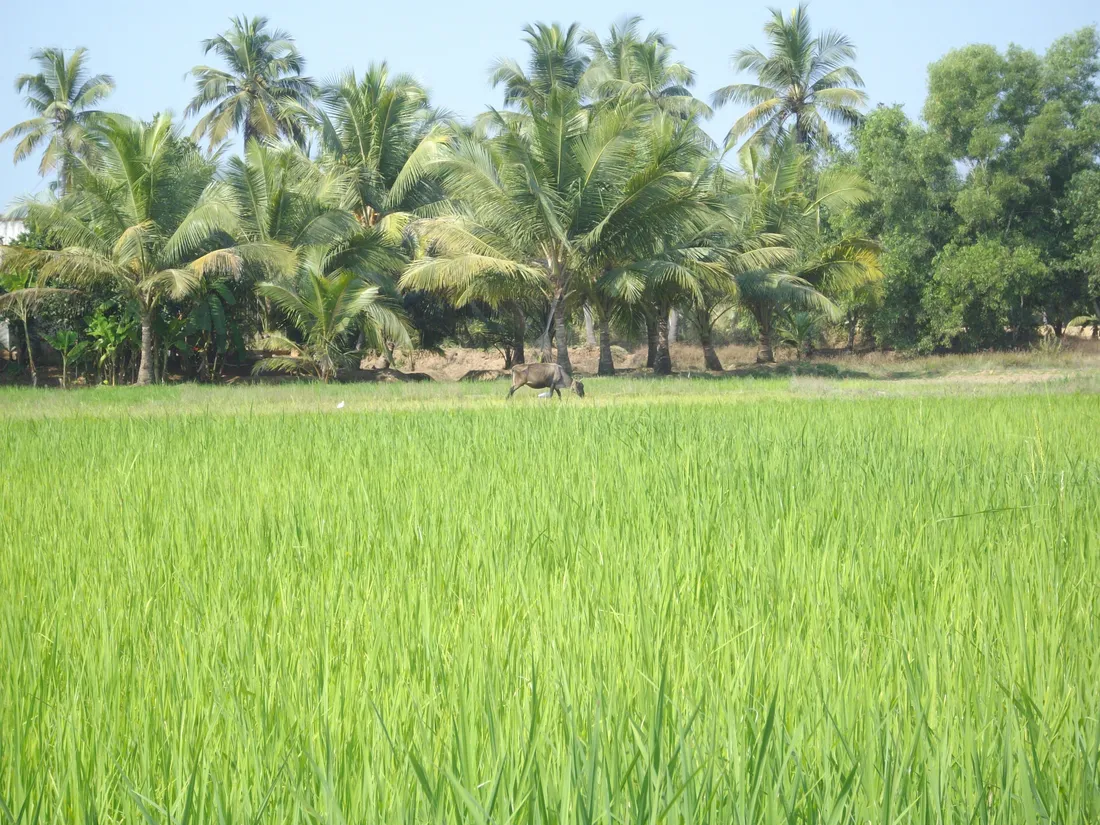
The Bunts — known also as Nadava across the northern reaches of their homeland, and as okkelme, the cultivators — are a Tuluva community of Tulu Nadu, the coastal country of Dakshina Kannada and Udupi in Karnataka and Kasaragod in Kerala, where Tulu is the mother tongue and Kannada is widely spoken in the north. Theirs is a land of paddy and areca, of coconut palms and laterite, of monsoon rivers running west to the sea.

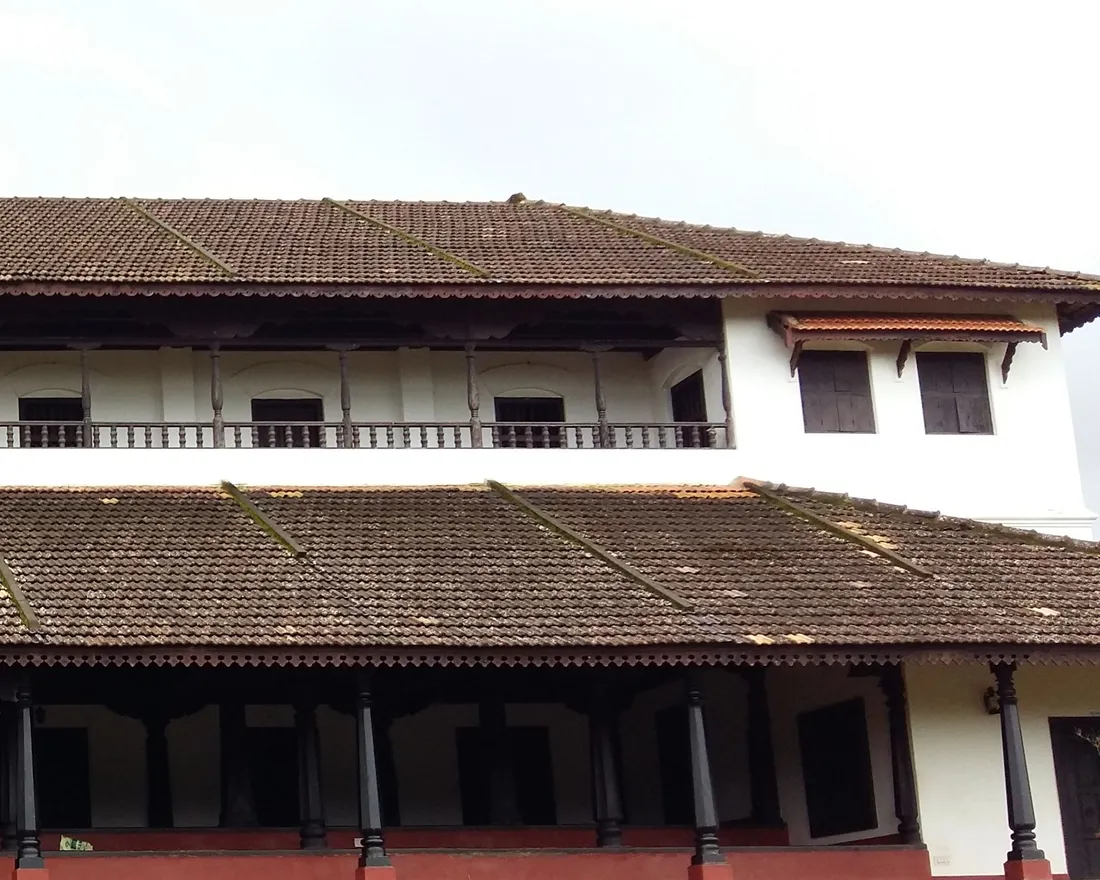
By long tradition most Bunt families reckon descent through the mother, under the custom known as Aliyasantana, and a family's bari — the matrilineal clan that Tuluva usage treats as the counterpart of a gotra — is settled before an alliance is considered, since families of the same bari do not marry. The ancestral guttu, the pillared and tile-roofed house a family is named for, remains for many households the place a lineage is traced from, and the carved woodwork of its verandahs and doorways is among the finest domestic craft of coastal Karnataka.

Sri Guru Raghavendra Matrimony presents those details on every profile, in the order your elders actually weigh them — so a Bunt alliance begins informed, and with the dignity your family expects.

What families often ask first

What families often value first

  • Profiles state sub-community, the bari your family names, the guttu or ancestral house, and native district up front, so your family knows the essentials before the first conversation.
  • A Bunt household, a Nadava household of the northern taluks, a Masadika household of the Tuluva heartland and a Parivara household of the southern taluks each stand here under the name they use at home — none of them folded into another.
  • Registrations from this page stay within the Bunt community, so every profile your family considers belongs to the community.

What your family will find inside

Everything your family checks, before the first phone call

These are the details Bunt households settle first — and they are visible before any contact is exchanged.

Government ID verified members stand out

Members who complete Government ID verification carry a clear mark, giving your family added reassurance at a glance.

Filter by sub-community, bari, and native place

Narrow the search by sub-community — Masadika, Nadava, Parivara and more — and by bari, ancestral house, native district, mother tongue, and family origin.

Education, work, and family background together

Degrees, professions, and family character read clearly on every profile, in the same order elders weigh an alliance.

Lineage recorded your way

Write your family's bari and your guttu — the ancestral house — in your own words, exactly as your family names them. There is no list you have to fit into.

Contact details are not shown openly

Phone numbers and email are not shown openly on profiles. A member uses the Reveal Contact feature to see another member's details and reach out directly when they are ready to take an introduction forward.

Interest is never lost

Shortlists and the profiles your family has already opened stay saved, so you can return to a promising profile after the household has talked it over.

Built around how Bunt alliances actually happen

Whether your family's search stays within one taluk of the coast or reaches to Bengaluru, Mumbai and beyond, the details that matter — sub-community, bari, ancestral house and native district — are always in view.

Why families feel at ease

Why Bunt families feel at home

The details that decide an alliance sit together in one place, presented the way your family would present them.

Paddy, areca, and the monsoon coast

Your search stays among Bunt families, so every introduction starts from shared roots in the Tuluva country.

Every sub-community at home

Masadika and Nadava families of the north and Parivara households of the southern taluks are all welcome, each with its own option so families recognise and match within their own group.

Comfortable for parents and members alike

Whether the search is led by a parent, a sibling, or the member themselves, the profile reads clearly for all of them.

Move at your family's pace, with tradition honoured up front and you reach out when your family is ready.

Understanding the heritage

Tulu Nadu — the coastal country the community calls home

Tulu Nadu is the narrow, green country between the Western Ghats and the Arabian Sea, and the Bunt community belongs to it entirely — to its paddy fields and areca gardens, its laterite soil and its monsoon.

The land and its people

Dakshina Kannada and Udupi in Karnataka and Kasaragod in Kerala make up the homeland, with Mangalore as its principal city. Tulu is the mother tongue of the community, and Kannada is widely spoken across the northern reaches.

  • Dakshina Kannada, Udupi and Kasaragod — the Tuluva country
  • Mangalore, the city of the coast
  • Tulu at home; Kannada widely spoken in the north

Okkelme — the cultivators

The community's own dignified name for itself is okkelme, the cultivators. For generations Bunt families worked the paddy and the areca of the coast, and that quiet, land-rooted self-reliance is carried today into the professions, into business, and into households far from the coast.

Practice and emphasis differ from one family network to another — this is heritage held with pride, not a single rule book.

One community, its own names

Who the Bunt community is — and the names it carries

Across Tulu Nadu the community carries more than one name, and within it are groups that families still name for themselves. Each registers as its own sub-community here, so households recognise and match within their own people.

The names the community carries

Bunt is the name most widely used, and Nadava — also written Nadavaru — is the name families use across the northern reaches of Tulu Nadu, around Kundapura and north of Brahmavar. Bant, Banta and Bantaru are the same name written as families and records have written it.

  • Bunt — the name most widely used across the community
  • Nadava, Nadavaru — the name used in the northern reaches of Tulu Nadu
  • Bant, Banta, Bantaru — the same name in older and regional spellings
  • Okkelme — the cultivators, the community's own name for itself

The groups families name for themselves

Within the community, households name their own group — and each is welcome here on its own terms, with its own option.

  • Masadika — the Tulu-speaking families of the Tuluva heartland
  • Nadava, or Nad — the families of the northern taluks, with bari names of their own
  • Parivara — households of the southern taluks, who reckon descent through the father

If your family's group is not listed separately, Other Bunt community keeps you within the same community space. Families of Uttara Kannada who call themselves Nadavar belong to a different community with its own history, and are not covered by this page.

Understanding the traditions

Bari and guttu: how Bunt families trace and match lineage

Before education, often before the horoscope itself, a Bunt alliance turns to the family's bari — and to the guttu, the ancestral house a family is named for. These are the markers families use to keep an alliance outside the same ancestral line.

The bari, named from the mother

The bari is the family's clan, and Tuluva usage treats it as the counterpart of a gotra — with one difference that matters at every alliance: a bari is taken from the mother's side, not the father's. Two people of one bari are regarded as of one ancestral line, so alliances are sought outside it while the match stays within the community.

  • A bari comes from the mother's family, not the father's
  • Families of the same bari do not marry
  • Bari names differ between the Tuluva heartland and the northern taluks
  • Sub-community is usually weighed together with this lineage check

The guttu — the house a family is named for

The guttu is the ancestral home: a pillared, tile-roofed house set around its courtyard, with the daivakone, the room kept for the family's guardian spirits. Families still name their guttu when they speak of where they are from, and here it stands as your family's own name, honoured alongside the bari.

  • Enter your bari and your guttu in your own words
  • The chowka, the courtyard the house is built around
  • The aanebaagilu, the great entrance, and the carved verandah
  • The bari your elders would ask about first, answered before the first phone call

Households differ in how they weigh the lineage line, and Parivara families reckon descent through the father rather than the mother — so the bari is recorded where a family keeps one, and never required of a family that does not.

The figure the coast remembers

Siri, and the line that passes through the daughters

Bunt families look to no single guru, and Tulu Nadu holds no Bunt matha — faith here has always lived closer to home. The one figure the whole coast remembers is Siri, a woman of the guttu houses, honoured as the ancestress from whom the line through the daughters is traced.

The longest poem in the Tulu language

As Tulu Nadu tells it, Siri was found as an infant among areca flowers and raised at Satyanapura in the house of Berma Alva, and her story carries on through her son Kumara and her daughter Sonne. That story is sung as the Siri paddana, which folklorists who recorded it line by line hold to be the longest poem in the Tulu language, running to more than fifteen thousand lines. It is the community's cherished lore rather than documented history, and is shared here in that spirit.

  • Siri, remembered as a woman of the guttu houses of Satyanapura
  • The Siri paddana — over fifteen thousand lines, sung and handed down
  • Her line continues through her son Kumara and her daughter Sonne
  • Recorded and studied by folklorists in India and abroad

The Siri Jatre, on a full-moon night

Between February and May, on a full-moon night, families gather at the Adi Alade shrines for the Siri Jatre — at Hiriadka, Pangala and Nandalike in Udupi district, and at Kavathar and Nidgal in Dakshina Kannada. Siri is not honoured by one community alone; the gathering is Tuluva, and families of every background come to it, which is why she is spoken of here as a figure the coast shares rather than one it owns.

  • The Siri Jatre — a full-moon night between February and May
  • Adi Alade shrines at Hiriadka, Pangala and Nandalike, Udupi district
  • Kavathar and Nidgal, Dakshina Kannada
  • Attended across the Tuluva world, not by one community alone

Siri, these shrines and this gathering are mentioned with reverence and gratitude alone, as heritage shared across the Tuluva world. No endorsement is implied, and devotional matters rest with each family and its elders.

A heritage of devotion

Faith lived close to the land

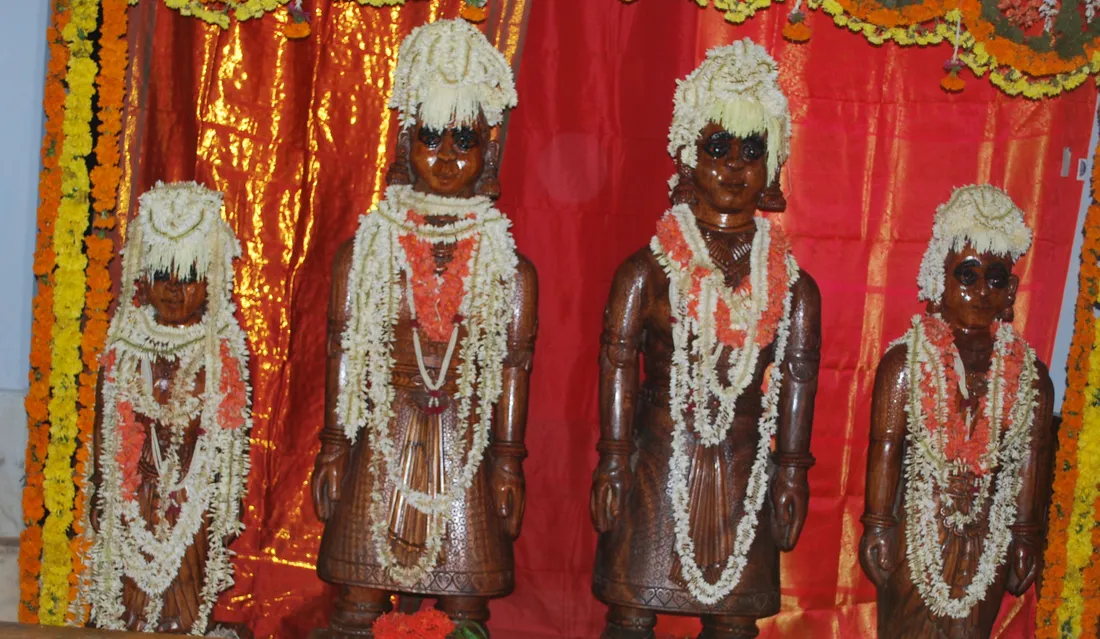
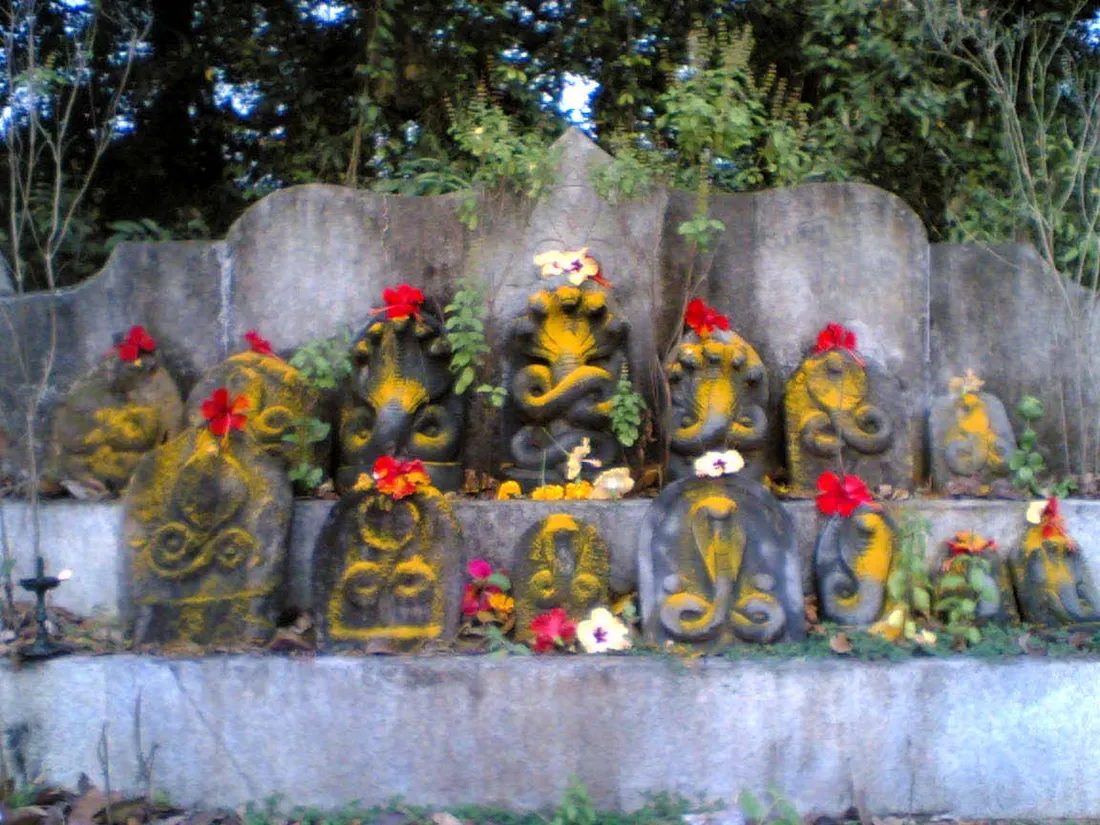
Bunt devotion belongs to the soil of Tulu Nadu. Families keep the guardian daivas of house, field and village, and across the coast households tend a nagabana, the sacred grove where the serpent deity is revered.

The daivas of house, field and village

Bunt families have long been the traditional patrons of daiva aradhane, the reverence offered to the guardian spirits of the household, the field and the village. It is a devotion the whole Tuluva world shares, kept with great seriousness and passed down within the family.

  • The guardian daivas of the house and the family
  • The daivas of the field and the village
  • Jumadi, Ullaya, Ullalthi, Jaranthaye, Kodamanthaye — daivas families call by name
  • A reverence shared across the wider Tuluva world

The nagabana, the serpent grove

Across Tulu Nadu households tend a nagabana — a small grove left standing, with carved naga stones set beneath the trees, where the serpent deity is honoured and the family gathers at the appointed season.

These deities, groves and sacred places are mentioned with reverence and gratitude alone, as heritage shared across the Tuluva world. No endorsement is implied, and devotional matters rest with each family and its elders.

The wedding and the year

The dhare, and the culture of the coast

A Bunt wedding turns on a single moment — the dhare — and the community's year is coloured by the arts, the new year and the food of the Tuluva coast.

Kai dhare — the moment the marriage is made

The bride's right hand is laid over the bridegroom's, a decorated vessel of water crowned with a coconut and the flower of the areca palm is held above their joined hands by the elders of both families, and the water is poured through — the moment at which the marriage is held to be made. The betrothal that precedes it is the ponnapathera, the nischaya tambula.

  • Kai dhare, the joining of hands
  • The dhare gindi — the vessel, the coconut, the areca flower
  • Elders of both families move the vessel three times
  • Ponnapathera, the betrothal that comes before

Yakshagana, Bisu Parba and the food of the coast

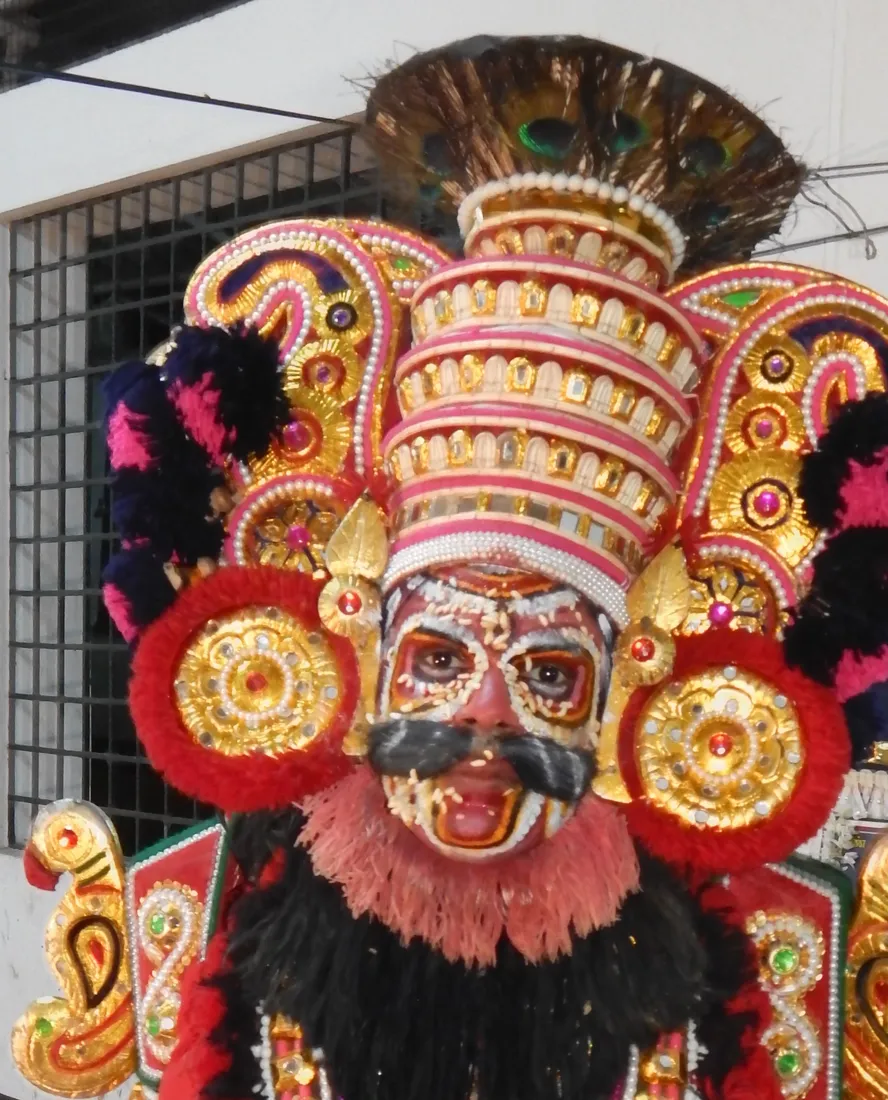
Yakshagana, the night-long dance theatre of the coast, is carried forward by Bunt families alongside the wider Tuluva world. Bisu Parba, the Tuluva new year, falls in the middle of April, and neer dosa — the soft, unfermented rice crepe whose name comes from neer, water in Tulu — belongs to every gathering.

  • Yakshagana, the dance theatre of Tulu Nadu
  • Bisu Parba, the Tuluva new year in mid-April
  • Neer dosa, and the rice-and-coconut cooking of the coast

Festivals, weddings and their customs are cherished differently from one household to another; they are shared here as heritage the community holds dear.

A community that builds together

The sanghas, and a community's habit of service

Wherever Bunt families settled, they organised — and what they built first were schools, hostels and dispensaries for their own young people and for the wider town.

Founded where families gathered

Community associations were founded at Mangalore in 1908, at Mumbai in 1927 and at Bengaluru in 1958, and they have long run schools, hostels, night schools and welfare work — a habit of putting education first that families still carry.

A community at home in Bengaluru

Bunt families have been part of Bengaluru's life for generations, and Sri Guru Raghavendra Matrimony is based in the city — so a search that begins on the coast and a search that begins in Bengaluru meet in the same place.

Community institutions are mentioned as heritage and service alone; this space is not affiliated with any association.

Questions families ask

Common questions from Bunt families

Will we only see Bunt profiles here?

Yes. Registering through this page places your profile in the dedicated Bunt section — Bunt and Nadava, Masadika and Parivara families — and every profile you see, match with, or contact belongs to it.

We are Nadava — is this the right place for us?

Yes. Nadava, also written Nadavaru, is the name families use across the northern reaches of Tulu Nadu, around Kundapura and north of Brahmavar, and Nadava is one of the sub-communities you can choose here. Families of Uttara Kannada who call themselves Nadavar belong to a different community with its own history, and are not covered by this page.

How is our family's lineage recorded?

Your bari and your guttu — the ancestral house — each sit in their own place, written in your own words, exactly as your family names them. There is no single list of baris drawn up, so nothing is chosen for you. Bari names differ between the Tuluva heartland and the northern taluks, and Parivara families who reckon descent through the father may leave the bari blank — it is never required.

Our surname is Shetty, Rai, Hegde or Alva — does that decide our community?

No. Those are surnames and honoured titles carried by Bunt families, but several of them are carried by other communities of the coast as well. Your community and sub-community are what you choose on your profile — a surname is never used to decide them.

Will our phone number be visible to everyone?

It is not shown openly on your profile. A member who wants to take an introduction forward can see your contact through the app's Reveal Contact feature and reach you directly, and Government-ID-verified badges help you know who you are speaking with.

Next step

Register or login when your family is ready to continue

Create your account and step into the Bunt section of Sri Guru Raghavendra Matrimony, where sub-community, the bari your family names from the mother's side, the guttu or ancestral house, and native district are part of every profile — for Bunt, Nadava, Masadika and Parivara families, and your family sets the pace.