Sri Guru Raghavendra Matrimony™ emblem
SRI GURU RAGHAVENDRA MATRIMONY™

The Odia families of the Mahanadi country

Khandayat Matrimony

A community whose farming year opens with the first handful of seed carried out to the field, that honours the new grain in the measuring basket as Lakshmi herself, and that keeps the village goddess at every marriage, deserves a matrimony space that asks the right questions first — the gotra, the Grama Devati, the native district, and family character, all on the profile from the start.

KhandayatCoastal OdishaNorthern OdishaCentral Odisha

Begin when you are ready

Register now, or read about the Khandayat heritage first

Creating an account takes a few minutes. If your family prefers to understand the space first, the sections below walk through the Mahanadi country, the farming year and the days it keeps, Manabasa Gurubara and the granary, the goddess of the village, and the Odia wedding itself.

Registrations from this page stay within the Khandayat community — every profile your family sees and contacts belongs to the community.
A heritage of the delta, the granary, and the village goddess

A heritage your family carries every day

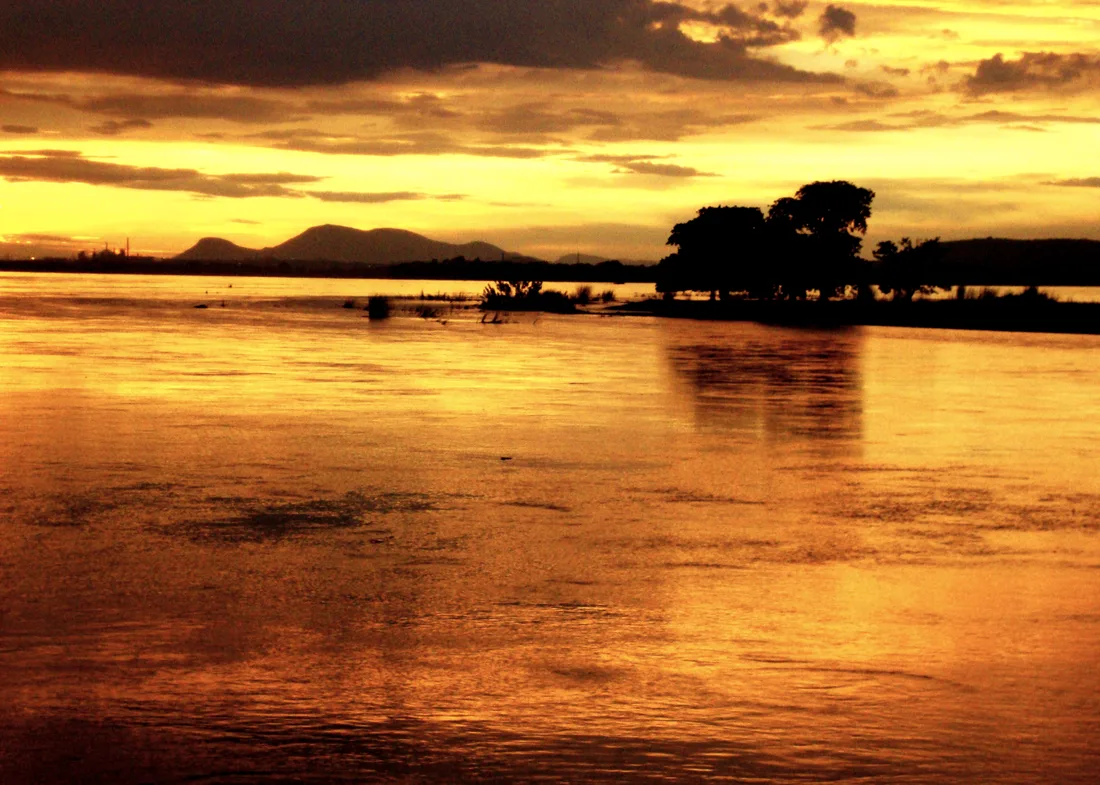
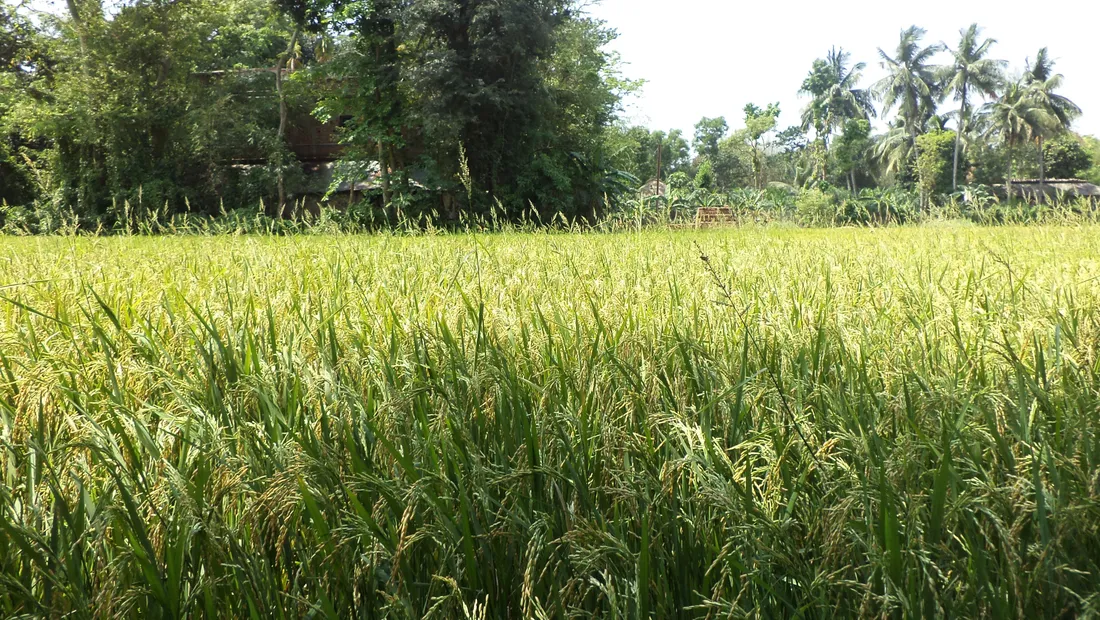
Khandayat families belong to Odisha and to the Odia language, and above all to the deltaic country of the Mahanadi, where the land between the western hills and the eastern marshes has been farmed by the same families for as long as anyone can name.

The farming year opens on Akshaya Trutiya with Akhi Muthi Anukula — akhi muthi, the first handful — when the first handful of paddy seed is carried out to the field in a decorated basket and offered before a single grain is sown; the Odia year itself turns earlier, at Pana Sankranti in mid-April. In mid-June comes Raja, when the earth herself is held to be resting — for three days nobody ploughs, digs or sows, the swings go up under the trees, the pithas are made, and the fields are simply left in peace. In Odia households the gotra is taken from the father's side, and it is still weighed alongside the horoscope when an alliance is being considered, before the nirbandha settles it.

Here the gotra, the Grama Devati and the native district are already on the profile when your family opens it, weighed in the order an Odia household weighs them, long before the nirbandha is spoken of — so a Khandayat alliance begins informed, and with the dignity your family expects.

What families often ask first

What families often value first

  • Profiles state the family's gotra, the Grama Devati it keeps and the native district up front, so your family knows the essentials before the first conversation.
  • Families from coastal, northern, central, western and southern Odisha each find their own region on the profile.
  • Registrations from this page stay within the Khandayat community, so every profile your family considers belongs to the community.

What your family will find inside

Everything your family checks, before the first phone call

These are the details Khandayat households settle first — and they are visible before any contact is exchanged.

Government ID verified members stand out

Members who complete Government ID verification carry a clear mark, giving your family added reassurance at a glance.

Filter by region, gotra and native district

Narrow the search by the part of Odisha a family comes from, by gotra, by the village deity it keeps, and by native district.

Education, work, and family background together

Degrees, professions, and family character read clearly on every profile, in the same order elders weigh an alliance.

Lineage recorded your way

Write your gotra in your own words, exactly as your household names it. Older records also note families who named a line of a different kind, drawn from a tree, a bird or an animal — if that is what your family names, write it here and it belongs just the same.

Contact details are not shown openly

Phone numbers and email are not shown openly on profiles. A member uses the Reveal Contact feature to see another member's details and reach out directly when they are ready to take an introduction forward.

Interest is never lost

Shortlists and the profiles your family has already opened stay saved, so you can return to a promising profile after the household has talked it over.

Built around how Khandayat alliances actually happen

Whether your family's search stays within one district of Odisha or reaches to Bhubaneswar, Bengaluru and beyond, the details that matter — gotra, village deity and native district — are always in view.

Why families feel at ease

Why Khandayat families feel at home

The details that decide an alliance sit together in one place, presented the way your family would present them.

Odia spoken on both sides

Every profile your family opens here belongs to a Khandayat household, so an introduction begins with Odia already spoken on both sides and the same festivals kept in both houses.

Every part of Odisha at home

Families of the coastal districts, of the north and the centre, of the western country and of Ganjam in the south are all welcome, each able to name their own region on the profile.

Comfortable for parents and members alike

Whether the search is led by a parent, a sibling, or the member themselves, the profile reads clearly for all of them.

Move at your family's pace, with tradition honoured up front and you reach out when your family is ready.

Understanding the heritage

Odisha, and the country of the Mahanadi

Khandayat families are of Odisha, and the Odia language and the land of the Mahanadi delta are the two things a Khandayat household will name first.

The land between the hills and the sea

Between the western hills and the eastern marshes lies the deltaic country the Mahanadi has built, and it is here that the community's households have farmed the longest. Families are found across the coastal districts and inland through the north, the centre and the west, and southward into Ganjam.

  • Coastal Odisha — Cuttack, Puri, Jajpur, Kendrapara, Bhadrak, Balasore
  • Northern Odisha — Mayurbhanj and Keonjhar
  • Central Odisha — Dhenkanal and Angul
  • Western Odisha — Sambalpur and Bargarh; and Ganjam in the south

Odia first

Ask what a Khandayat home holds dear and the answer is Odia before it is anything else: the Vaishnava devotion the whole state shares with Lord Jagannath, jhoti drawn in rice paste across the floor and the walls, pakhala at midday, and betel offered to whoever comes to the door.

Practice and emphasis differ from one district and one family to another — this is heritage held with pride, not a single rule book.

The year on the land

The farming year, and the days it keeps

The Odia year turns on the land, and the community's calendar turns with it — from the first handful of seed to the three days when the earth is left to rest.

Akshaya Trutiya, and the first handful of seed

The farming year opens on Akshaya Trutiya, when the first handful of paddy seed is carried out to the field in a decorated basket and offered before a single grain is sown. Later comes Chitau Amabasya, when cakes are carried out into the standing paddy.

  • Akshaya Trutiya — the ceremonial first sowing
  • Chitau Amabasya — cakes carried into the paddy
  • Pana Sankranti and Kumar Purnima through the year
  • Nuakhai — the new rice of western Odisha, offered before the house eats

Nuakhai, and the new rice of the west

In western Odisha the new crop is welcomed at Nuakhai, on the fifth day of the bright fortnight of Bhadraba. The nabanna, the first of the new rice, is offered to Maa Samaleswari at Sambalpur before any household eats of it — and then comes Nuakhai Juhar, when the young greet their elders and the families of the village call on one another.

Raja, and the earth at rest

In mid-June comes Raja, when the earth herself is held to be resting — for three days nobody ploughs, digs or sows, the swings go up under the trees, the pithas are made, and the fields are simply left in peace. At Makar Sankranti the new rice is made into makara chaula — uncooked new paddy with jaggery, banana, coconut, sesame and chhena — offered first to the deities of the house and then shared among everyone in it. Raja and Makar Sankranti belong to all of Odisha, and the community keeps them as part of it.

Festivals and their customs are cherished differently from one household to another; they are shared here as heritage the community holds dear.

The granary and the women of the house

Manabasa Gurubara

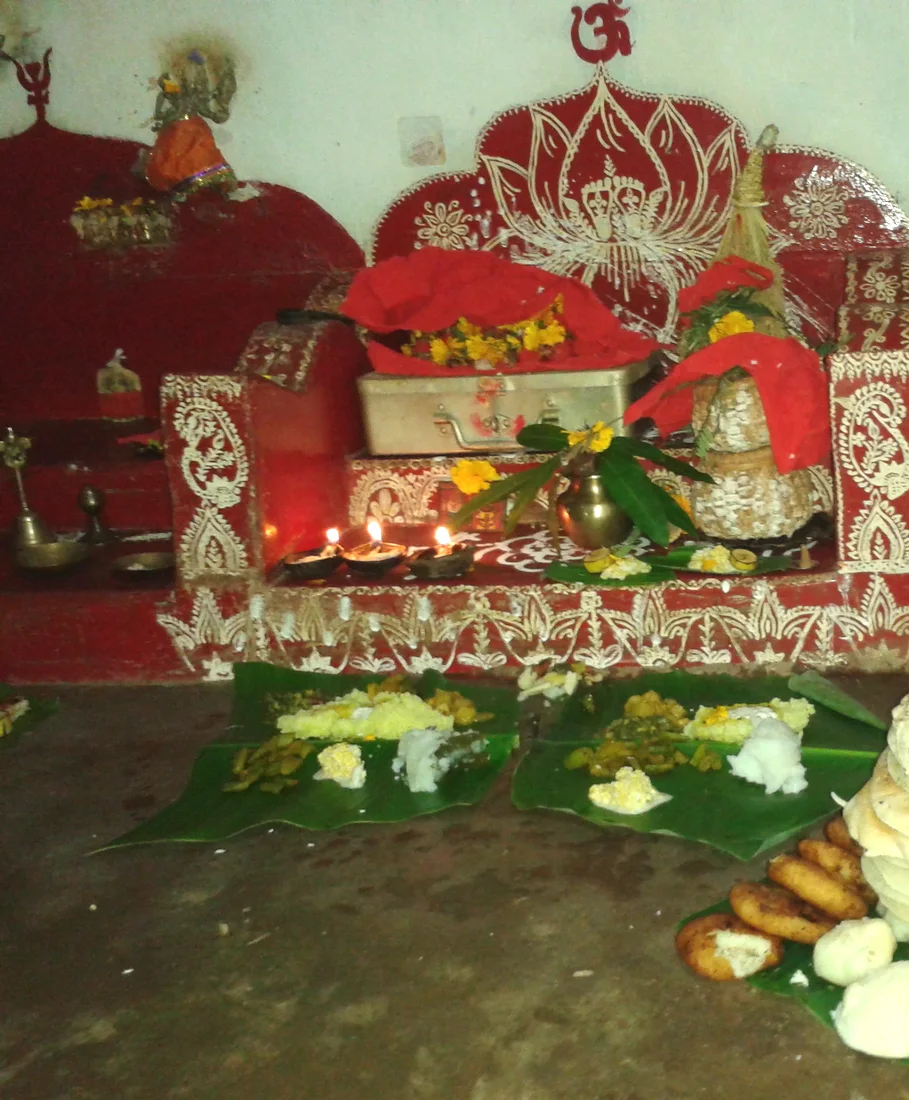
On the Thursdays of Margasira the new grain is heaped into the mana, the measuring basket, and honoured as Lakshmi herself.

Kept by the eldest woman, and handed on

The eldest woman of the house keeps the observance for as long as she is able, and then places it in the hands of her eldest son's wife. Cakes of the new crop are made without fail, the lamp is kept unbroken, and jhoti is drawn across the wall and the floor.

  • The new grain heaped in the mana and honoured as Lakshmi
  • Cakes of the new crop, made without fail
  • The lamp kept unbroken through the observance
  • Jhoti drawn on the wall and the floor

The home's own art

Jhoti and chita are drawn in rice paste by the women of the house, and muruja in coloured powder during Kartika. Of all the arts of Odisha this is the one that belongs to the household itself rather than to a workshop or a stage — it is made at home, by the family, and washed away and made again.

These observances are shared here as heritage the community holds dear; households keep them differently, and each family's practice is its own.

A heritage of devotion

Faith at home, and the goddess of the village

Khandayat families are predominantly Vaishnava, and the devotion to Lord Jagannath that Odia families share runs through the household year. Closer still is the Grama Devati, the goddess of the village itself.

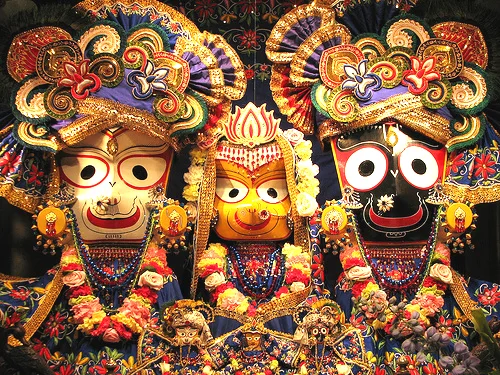
Lord Jagannath with Balabhadra and Subhadra in ceremonial dress and garlands, the devotion Odia families share across the whole of Odisha

The Grama Devati, and the marriage

Almost every Odia village keeps its own Grama Devati, and her worship belongs to the village as a whole — the sweets and fruit are offered on the village's behalf and the prasad is shared across it, and in the home the head of the family makes his own offering to her. Before a wedding the bride's saree, her sindura, her bangles and her toe-rings are carried to the goddess's temple and placed before her — the Diya Mangula Puja — and worn only afterwards. It is why an Odia family asks which goddess the other household keeps.

  • The village goddess, kept by the village and named by the family
  • Offerings made on the village’s behalf, and the prasad shared
  • Diya Mangula Puja — the bride’s saree and sindura blessed before the wedding

The goddesses of the Odia country

Beyond the village, Odia families honour the great goddess shrines the state has kept for centuries — Viraja at Jajpur, Sarala at Jhankada, Vimala at Puri, Charchika at Banki and Bhattarika at Baramba — and the Kalinga temples of Bhubaneswar and the coast stand as the shared inheritance of everyone in Odisha.

These deities, temples and sacred places are mentioned with reverence and gratitude alone, as heritage shared across Odisha. No endorsement is implied, and devotional matters rest with each family and its elders.

Understanding the traditions

The gotra, the horoscope, and the nirbandha

In Odia households the gotra is taken from the father's side, and it is still weighed alongside the horoscope when an alliance is being considered.

How the line is named

Write your family's gotra as your household names it. Older records also note families who carried a section name of a different kind, drawn from a tree, a bird or an animal; if that is what your family names, write it here just the same. There is no list drawn up, and nothing is chosen for you.

  • The gotra, taken from the father's side
  • Some families name a section of a different kind — equally welcome
  • The Grama Devati recorded alongside it
  • The native district, which is where the village goddess belongs

The wedding, in Odia

The nirbandha settles the alliance and the lagna is fixed; then comes the bahaghara itself, the barajatri arriving with the groom, the kanyadana, the hata ganthi that joins their hands, and the saptapadi walked over seven heaps of rice — and the bride's mother feeding the groom curd-pakhala from her lap. Sambalpuri bandha and the handlooms of the west clothe the occasion.

  • Nirbandha and lagna dhara — the alliance settled
  • Bahaghara, and the barajatri who come with the groom
  • Kanyadana, hata ganthi, and the saptapadi over seven heaps of rice

Households differ in how they weigh these. This community keeps no single founding guru, matha or sampradaya, and the devotion to Lord Jagannath belongs to all of Odisha rather than to any one community within it.

Questions families ask

Common questions from Khandayat families

Will we only see Khandayat profiles here?

Yes. Registering through this page places your profile in the dedicated Khandayat section, and every profile you see, match with, or contact belongs to it.

We are from a different part of Odisha — is this the right place for us?

Yes. Families from the coastal districts, from the north and the centre, from the western country and from Ganjam in the south all belong here, and each can name their own region on the profile so that families searching nearby find one another.

How is our family's lineage recorded?

Your gotra is written in your own words, exactly as your household names it, with the Grama Devati and the native district alongside. Older records note families who carried a section name of a different kind, drawn from a tree, a bird or an animal — if that is what your family names, write it in the same place. No list has been drawn up, and nothing is assumed from a surname.

Will our phone number be visible to everyone?

It is not shown openly on your profile. A member who wants to take an introduction forward can see your contact through the app's Reveal Contact feature and reach you directly, and Government-ID-verified badges help you know who you are speaking with.

Next step

Register or login when your family is ready to continue

Create your account and step into the Khandayat section of Sri Guru Raghavendra Matrimony, where the family's gotra, the village deity and the native district are part of every profile — for Odia families across coastal, northern, central, western and southern Odisha, and your family sets the pace.