Sri Guru Raghavendra Matrimony™ emblem
SRI GURU RAGHAVENDRA MATRIMONY™

The people who cut the stone and sank the wells

Vaddera / Bhovi Matrimony

Vaddera, Bhovi, Vaddar, Odde — these are one community's name in different states and different scripts, not different communities. These are the households that cut and dressed the stone, sank the wells, raised the tank bunds and kept the grinding mill in every kitchen turning. An alliance here begins with the line a family marries away from, whatever that line is called at home.

Vaddera / BhoviOther Vaddera / Bhovi community

Begin when you are ready

Register now, or read about the Vaddera and Bhovi heritage first

Creating an account takes a few minutes. If your family prefers to understand the space first, the sections below walk through the mill and the chisel, the many names and where the word came from, the line a family marries away from, and the hall in Bengaluru.

Registrations from this page stay within the Vaddera and Bhovi community — every profile your family sees and contacts belongs to it.
Many names, one community

A heritage your family carries every day

These are households of Karnataka and the Deccan, of Telangana and Andhra, of Maharashtra where the name is written Vadar, and of Tamil Nadu where families say Oddar. In Karnataka a great many of them say Bhovi, and one of the official Telugu names joins both halves into a single word, Vaddabhovi.

The work was stone and earth: quarrying and dressing, sinking wells, raising the bunds of tanks, making roads — and, in nearly every house in the old Mysore country, keeping the grinding mill turning. The two stones of a hand-mill wear smooth with use, and it was this family's chisel that cut the grooves back into them.

So an alliance here begins with what a Vaddera household names first: the line it marries away from, the deity it keeps and the town it belongs to — with the dignity your family expects.

What families often ask first

What families often value first

  • The line your family marries away from is written in your own words — gotram, bedagu, intiperu or the surname your elders use, whichever is yours.
  • Your kula devaru sits on every profile, whether your household keeps Yellamma under one of her many names or Venkataramana of Tirupati.
  • Search by native place across Bengaluru, Tumakuru, Kolar, Mysuru, Kalaburagi, Hyderabad, Pune, Solapur, Chennai and beyond.

What your family will find inside

Everything your family checks, before the first phone call

These are the details Vaddera and Bhovi households settle first — and they are visible before any contact is exchanged.

Government ID verified members stand out

Members who complete Government ID verification carry a clear mark, giving your family added reassurance at a glance.

One line, whatever your family calls it

Telugu households name a gotram or an intiperu, Kannada households a bedagu, and in the Deccan the surname itself does the work. It is one system in three languages, and the profile takes it in whichever words are yours.

Filter by native place and family origin

Narrow the search by native place — Bengaluru, Tumakuru, Kolar, Mysuru, Kalaburagi, Hyderabad, Pune, Solapur, Chennai and many more.

Education, work, and family background together

Degrees, professions, and family character read clearly on every profile, in the same order elders weigh an alliance.

Contact details are not shown openly

Phone numbers and email are not shown openly on profiles. A member uses the Reveal Contact feature to see another member's details and reach out directly when they are ready to take an introduction forward.

Interest is never lost

Shortlists and the profiles your family has already opened stay saved, so you can return to a promising profile after the household has talked it over.

Built around how Vaddera and Bhovi alliances actually happen

Whether your family says Vaddera in Telangana, Bhovi in Karnataka, Vadar in Maharashtra or Oddar in Tamil Nadu, the things that decide an alliance — the line you marry away from, the deity your house keeps and the native town — are always in view.

Why families feel at ease

Why Vaddera and Bhovi families feel at home

The details that decide an alliance sit together in one place, presented the way your family would present them.

Both names, and no choosing between them

A household that grew up saying Bhovi and a household that grew up saying Vaddera are the same people, and neither is asked to answer to the other's word. The profile carries the name your family actually uses.

Four states, one community

Vaddar and Waddar, Odde and Oddar, Vadar and Wudder are the same name written as each state writes it. Whichever spelling your family has on its papers, it finds this page.

Comfortable for parents and members alike

Whether the search is led by a parent, a sibling, or the member themselves, the profile reads clearly for all of them.

Move at your family's pace, with tradition honoured up front and you reach out when your family is ready.

The work, and the name it earned

The mill in the kitchen, and the chisel that kept it turning

Of all the stone this community cut, the piece that mattered most to an ordinary household was the smallest one.

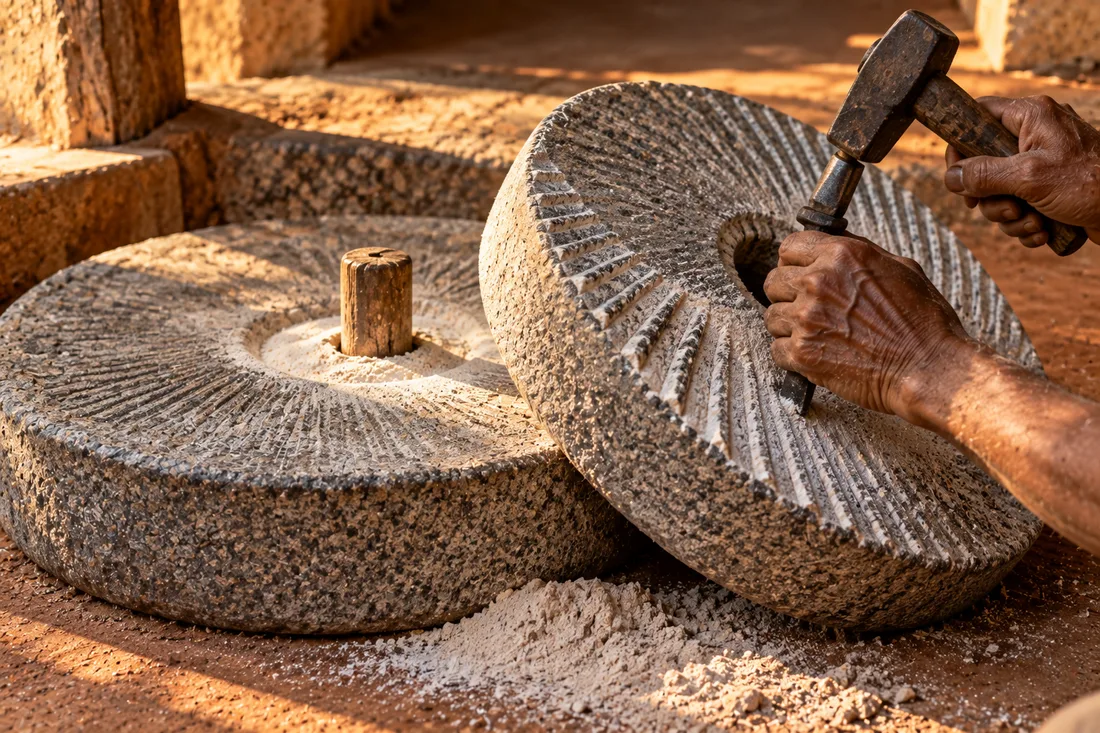
A pair of weathered granite hand-grinding stones being re-cut — a chisel and hammer held against the upper stone, the freshly cut grooves pale and sharp against the older flour-dulled surface

Every house had one, and it wore smooth

Most houses kept a pair of stone mills for grinding rice and ragi. The grinding faces wore smooth with use, and then the surface had to be made rough again — and that was done by the chisel of these households, going from village to village and town to town for the work.

  • The two stones, and the grooves cut back into them
  • Rice and ragi, ground at home every morning
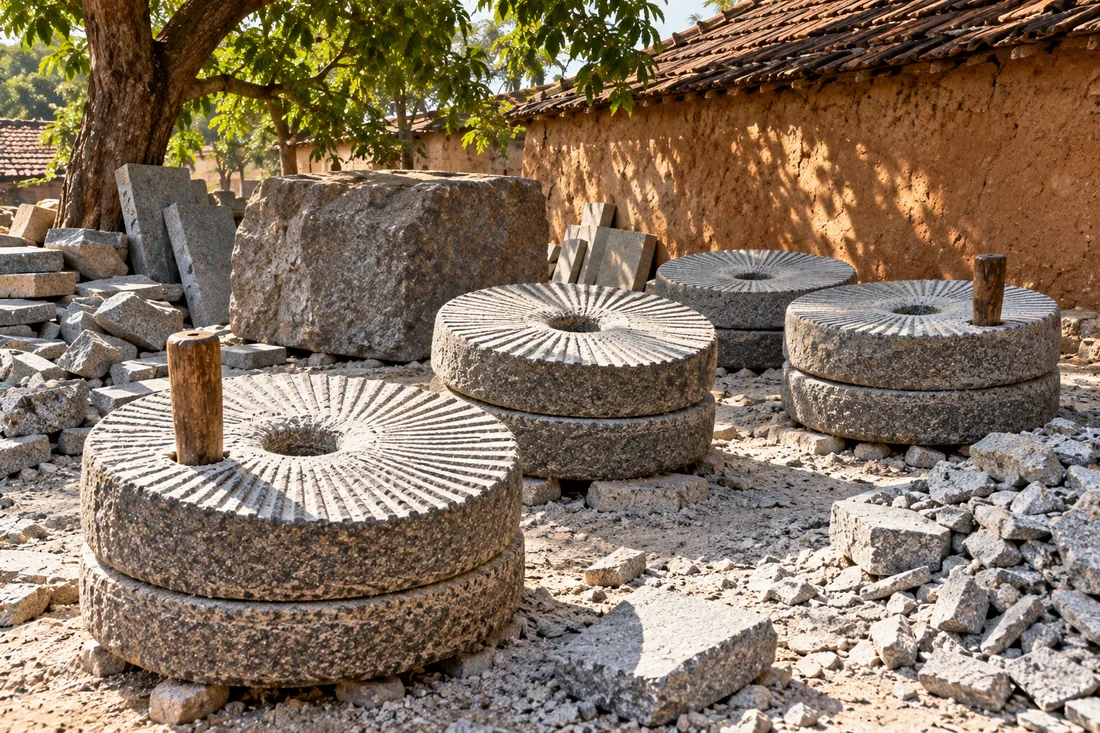
Newly finished pairs of granite hand-mills standing in a stone-cutter's open working yard, their grooves crisp and unworn, with offcuts and an unsplit block around them

Janti Ods — the trade that became the name

These families also made the jantis themselves, the stone hand-mills for grinding corn, and in the Bombay-Karnatak country they came to be called Janti Ods for it. A trade attaching itself to a community's own name is about the strongest thing a working record can say.

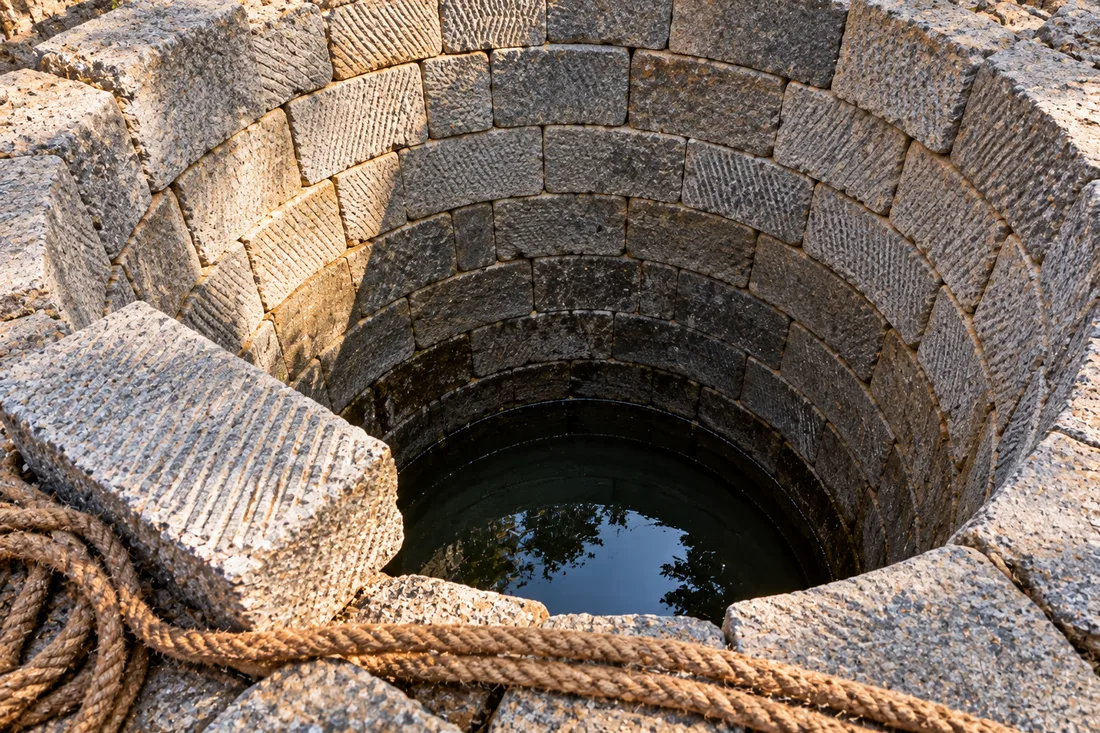
Looking down into a newly sunk village well lined with courses of hand-dressed granite laid tight without mortar, each face still carrying the fine chisel marks of fresh dressing

Stone, wells, bunds and roads

Beyond the mill there was the quarry and the dressing yard, the sinking of wells, the raising of tank bunds and the making of roads. The whole household took a share of it — everyone but the very old and the very young — and the work went on until it was finished.

Practice and emphasis differ from one district, one branch and one family network to another — this is heritage held with pride, not a single rule book.

The names

Vaddera, Bhovi, Vaddar, Odde — and where the word came from

This community answers to a good many names, and it is worth setting down plainly that they are names for one people rather than groups within it.

The same name, state by state

Vaddera, Vadde and Vaddelu in Telangana and Andhra; Vaddar, Waddar, Woddar and Voddar in Karnataka, where a great many households say Bhovi, or Bovi; Vadar in Maharashtra; Oddar in Tamil Nadu; Odde, Odda, Vodda and Wudder in the older records. One of the official Telugu names is Vaddabhovi, which joins both halves of it into a single word.

  • Vaddera · Vadde · Vaddelu
  • Vaddar · Waddar · Woddar · Voddar · Bhovi
  • Odde · Odda · Oddar · Vodda · Vadar · Wudder

Where the word came from is genuinely unsettled

Four accounts are in circulation and none of them is established. One traces it to Odra-desa, the country now called Odisha. One to the Kannada oddu, to join, from the joining of stones in building. One to the Kannada bhavi, a well. One to the Telugu boyi, a bearer. The honest thing a page can say is that the community has carried the name far longer than anybody has been able to explain it.

A name that is shared

In the South Canara country the name Bhovi is also used by families who have their own name, their own deities and their own account of themselves. This page speaks only for the households described here and would not presume to speak for theirs.

If your family carries one of these names and does not find itself described here, please do tell us through the request option in the app — it is the kind of message that decides what we open next.

How a marriage is guarded

Count the gotras of the Voddas, and the grains of sand

There is an old saying about this community's lineages, and it is the reason your profile asks the question the way it does.

The saying, and what it means for you

Count the gotras of the Voddas and the grains of sand, the old line runs — and a hundred years of trying to write them down has not disproved it. So nothing is chosen for you from a list here. You write your family's line the way your family says it, and it is read as your family means it.

One system, three languages

A Telugu household names a gotram, or an intiperu, the house name. A Kannada household names a bedagu. In the Deccan the surname itself is the unit. They are three words for one institution, and the rule behind all three is the same: a marriage is not made between two people of the same line.

  • Telugu — gotram, or the intiperu
  • Kannada — the bedagu
  • The Deccan — the surname itself

The deity of the house is a name, not a rule

Yellamma is the goddess most Vaddera households name, and she is kept under many of her names — Sunkalamma, Chaudamma, Maramma, Sidubamma, Kariyamma, Gangamma. Many families hold Venkataramana of Tirupati above all. Whichever is yours goes on the profile as your household's own. It is how a family is known, not what an alliance is decided by.

Every line named here stands on its own terms. Nothing on this site places one household above another.

The house, and the hall

Glass on the left hand, and a tortoise carried back to the water

Two small things recorded of these households more than a century ago, and one very present-day place in Bengaluru.

Glass on the left, brass on the right

Vaddera women wore glass bangles on the left hand and brass on the right. An older woman, asked why, gave the plainest answer there is: the right arm is the one you work with, and glass on it would break. It is a small sentence about a working life, and it has outlasted a great deal of more elaborate writing about this community.

The tortoise they call grandmother

A Vaddera household will not let a tortoise come to harm. They call it their grandmother, and say it did them a good turn long ago. If a Vodda sees someone carrying a live one, the old account says, he buys it from him, takes it to a well or a tank, and leaves it there in the water — very likely water his own people had dug.

Jasma Devi Bhavan, Bengaluru

The Karnataka Bhovi Welfare Association runs Jasma Devi Bhavan on Jasma Devi Bhavan Road, off Queens Road in Bengaluru, and Jasma Devi Mandir at Austin Town Layout. The Bhavan is where a great many of this community's weddings and engagements in the city are actually held. The association was founded in the early 1970s, runs an annual Varshikothsava and a sports meet, and gives free food and accommodation to students.

  • Jasma Devi Bhavan, off Queens Road
  • Jasma Devi Mandir, Austin Town Layout

Devotion is honoured here on its own terms. Nothing on this site ranks one form of it above another.

Questions families ask

Common questions from Vaddera / Bhovi families

We say Bhovi at home, not Vaddera. Is this our page?

Yes. Bhovi and Vaddera are two names for the same community, and one of the official Telugu names, Vaddabhovi, joins both halves into a single word. Vaddar, Waddar, Woddar, Voddar, Odde, Oddar, Vadar and Wudder all belong here too — they are how different states write one name.

How is our family's lineage recorded?

By the line your family marries away from, written in your own words — gotram, bedagu, intiperu or the surname your elders use, whichever your household says. Nothing is chosen for you from a list, because no list of these lines has ever been successfully drawn up. Your kula devaru sits beside it on the profile.

Our family has moved to Maharashtra and our papers say Vadar. Does that matter?

Not at all. Vadar is simply how Maharashtra writes the name, as Oddar is how Tamil Nadu writes it and Waddar how Karnataka does. Your native place and the state your family lives in are separate fields on the profile, and neither changes which community you belong to.

Will our phone number be visible to everyone?

It is not shown openly on your profile. A member who wants to take an introduction forward can see your contact through the app's Reveal Contact feature and reach you directly, and Government-ID-verified badges help you know who you are speaking with.

Next step

Register or login when your family is ready to continue

Create your account and step into the Vaddera and Bhovi space on Sri Guru Raghavendra Matrimony, where the line your family marries away from and the deity your household keeps are part of every profile from the first day — and your family sets the pace.