Sri Guru Raghavendra Matrimony™ emblem
SRI GURU RAGHAVENDRA MATRIMONY™

One honoured name, several proud communities

Mudaliar Matrimony

Mudaliar is an honoured Tamil name — from muthal, the first — carried by several distinct communities of the Tamil land. A matrimony space worthy of it should hold each community on its own terms: so Kondaikatti, Thuluva, Saiva Vellalar and Sengunthar families each search within their own people, with lineage, native place and family character on every profile from the start.

Thuluva VellalarKondaikatti VellalarSaiva VellalarSengunthar

Begin when you are ready

Register now, or read about the Mudaliar heritage first

Creating an account takes a few minutes. If your family prefers to understand the space first, the sections below walk through the name and the communities that carry it, the Saiva inheritance of the Tamil land, the loom and the land, and how each community records its lineage.

Registrations from this page stay within the community you choose — every profile your family sees and contacts belongs to it.
One honoured name, and the communities that carry it

A heritage your family carries every day

Mudaliar is not one community but an honoured Tamil name — from muthal, the first — carried by several distinct communities of the Tamil land, each with its own heritage and its own circle of marriage.

Across the Tamil land the honoured name changes with the country a community belongs to: in Thondai Nadu it is Mudaliar, in Kongu Nadu it is Gounder, and in the Chola and Pandya country it is Pillai — separate communities, each with the honour its own region gives it, not one community under three names. Because these are separate communities with separate circles of marriage, Sri Guru Raghavendra Matrimony honours that distinctness: you register as your own community, and your matches stay within it.

So a Mudaliar alliance begins among your own people, with the details your elders actually weigh — your community, your koottam or kulam, the kula deivam and the native place — and with the dignity your family expects.

What families often ask first

What families often value first

  • Profiles state your own community first, then the koottam or kulam, the kula deivam and the native place, so your family knows the essentials before the first conversation.
  • Thuluva Vellalar, Kondaikatti Vellalar, Saiva Vellalar and Sengunthar families each register as their own community, and matches stay within it.
  • Registrations from this page stay within the community you choose, so every profile your family considers belongs to it.

What your family will find inside

Everything your family checks, before the first phone call

These are the details Mudaliar households settle first — and they are visible before any contact is exchanged.

Government ID verified members stand out

Members who complete Government ID verification carry a clear mark, giving your family added reassurance at a glance.

Filter by community, lineage and native place

Narrow the search by community — Thuluva, Kondaikatti, Saiva Vellalar, Sengunthar — and by koottam or kulam, kula deivam, native place and family origin.

Education, work, and family background together

Degrees, professions, and family character read clearly on every profile, in the same order elders weigh an alliance.

Lineage recorded your way

Write your koottam or kulam in your own words, exactly as your family names it — and leave it blank if your household does not keep one. There is no list you have to fit into.

Contact details are not shown openly

Phone numbers and email are not shown openly on profiles. A member uses the Reveal Contact feature to see another member's details and reach out directly when they are ready to take an introduction forward.

Interest is never lost

Shortlists and the profiles your family has already opened stay saved, so you can return to a promising profile after the household has talked it over.

Built around how Mudaliar alliances actually happen

Whether your family's search stays within one district of Tamil Nadu or reaches to Bengaluru and beyond, the details that matter — your community, your lineage and your native place — are always in view.

Why families feel at ease

Why Mudaliar families feel at home

The details that decide an alliance sit together in one place, presented the way your family would present them.

Your own community, not a merged one

These are separate communities with their own traditions of marriage, and that is how they are kept here — you register as your community, and your matches stay within it.

Every community, its own option

Thuluva Vellalar and Kondaikatti Vellalar, Saiva Vellalar and Sengunthar each stand here as themselves, under the name their own people use, so a family recognises its own at once and matches among them.

Comfortable for parents and members alike

Whether the search is led by a parent, a sibling, or the member themselves, the profile reads clearly for all of them.

Move at your family's pace, with tradition honoured up front and you reach out when your family is ready.

One name, several communities

Understanding the name

Mudaliar is not a single community but an honoured Tamil title, from muthal, the first. It is carried by several distinct communities, each with its own heritage and its own circle of marriage — and on this matrimony space each is honoured on its own terms.

One name, drawn by the map

The honoured name changes with the country a community belongs to, not with the district a family lives in. In Thondai Nadu it is Mudaliar; in Kongu Nadu it is Gounder; in the Chola and Pandya country it is Pillai — separate communities, each with its own circle of marriage. Within a single community it does happen: the Saiva Vellalar are called Saiva Mudaliar in the north of Tamil Nadu and Saiva Pillai in the south — one people, two names, decided by the map and nothing else.

Each community, its own circle

Kondaikatti Vellalar, Thuluva Vellalar, Saiva Vellalar and Sengunthar are separate communities with their own traditions of marriage. Families marry within their own community, and this matrimony space keeps it that way — you register as your community, and your matches stay within it.

  • Thuluva Vellalar — also Thuluva Vellala Mudaliar, Arcot Mudaliar
  • Kondaikatti Vellalar — also Thondaimandala Mudaliar
  • Saiva Vellalar — Saiva Mudaliar in the north, Saiva Pillai in the south
  • Sengunthar — also Kaikolar, Senguntha Kaikola Mudaliar

Names, regional usage and customs differ from one community and district to another — this is a family of communities, held side by side with respect, not one single group. If your family's community is not listed separately, Other Mudaliar community keeps you among your own people.

The four communities

Who carries the name, and where

Each of these is its own community, with its own country within the Tamil land and its own traditions.

The Vellalar communities

Thuluva Vellalar families are of northern Tamil Nadu and southern Andhra, and of southern Karnataka too — Chennai, Vellore, Tiruvannamalai and Bengaluru — and are widely known as Arcot Mudaliar. Two accounts of their origin are recorded and neither is settled. Kondaikatti Vellalar belong to Thondaimandalam and are known as Thondaimandala Mudaliar. Saiva Vellalar carry the Mudaliar name in the north and the Pillai name in the south.

  • Thuluva Vellalar — northern Tamil Nadu, southern Andhra, Bengaluru
  • Kondaikatti Vellalar — the Thondaimandalam country
  • Saiva Vellalar — Saiva Mudaliar and Saiva Pillai, one people

Sengunthar, the weavers

Sengunthar families are a distinct Tamil weaving community with their own circle of marriage, and the older name says the work plainly — Kaikolar, from kai, the hand, and kol, the shuttle of the loom. Tradition holds the community's descent from Virabahu, foremost of the companions of Lord Murugan, who were afterwards told to take up a livelihood that would injure no living creature, and were taught weaving. The community's assembly at Kanchipuram has honoured Kamakshi Amman as its own for as long as its records reach, and Murugan is the deity families share, with Palani among the places they keep.

Practice and emphasis differ from one community and family network to another — this is heritage held with pride, not a single rule book.

A heritage of devotion

The Saiva inheritance of the Tamil land

Tamil devotion has been carried in these communities' households for centuries — in the poets it gave, in the book it wrote, and in the mutts that have kept the songs in print.

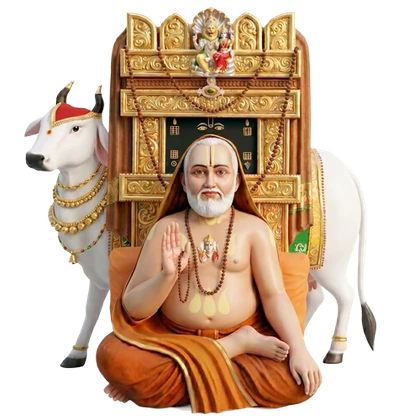
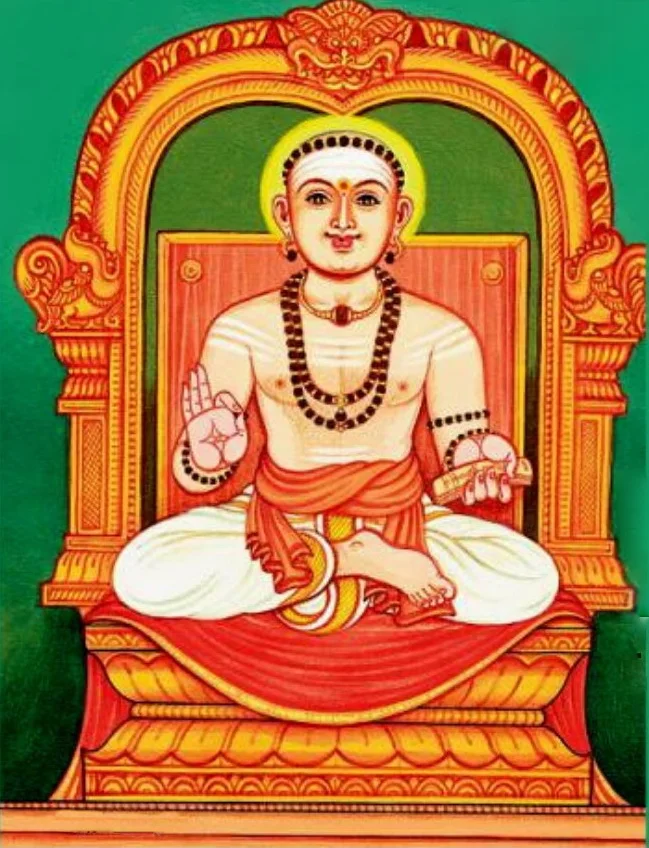
Sekkizhar of Kundrathur seated in blessing with the palm-leaf manuscript, author of the Periya Puranam, the twelfth and last book of the Tamil Saiva canon

Sekkizhar, and the Periya Puranam

Sekkizhar of Kundrathur gave Tamil devotion its Periya Puranam — the twelfth and last book of the Saiva canon, and to many Tamil households a fifth Veda — and his guru puja is still kept every Vaikasi-Poosam at the temple in the village where he was born. Many of the Nayanmars whose lives he set down were Vellalar, and the Periyapuranam celebrates them.

  • Sekkizhar of Kundrathur, author of the Periya Puranam
  • The twelfth and last book of the Saiva canon
  • His guru puja kept every Vaikasi-Poosam

The adheenams, and the songs kept in print

The Saiva Siddhanta adheenams founded in the sixteenth century — Thiruvavaduthurai, Dharmapuram and Thiruppanandal — have carried Tamil Saiva learning ever since, printing the Thevaram and the Tiruvasakam and keeping the temples in their care. They are traditionally associated with the Saiva Vellalar. Both Saiva and Vaishnava families are found within these communities, with no bar between them.

There is no single guru or matha for Mudaliar as a whole, because Mudaliar is a name rather than one community. These temples, teachers and mutts are mentioned with reverence and gratitude alone, as heritage shared across the Tamil land.

The loom and the land

Water, soil, and the shuttle

Two inheritances of skill run through these communities — the knowledge of water and soil, and the knowledge of the loom.

The knowledge of water

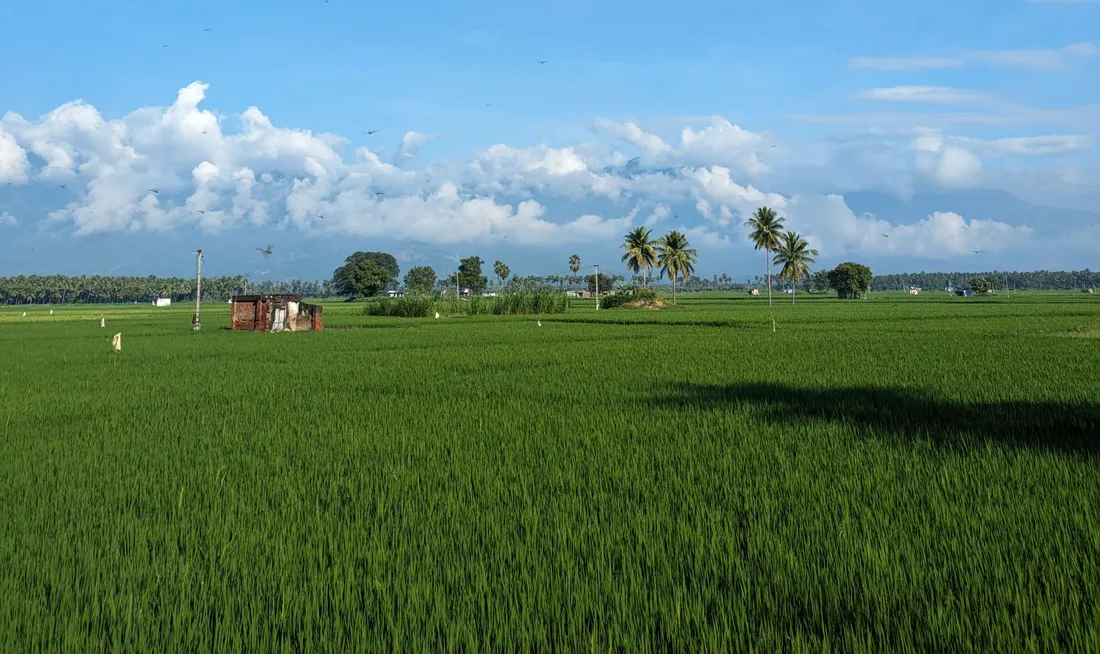
The Vellalar name is linked to vellam, the flood — and the skill it names is the storing and directing of water, the reading of soil, and the care of the land that follows from both. It is a heritage of stewardship, carried today into farming, the professions and public life alike.

The three shuttles and the korvai

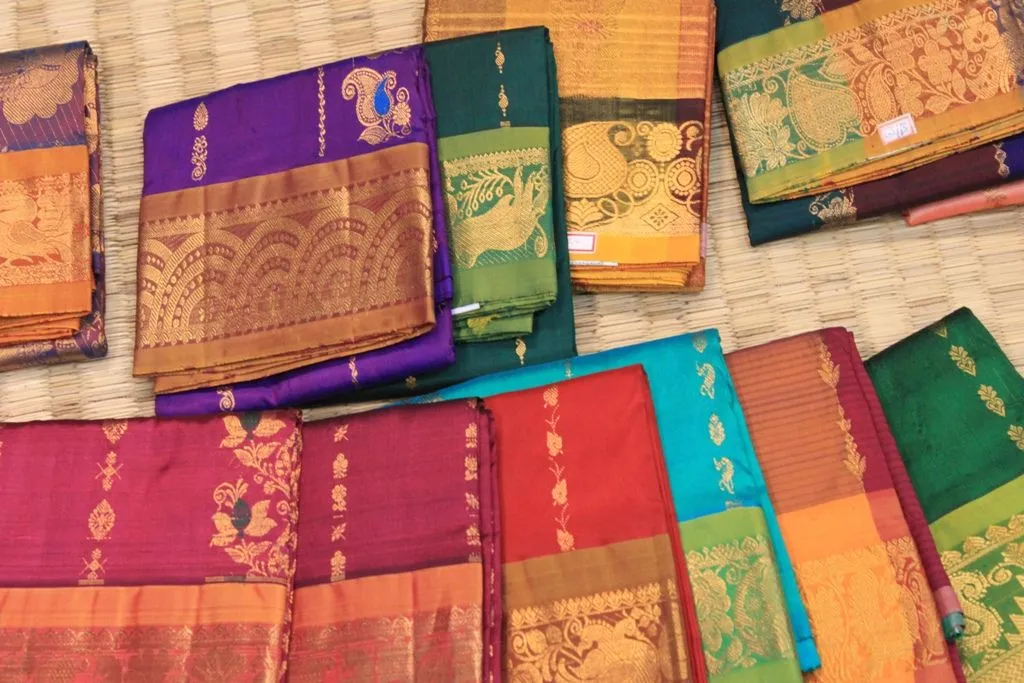
On the looms of Kanchipuram the body, the border and the pallu are woven with three shuttles, and the korvai interlock joins border to body so firmly that the border holds even if the body tears. It is among the finest handloom craft of the Tamil land, and the weaving heritage the Sengunthar carry belongs to that world.

These crafts belong to the Tamil land and to the many hands that keep them; they are named here as heritage, never as any one community's possession.

Understanding the traditions

How Mudaliar families trace and match lineage

Mudaliar families record lineage in different ways, because these are different communities — and there is room here for all of it.

The koottam, the kulam, and the kula deivam

Sengunthar families usually name a koottam, carried down the father's line, and an alliance is kept outside it. Among Vellalar families it is more often the community itself, the native place and the kula deivam that a household names first, and older records note that some sub-communities kept a lineage name while others did not. Write whichever your family keeps — and leave it blank if your household does not keep one.

  • Koottam or kulam, written as your family says it
  • The kula deivam and the temple it belongs to
  • The native place, or the nadu your family comes from
  • No list to fit into, and nothing assumed from a surname

Pachaiyappa Mudaliar, and what he left

Pachaiyappa Mudaliar, who died in 1794, renovated temples at Kanchipuram and left an educational endowment that in time became Pachaiyappa's College — remembered as the first non-missionary, non-British-financed educational institution in South India. It is the part of this heritage the communities are most often glad to be reminded of.

Households differ in how they weigh the lineage line, and the customs differ between these communities — some settle it first, others read it alongside the horoscope and the family's overall comfort.

Questions families ask

Common questions from Mudaliar families

Is Mudaliar a single community?

No — Mudaliar is an honoured Tamil title carried by several distinct communities: Kondaikatti Vellalar (also called Thondaimandala Mudaliar), Thuluva Vellalar (also called Arcot Mudaliar), Saiva Vellalar (Saiva Mudaliar) and Sengunthar (Senguntha Kaikola Mudaliar). On this matrimony space you register as your own community, and your matches stay within it, the way Tamil alliances are traditionally made.

We are Arcot Mudaliar — which community do we choose?

Arcot Mudaliar is a name for the Thuluva Vellalar community, so choose Thuluva Vellalar. In the same way, Thondaimandala Mudaliar families choose Kondaikatti Vellalar, and Senguntha Kaikola Mudaliar families choose Sengunthar.

How is our family's lineage recorded?

Mudaliar families keep lineage differently, and there is room here for all of it. Sengunthar families usually name their koottam, carried down the father's line. Vellalar families more often name their community, their native place and their kula deivam. Every one of these is written in your own words, the way your family says it, with no list to fit into, and lineage is never assumed from a surname.

Our family carries the Pillai name — is this the right place for us?

If your family is Saiva Vellalar, yes — the same community is called Saiva Mudaliar in the north of Tamil Nadu and Saiva Pillai in the south, and both belong here. Pillai is also carried as an honoured name by other Tamil communities, which are separate from Saiva Vellalar — so please choose the community your family names as its own, rather than the Pillai name alone.

Will our phone number be visible to everyone?

It is not shown openly on your profile. A member who wants to take an introduction forward can see your contact through the app's Reveal Contact feature and reach you directly, and Government-ID-verified badges help you know who you are speaking with.

Next step

Register or login when your family is ready to continue

Create your account and step into the Mudaliar section of Sri Guru Raghavendra Matrimony, where your own community, your koottam or kulam, the kula deivam and the native place are part of every profile — for Thuluva, Kondaikatti, Saiva Vellalar and Sengunthar families, and your family sets the pace.