Sri Guru Raghavendra Matrimony™ emblem
SRI GURU RAGHAVENDRA MATRIMONY™

The pastoral heritage of the Deccan

Kuruba Matrimony

A community that shepherded the Deccan, wove its warm kamblis, and gave Kannada the saint-poet Kanakadasa deserves a matrimony space that asks the right questions first — sub-community, bedagu or bali, native region, and family character, all on the profile from the start.

Kannada Kuruba (Kuruba Gowda)Telugu Kuruma / KurumaluTamil Kurumbar / KurumbaForest Kuruba — Jenu, Betta, Kadu

Begin when you are ready

Register now, or read about the Kuruba heritage first

Creating an account takes a few minutes. If your family prefers to understand the space first, the sections below walk through Halumatha, the bedagu/bali system, the regional sub-communities, and the saints and heroes the community honours.

Registrations from this page stay within the Kuruba section — every profile your family sees and contacts belongs to the community.
A heritage of the land and the herd

A heritage your family carries every day

The Kuruba are one of South India's oldest and largest communities — pastoralists whose name comes from the Kannada kuri, sheep. For generations they tended sheep and goats across the Deccan, wove the warm kambli, the woollen blanket, and farmed the land, living by Halumatha, the tradition of those who protect the herd and the community.

Today Kuruba families farm, run businesses, teach, build careers, and serve in public life across Karnataka, Andhra Pradesh, Telangana, Tamil Nadu and beyond — yet an alliance conversation still opens the old way: which sub-community a family belongs to, which bedagu or bali, the clan line, and kula daiva, the family deity, it carries, and which native region holds its roots.

Sri Guru Raghavendra Matrimony presents those details on every profile, in the order your elders actually weigh them — so a Kuruba alliance begins informed, and with the dignity your family expects.

What families often ask first

What families often value first

  • Profiles state sub-community, bedagu/bali, and native region up front, so your family knows the essentials before the first conversation.
  • Families across Karnataka (Kuruba / Kuruba Gowda), Andhra Pradesh and Telangana (Kuruma / Kurumalu), Tamil Nadu (Kurumbar), and beyond will find their regions represented — and the forest Kuruba communities are welcome here too.
  • Registrations from this page stay within the Kuruba section, so every profile your family considers belongs to the community.

What your family will find inside

Everything your family checks, before the first phone call

These are the details Kuruba households settle first — and they are visible before any contact is exchanged.

Government ID verified members stand out

Members who complete Government ID verification carry a clear mark, giving your family added reassurance at a glance.

Filter by sub-community, bedagu, and native place

Narrow the search by sub-community, bedagu or bali, native place, and family origin — whether your family says Kuruba, Kuruba Gowda, Kuruma, Kurumalu, or Kurumbar.

Education, work, and family background together

Degrees, professions, and family character read clearly on every profile, in the same order elders weigh an alliance.

Lineage recorded your way

Record your family's bedagu, bali, or kula daiva as free text, exactly as your family names it.

Contact details are not shown openly

Phone numbers and email are not shown openly on profiles. A member uses the Reveal Contact feature to see another member's details and reach out directly when they are ready to take an introduction forward.

Interest is never lost

Shortlists and expressed interest stay saved, so your family can return to a promising profile after the household has talked it over.

Built around how Kuruba alliances actually happen

Whether your family's search stays within one district or reaches across South India and beyond, the details that matter are always in view.

Why families feel at ease

Why Kuruba families feel at home

The details that decide an alliance sit together in one place, presented the way your family would present them.

A community-scoped beginning

Your search stays within the Kuruba community pool, so every introduction starts from shared roots.

Every region and sub-community at home

Kuruba, Kuruma, Kurumalu, Kurumbar, the forest Kuruba communities, and related pastoral families are all welcome, each with its own sub-community option.

Comfortable for parents and members alike

Whether the search is led by a parent, a sibling, or the member themselves, the profile reads clearly for all of them.

Move at your family's pace, with tradition honoured up front and you reach out when your family is ready.

Understanding the heritage

Halumatha and the shepherds of the Deccan

The Kuruba name comes from kuri, sheep — and for centuries the community's life turned on the herd: tending sheep and goats, weaving the kambli, and reading the land and the seasons. That pastoral life is carried in Halumatha, the community's own living tradition.

Halumatha — the path of the protectors

Halumatha, from halu, milk, is described as the way of those who protect the herd and the community. It carries the Kuruba's festivals, family deities, and the values of hard work, hospitality, and care that families still hold dear.

The kambli and the land

The warm woollen kambli woven by Kuruba hands clothed the Deccan against cold and rain. Today most families have moved into farming, enterprise, and the professions, but the pride of that self-reliant heritage remains.

Practice and emphasis differ from one family network to another — this is heritage held with pride, not a single rule book.

Understanding the traditions

Bedagu and Bali: how Kuruba families trace and match lineage

Before education, often before the horoscope itself, a Kuruba alliance turns to the family's bedagu or bali — the clan line — and its kula daiva, the family deity. These are the markers families use to keep an alliance outside the same ancestral line.

Marriage outside the same clan line

Two families who share the same bedagu or bali are treated as one ancestral line, so alliances are traditionally sought outside it. The kula daiva is often part of the same check.

  • Same bedagu / bali is usually avoided, like a shared sibling line
  • Sub-community match alone is usually weighed together with this clan check
  • Stating it on the profile settles a question that would otherwise come first

How we record it

Kuruba lineage is recorded as a free-text bedagu / bali / kula daiva field, written the way your family already says it — there is no single fixed gotra list for the community.

  • Enter your bedagu, bali, or kula daiva in your own words
  • Works the same for Kuruba, Kuruma, Kurumbar, and related families
  • The check your elders rely on can happen before any contact is exchanged

Households differ in how strictly they weigh the clan line — some settle it first, others read it alongside the horoscope and the family's overall comfort.

One community, many names

From Kuruba Gowda to Kuruma, Kurumbar, and beyond

The community lives across South India and into the Deccan and the north under many regional names. Knowing where your family belongs helps you search with clarity.

Karnataka and the South

In Karnataka the community is known as Kuruba or Kuruba Gowda, with sub-divisions remembered in family life. In the Telugu and Tamil country the same community carries its own names.

  • Kannada Kuruba / Kuruba Gowda — with Hatti, Hande, Unni, and Ande lineages
  • Telugu Kuruma / Kurumalu — Andhra Pradesh and Telangana
  • Tamil Kurumbar / Kurumba — Tamil Nadu

The forest Kuruba communities

The forest-dwelling Kuruba communities share the name and are welcome here, with their own sub-community options so families can recognise and match within their own group.

  • Jenu Kuruba — the honey-gathering community
  • Betta Kuruba / Betta Kurumba
  • Kadu Kuruba
  • Mullu Kurumba

Related pastoral families

Across the Deccan and the north, related pastoral communities share the same herding heritage and are at home here too.

  • Dhangar and Hatkar — Maharashtra and the border belts
  • Gadariya / Pal — the Hindi-belt shepherd communities

If your family's name or region is not listed separately, Other Kuruba keeps you within the same community space.

A heritage of devotion

Halumatha deities and the Kaginele Kanaka Guru Peetha

Kuruba devotion is rich and rooted in the land. Families honour the deities of the herd and the village alongside the wider Hindu tradition, and many look to the community's own spiritual seat at Kaginele.

The deities families hold dear

Worship centres on the protective deities of the pastoral world, honoured in homes and at village shrines.

  • Beereshwara, Beeradeva — a beloved Kuruba family deity
  • Mailaralingeshwara, Mailara or Mallanna — widely revered across the Deccan
  • Sri Revanasiddeshwara, alongside Shiva and the wider Hindu tradition

Sri Kaginele Kanaka Guru Peetha

At Kaginele — the home of Sant Kanakadasa — the Kanaka Guru Peetha stands as the community's spiritual and cultural seat, guiding devotion and service across generations.

These deities, saints, and sacred places are mentioned with reverence and gratitude alone. No endorsement is implied, and devotional matters rest with each family and its elders.

The shepherds' own deity

Beerappa — the patron deity of the Kuruba herding world

Of all the deities of the pastoral tradition, none belongs to the Kuruba community so completely as Beerappa — also lovingly called Beeranna, Beereshwara, or Beeralingeswara. He is the shepherds' own patron deity, honoured by Kuruba families across Karnataka, by the Kuruma families of Telangana and Andhra Pradesh, and — as tradition holds — by the Dhangar shepherds of Maharashtra, who revere the same deity as Biroba.

The deity of the herd and the wool

Beerappa embodies the community's ancient vocation — the sheep, the wool, the open grazing land — and Beereshwara temples across Karnataka carry his name. In tradition he and Vitthal are regarded as brothers, and among the pastoral deities of the Deccan he is remembered as the Kurubas' very own, honoured beside Mailaralingeshwara — Mailara or Mallanna — as companions of one devotional world.

Sung by the Oggu Katha storytellers

In Telangana, the Oggu Katha tradition — a folk narrative art of story, song, and percussion that arose among the Kuruma and Golla communities — sings the stories of Beerappa, Mallanna, and Yellamma to this day. Tradition holds the great Beerappa Patnalu festival, celebrating the deity's marriage to Kamaraathi, is observed in cycles of years with these performances at its heart.

Beerappa is honoured here with reverence and gratitude, as living heritage the community carries across state lines. No endorsement is implied, and devotional matters rest with each family and its elders.

Pride of the community

The saint-poet and the warrior the community honours

Across the Kannada land, two names are spoken with deep pride — a saint-poet whose songs still teach equality and devotion, and a warrior who gave his life resisting colonial rule.

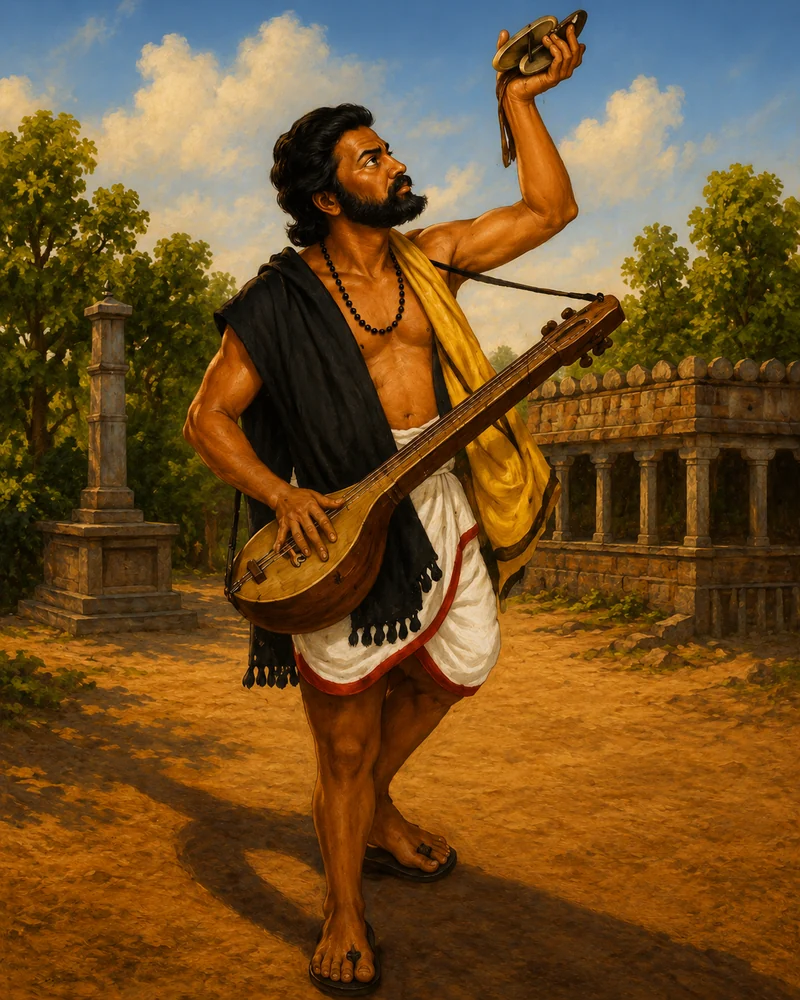
Sant Kanakadasa, the Haridasa saint-poet revered by the Kuruba community

Sant Kanakadasa (1509–1606)

Born Thimmappa Nayaka and raised in the Kuruba community, Kanakadasa became one of the great Haridasa saint-poets of the Dvaita tradition. His Kannada keertanas — sung to this day — carried devotion and a fearless message of human equality, and his Ramadhanyacharithe spoke for the dignity of the humble. Kanakadasa Jayanti is honoured across Karnataka.

Statue of Krantiveera Sangolli Rayanna, the freedom fighter, in Bengaluru

Krantiveera Sangolli Rayanna (1798–1831)

A commander under Kittur Rani Chennamma, Sangolli Rayanna led a determined resistance against the British East India Company until his capture and execution at just thirty-three. Karnataka remembers him as Krantiveera, the valiant revolutionary, and Bengaluru's main railway station carries his name.

These figures are recalled with gratitude and pride, as shared community heritage. No ranking of any community, and no political association, is intended.

Questions families ask

Common questions from Kuruba families

Will we only see Kuruba profiles here?

Yes. Registering through this page places your profile in the dedicated Kuruba section, and every profile you see, match with, or contact belongs to the community — Kuruba, Kuruma, Kurumbar, and related families alike.

We are Kuruma from Telangana or Kurumbar from Tamil Nadu — is this the right place for us?

Yes. Kuruba, Kuruba Gowda, Kuruma, Kurumalu, and Kurumbar are regional names of the same community, and each has its own sub-community option when you register, so your matches stay close to your region and traditions.

How is our family's lineage recorded?

Lineage is a free-text field, so you can enter your bedagu, bali, or kula daiva exactly as your family names it. There is no single fixed gotra list for the community.

Will our phone number be visible to everyone?

It is not shown openly on your profile. A member who wants to take an introduction forward can see your contact through the app's Reveal Contact feature and reach you directly, and Government-ID-verified badges help you know who you are speaking with.

Next step

Register or login when your family is ready to continue

Create your account and step into the Kuruba section of Sri Guru Raghavendra Matrimony, where sub-community, bedagu/bali, native region, and family background are part of every profile — and your family sets the pace.