Sri Guru Raghavendra Matrimony™ emblem
SRI GURU RAGHAVENDRA MATRIMONY™

The needle, the block, and the family

Chippiga / Chippolu / Simpi Matrimony

A community of skilled hands — known as Chippiga in the Kannada country, as Chippolu or Mera in the Telugu country, and as Simpi wherever its families settled — whose craft was the making of cloth into garment, deserves a matrimony space that asks the right questions first: sub-community, gotra and family name, native region, and family character, all on the profile from the start.

Chippiga / Chippi (Karnataka)Chippolu / Mera (Andhra & Telangana)Simpi / ShimpiNamdev Shimpi / Namdev Simpi

Begin when you are ready

Register now, or read about the community's heritage first

Creating an account takes a few minutes. If your family prefers to understand the space first, the sections below walk through the community's craft heritage, its regional names, the gotra and family-name system, and the devotion to Sant Namdev it holds dear.

Registrations from this page stay within the Chippiga, Chippolu and Simpi community — every profile your family sees and contacts belongs to the community.
A heritage of the needle, the block, and the saint

A heritage your family carries every day

Chippiga in the Kannada country, Chippolu or Mera in the Telugu country, and Simpi wherever its families settled — these are the names of one community of skilled hands, whose hereditary craft was the making of cloth into garment: the measure, the cut and the stitch, and in a related branch the carved block, the dye and the printed cotton.

The community's families are found across Karnataka — through the old towns of the Kannada country and in Bengaluru, where this matrimony service is based — and across Andhra Pradesh and Telangana, and among the Marathi-speaking households of the Deccan who carry the names Shimpi and Namdev Shimpi. By tradition an alliance opens with the family's own line — its gotra, kula or family name — and the native region that holds its roots.

Sri Guru Raghavendra Matrimony puts the gotra or kula, the family name and the native region on every profile, in the order your elders actually weigh them — so a Chippiga, Chippolu or Simpi alliance begins informed, and with the dignity your family expects.

What families often ask first

What families often value first

  • Profiles state sub-community, gotra and family name, and native region up front, so your family knows the essentials before the first conversation.
  • Families across the regions — Chippiga and Chippi, Chippolu and Mera, Simpi and Namdev Shimpi — will find their own name represented.
  • Registrations from this page stay within the Chippiga, Chippolu and Simpi community, so every profile your family considers belongs to the community.

What your family will find inside

Everything your family checks, before the first phone call

These are the details Chippiga, Chippolu and Simpi households settle first — and they are visible before any contact is exchanged.

Government ID verified members stand out

Members who complete Government ID verification carry a clear mark, giving your family added reassurance at a glance.

Filter by sub-community, gotra, and native place

Narrow the search by your own name — Shimpi, Chippiga or Chippolu — and by gotra and family name, native place, and family origin.

Education, work, and family background together

Degrees, professions, and family character read clearly on every profile, in the same order elders weigh an alliance.

Lineage recorded your way

Write your family's gotra or kula in your own words, exactly as your family says it — whether that is a rishi gotra, a surname line, or a devak — so the same-lineage check your elders rely on is settled up front.

Contact details are not shown openly

Phone numbers and email are not shown openly on profiles. A member uses the Reveal Contact feature to see another member's details and reach out directly when they are ready to take an introduction forward.

Interest is never lost

Shortlists and the profiles your family has already opened stay saved, so you can return to a promising profile after the household has talked it over.

Built around how Chippiga, Chippolu and Simpi alliances actually happen

Whether your family's search stays within one district or reaches across Maharashtra, Karnataka and the Telugu country, the details that matter — sub-community, gotra, and native region — are always in view.

Why families feel at ease

Why Chippiga, Chippolu and Simpi families feel at home

The details that decide an alliance sit together in one place, presented the way your family would present them.

The tailor's craft, in three languages

Your search stays among these families rather than one mixed crowd, and the name your own household uses — Chippiga, Chippolu, Simpi or another — travels with every profile, so your family can look the way it prefers.

Your own regional name, honoured

Shimpi, Chippiga and Chippolu families each register as the name they know themselves by, and your family can search within it.

Comfortable for parents and members alike

Whether the search is led by a parent, a sibling, or the member themselves, the profile reads clearly for all of them.

Move at your family's pace, with tradition honoured up front and you reach out when your family is ready.

Understanding the heritage

A craft carried across the Deccan

The community's heritage is a heritage of skilled hands — the measure and the cut, the needle and the thread, and in a related branch the carved wooden block, the dye vat and the printed cotton. It is a craft that travelled with its families across the Deccan and put down roots in three languages.

The needle, the block, and the dye

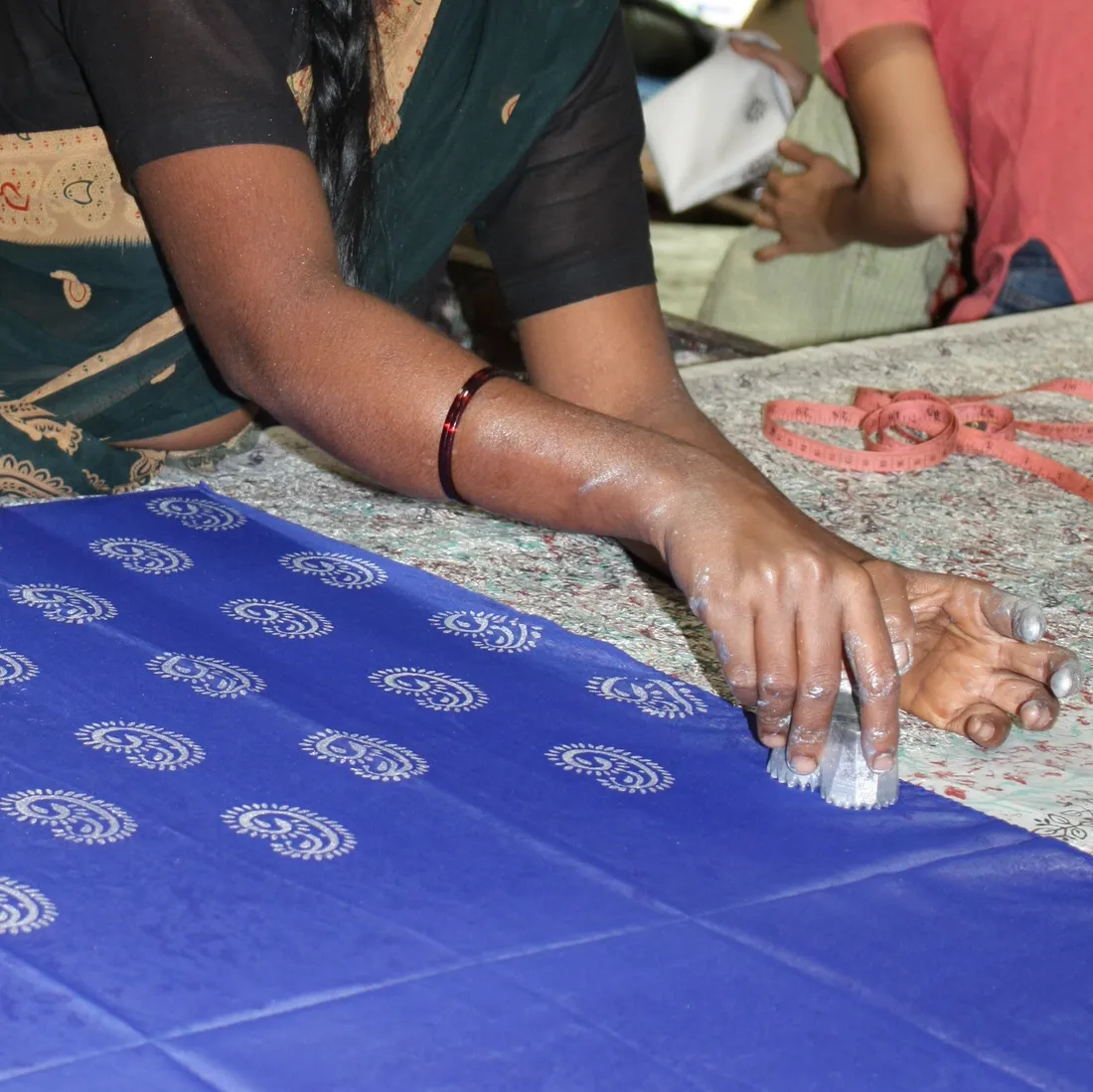
The community's hereditary calling was the tailor's craft — the taking of a measure, the cutting of cloth, and the stitching of a garment made to fit one person alone — and, in households of the related branch, the carving of printing blocks, the mixing of dyes and the printing of cotton. Both are skilled trades passed from parent to child, and both were named with respect in the old records of the South.

One community, the names each region gave it

The same community carries a different name in each land it settled. In Marathi it is Shimpi; in Karnataka Simpi, Chippiga and Chippi; in Andhra Pradesh and Telangana Chippolu, also written Mera. Northern India knows kindred printing communities by the names Chhipa and Chhimba. Families in Tamil Nadu are often recorded among the Marathi-speaking settlers of the Deccan.

  • Maharashtra & North Karnataka — Shimpi, Simpi
  • Karnataka — Chippiga, Chippi, Namdev Simpi
  • Andhra Pradesh & Telangana — Chippolu, Mera
  • Also recorded — Shetwal, Saitwal, Shiv Shimpi, Darzi

Tailoring, dyeing and block-printing are recalled here as skilled hereditary crafts with named masters. Today the community's families serve across business, education, government, engineering, medicine and technology — the craft is a proud root, not the whole of the story.

One community, the names families know

Who this community is

This space is for the Chippiga, Chippolu and Simpi families and the households who belong to them. Each region gave the community its own name, and every one of them is welcome here on its own terms.

The regional names, side by side

Families register as the name they know themselves by, and that name stays on the profile. Older records of the South place the Darji, Chippiga and Namdev names together as one group of the tailor's craft, and households that keep the Lingayat observance are recorded within it as Lingayat Simpi or Shiv Shimpi. Whether families of different regional names make alliances with one another is not for a website to say — that is each family's own matter, and this space simply shows you the name and lets your elders decide.

  • Chippiga / Chippi — the Kannada country of Karnataka
  • Chippolu / Mera — Andhra Pradesh and Telangana
  • Simpi / Shimpi — Karnataka and the Marathi-speaking Deccan
  • Namdev Shimpi / Namdev Simpi — the households who carry the saint's name
  • Lingayat Simpi / Shiv Shimpi — households of the Lingayat observance

Also covers — the names across India

The same craft community is known by many names across the country, and families arriving from any region will find their own word here. These are gathered for recognition and search, so that no family has to guess where it belongs.

  • Karnataka — Chippiga, Chippi, Chimpiga, Simpi, Namdev Simpi, Lingayat Simpi, Sivasimpy
  • Andhra Pradesh & Telangana — Chippolu, Mera
  • Maharashtra & the Deccan — Shimpi, Namdev Shimpi, Shiv Shimpi, Shetwal, Saitwal, Bhavgar
  • Tamil Nadu — recorded among the Marathi-speaking settlers as Namdev Mahratta
  • Northern India — Darzi, Darji, and the kindred printing names Chhipa, Chhimpa, Chhimba
  • Related crafts, honoured as their own communities — Bhavsar / Bhavasara Kshatriya, Rangari, Rangrez, Neelagar, Jingar

Your own name, honoured

Whichever name your family uses, you register as your own — and if your household names itself differently, Other Chippiga / Chippolu community keeps you among your own people. Families settle an alliance the way they always have: by speaking, and by their elders' comfort.

  • Register as the name your family uses
  • Your sub-community is shown on every profile
  • Other Chippiga / Chippolu community keeps every family together

These are regional names of long standing, gathered here for recognition — not a merging of communities, and not a statement that any two of them marry into one another. That question belongs to each family, never to a website. Bhavsar, Rangari, Rangrez, Neelagar and Jingar families are honoured as their own communities and register on their own terms. Some names in this list, such as Darzi and Chhipa, are carried by both Hindu and Muslim families across India; this section is for Hindu families, and a household's religion is always its own declaration, never inferred from a name. No ranking among any of these names is intended.

Understanding the traditions

Gotra and family name: how families trace lineage

Before education, often before the horoscope itself, an alliance turns to the family's own line — its gotra, its kula, or the family name it has carried. These are the markers households use to keep an alliance outside the same ancestral line.

Marriage outside the same line

Two families of the same line are traditionally treated as one ancestry, so alliances are sought outside it. Families of the Deccan name that line differently — some by a rishi gotra, some by the kula or surname line, and some by the devak, the family's own token — and all are honoured here as your family's own answer.

  • Same gotra or kula is avoided, as one ancestral line
  • A rishi gotra, a surname line and a devak are all valid answers
  • Every profile shows its own sub-community, so your family decides who to consider

How we record it

Each part of the lineage sits in its own place, written in your own words, exactly the way your family already says it — because no single list has ever been drawn up for this community, and nothing is chosen for you here. The regions differ in what they keep, so nothing is assumed from one family to the next.

  • Gotra — in your family's own words
  • Kula or devak — kept as its own detail, not merged with the gotra
  • Surname, native place and kuladaivat — each recorded separately alongside
  • Practice varies by family and region; nothing is auto-rejected on a spelling

Households differ in how strictly they weigh the lineage line — some settle it first, others read it alongside the horoscope and the family's overall comfort. A lineage is never inferred from a surname; each family names its own.

A heritage of devotion

Sant Namdev, revered as patron

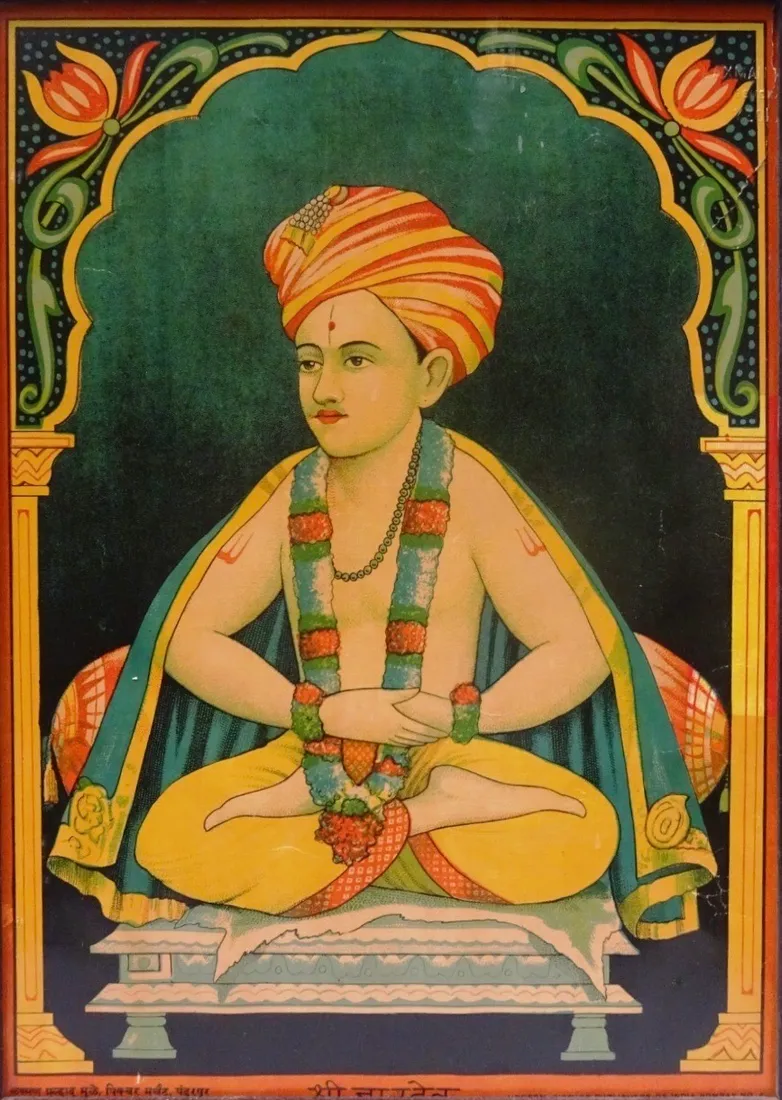
Among the community's Simpi and Namdev Shimpi households, no name is held closer than that of Sant Namdev — the great saint-poet of the Bhakti movement, revered as their patron, whose abhangs are still sung wherever these families have settled.

The saint of the abhang

Sant Namdev, traditionally placed in the thirteenth and fourteenth centuries, gave the Marathi people some of their best-loved devotional poetry. He is remembered above all as a devotee of Vithoba of Pandharpur, and households of the community revere him as their patron — it is his name that the Namdev Simpi and Namdev Shimpi families carry to this day. Traditions differ over the details of his life, and they are shared here in a spirit of reverence rather than as settled history.

A saint the whole land reveres

His devotion reached far beyond one community and one language: sixty-one of his hymns are honoured in the Guru Granth Sahib, and he is revered in the Varkari tradition of Maharashtra and by devotional orders across northern India. Tradition places his birth at Narsi in Maharashtra, though other tellings place it near Pandharpur on the banks of the Bhima.

Sant Namdev is honoured here with reverence and gratitude alone, as the community's cherished patron — and as a saint whose devotion belongs to the whole land. No endorsement is implied, and devotional matters rest with each family and its elders.

A heritage of the Kannada and Telugu country

The cloth country the community calls home

The community's home is the cloth country of the South — the printing and dyeing towns of Karnataka, and the painted and printed cotton of the Telugu lands, where its families have worked with cloth for generations.

Karnataka and the Telugu country

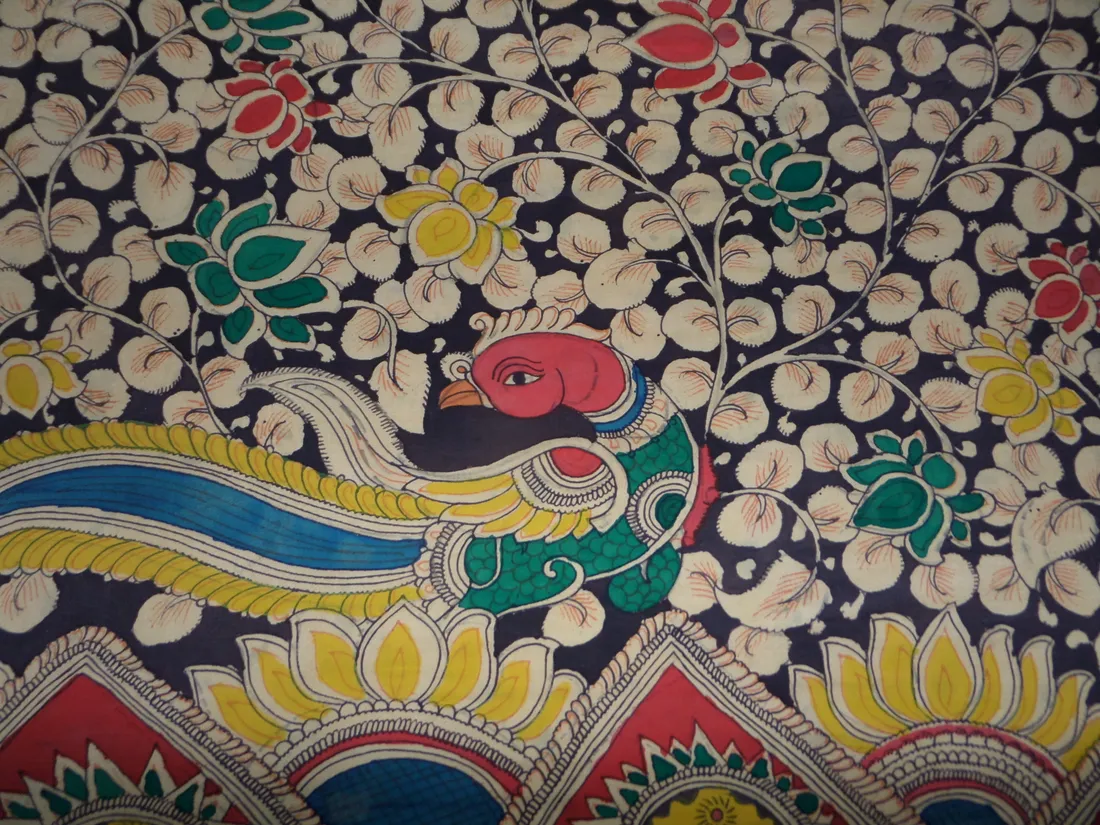
In Karnataka the community's Chippiga and Simpi families are found through the old towns of the Kannada country, where block-printing and dyeing were worked alongside the tailor's craft. In Andhra Pradesh and Telangana the Chippolu or Mera families are among the households of the Telugu cloth country, whose painted and printed cotton — the Kalamkari of Srikalahasti and Machilipatnam among them — has been prized for centuries.

  • Karnataka — Chippiga, Chippi and Simpi families of the Kannada country, and of Bengaluru
  • Andhra Pradesh & Telangana — Chippolu and Mera families of the Telugu country
  • The Deccan — Simpi and Namdev Shimpi households of the Marathi-speaking belt

The family's own deity

Devotion in this community is a household matter. Each family keeps its own kuladaivat, the deity handed down through the generations, honoured at the home shrine and at the village temple — and the families who revere Sant Namdev keep his memory in temples raised to him, and walk the road to Pandharpur with the Varkari pilgrims. Practice varies from family to family, and every household's own way is honoured here.

These cloth traditions are the shared inheritance of several craft communities working side by side, and are recalled here with pride and gratitude — no exclusive claim on any craft is intended. Deities and sacred places are mentioned with reverence alone, and devotional matters rest with each family and its elders.

Questions families ask

Common questions from Chippiga / Chippolu families

Will we only see Chippiga, Chippolu and Simpi profiles here?

Yes. Registering through this page places your profile in the dedicated Chippiga, Chippolu and Simpi section — the Chippiga, Chippi, Chippolu (Mera), Simpi and Namdev Shimpi families — and every profile you see, match with, or contact belongs to it.

We are Chippolu (Mera) from Andhra or Telangana — is this our section?

Yes. Chippolu, also written Mera, is the community's own name in Andhra Pradesh and Telangana, and those families are at home here with their own sub-community option. You register as Chippolu / Mera, and your sub-community, gotra and native region sit on every profile so your family can search the way it prefers.

How is our family's lineage recorded?

Lineage is recorded as your family's own — your gotra, kula or family name, entered in your own words, exactly as your family says it. A rishi gotra, a surname line and a devak are all valid answers. Alliances traditionally avoid the same line, and no list has been drawn up for the community. A lineage is never inferred from a surname.

Will our phone number be visible to everyone?

It is not shown openly on your profile. A member who wants to take an introduction forward can see your contact through the app's Reveal Contact feature and reach you directly, and Government-ID-verified badges help you know who you are speaking with.

Next step

Register or login when your family is ready to continue

Create your account and step into the Chippiga, Chippolu and Simpi section of Sri Guru Raghavendra Matrimony, where your gotra and family name, native region, and family background are part of every profile — for the tailoring and cloth-printing families of Karnataka, Andhra Pradesh and Telangana, and your family sets the pace.